


SHARE THIS ARTICLE
Hymovis
Hymovis vs Synvisc – Comparing OA Treatments
Nov 19, 2024
Living with knee osteoarthritis can be challenging, with pain and stiffness often limiting everyday activities. A study in Applications of Biotribiology in Biomedical Systems highlights the critical role of lubrication and cushioning in preserving knee joint health. These elements reduce friction, absorb shock, and prevent cartilage wear, allowing smooth and pain-free movement.
Hymovis and Synvisc are two popular viscosupplements that aim to restore these crucial functions. Hymovis offers a longer-lasting solution with fewer injections, while Synvisc is renowned for its immediate relief and proven effectiveness. Both treatments are designed to alleviate knee pain and improve joint function.
In this article, we’ll delve into the differences and compare Hymovis vs Synvisc, offering comprehensive insights to help you make an informed decision.
Key Takeaways
- Hymovis and Synvisc are viscosupplements designed to alleviate knee pain and improve joint function in osteoarthritis patients.
- Hymovis contains high-molecular-weight hyaluronic acid for enhanced durability, while Synvisc features a gel-like consistency for immediate cushioning.
- Hymovis requires two injections spaced a week apart, whereas Synvisc offers a three-shot regimen or a single-dose option (Synvisc-One).
- Clinical studies show both treatments significantly reduce pain and improve mobility, with benefits lasting up to six months.
- Both treatments are generally well-tolerated but may not be suitable for individuals with allergies, infections, or bleeding disorders.
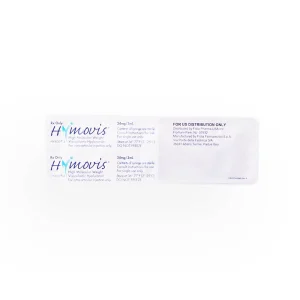
About: Trusted by over 2,000+ global clients since 2014, Direct Doctor Supply has become a leading supplier of cosmetic, skincare, and orthopedic products for medical and aesthetic professionals. Direct Doctor Supply offers a wide range of authentic brand-name products at competitive wholesale prices, sourced from around the world.
Understanding Hymovis and Synvisc
Knee osteoarthritis (OA) can cause debilitating pain and stiffness as the cartilage in the knee joint wears down.[1] When conservative treatments like medications and physical therapy are insufficient, viscosupplementation with Hymovis or Synvisc may offer relief.

Both are hyaluronic acid-based injections designed to mimic the joint’s natural synovial fluid, restoring lubrication and cushioning to ease pain and improve function.
- Hymovis: Uses high-molecular-weight hyaluronic acid and requires only two injections spaced a week apart for effective symptom management.
- Synvisc: This gel-like formulation offers flexible dosing options: three injections for the standard protocol or a single-dose option with Synvisc-One.
Both treatments reduce inflammation and improve mobility, offering valuable options for patients when other treatments fail.
Formulation and Mechanism of Action
Hymovis contains high-molecular-weight hyaluronic acid specifically engineered to mimic the body’s natural synovial fluid closely. Its structure enhances joint lubrication and durability.

By increasing synovial fluid viscosity and lubrication, Hymovis reduces friction within the joint, alleviates pain, and improves mobility. This mechanism helps address the root causes of osteoarthritis symptoms.
Meanwhile, Synvisc uses a gel-like mix of hyaluronic acid with a thicker, more viscous consistency. Synvisc restores natural joint lubrication, providing a cushioning effect that reduces pain and protects the joint from further wear. Its thicker consistency is particularly effective for patients requiring immediate relief.
Clinical Efficacy and Duration of Relief
Hymovis (hyaluronic acid) has demonstrated significant clinical efficacy in reducing osteoarthritis (OA) knee pain. Clinical trials have shown a 34% reduction in WOMAC/VAS pain scores 6 months from baseline. A post-market clinical trial also reported a 37% reduction in VAS pain scores at week 26.

In real-world clinical practice, a retrospective study found a 57% reduction in resting VAS pain scores and a 56% reduction in total WOMAC scores. These improvements were maintained for up to 52 weeks with a 2-cycle regimen.
2026 Study Update: RHYMOVIS® ONE Demonstrates Sustained Pain Relief
A 2026 randomized, double-blind, multicenter study evaluated HYMOVIS® ONE in 347 patients with symptomatic knee osteoarthritis. Researchers found that walking pain decreased by 65% from baseline at week 12 and by 73% at week 26 following a single injection. HYMOVIS® ONE was also non-inferior to MONOVISC for the primary pain outcome, with improvements in stiffness, physical function, and quality of life reported during follow-up. These findings provide recent evidence supporting the effectiveness of this HYMOVIS formulation for symptomatic knee OA relief over approximately six months.[5]
Synvisc (Hylan G-F 20) has also shown substantial efficacy in relieving OA knee pain.[2] A pivotal clinical trial demonstrated significant pain reduction from baseline as early as week 1, with improvements lasting up to 26 weeks.
Synvisc provided long-lasting relief for up to 6 months, with an average 44.8% reduction in pain from baseline compared to saline control. In another study, Synvisc-One showed superiority over saline in reducing pain at 6 months, with a 48.8% reduction in weight-bearing pain from baseline.
These findings suggest that both Hymovis and Synvisc offer significant pain reduction and functional improvement in knee OA patients, with effects lasting up to six months or more.
Injection Schedule and Administration
Hymovis requires two injections, typically administered one week apart. The treatment is designed for simplicity, offering a shorter injection schedule than other viscosupplements. The high-molecular-weight hyaluronic acid formulation provides prolonged relief with just two doses, making it a convenient option for patients seeking effective, time-efficient care.
Synvisc offers flexibility in its injection schedule depending on the formulation used:
- Standard Synvisc: Administered as three injections, spaced one week apart.
- Synvisc-One: A single-dose option containing the full treatment amount in one injection, offering convenience and quicker relief.
A healthcare professional delivers both treatments via intra-articular injection directly into the knee joint. The procedure is minimally invasive, performed in an outpatient setting, and typically requires no significant downtime.
Side Effects and Patient Suitability
While both Hymovis and Synvisc are generally well-tolerated, they may cause side effects. The most common Synvisc and Hymovis side effects are mild and temporary and affect the injection site.
- Pain at the injection site
- Swelling or redness at the injection site
- Headache
- Nausea or upset stomach
- Temporary warmth or irritation in the knee
Rare Side Effects
- Allergic reactions
- Flu-like symptoms
- Infection at the injection site
Patients considering Hymovis or Synvisc should not have bleeding disorders, allergies to the medication components, or infections in or around the knee. Both treatments are generally not recommended for individuals younger than 21 years old. Pregnant or breastfeeding women should consult their healthcare provider before using these medications.
Conclusion
Hymovis and Synvisc offer effective solutions for alleviating knee pain and improving movement in osteoarthritis patients. Both treatments use hyaluronic acid to restore joint lubrication and reduce discomfort. Hymovis stands out with its two-shot regimen spaced one week apart, while Synvisc provides flexibility with either a three-shot series or a single-dose option.
The choice between these treatments ultimately depends on your individual needs, lifestyle, and treatment goals. Consult your healthcare provider to determine the best option for achieving lasting relief and improved joint function.
FAQs
1. What is the primary difference between Hymovis and Synvisc?
Hymovis requires two injections spaced a week apart, while Synvisc offers either three injections or a single-dose option (Synvisc-One).
2. What are the common side effects?
Both treatments commonly cause mild pain, swelling, or redness at the injection site.
3. Who should avoid these treatments?
Patients with infections near the knee, allergies to the ingredients, or bleeding disorders should avoid these treatments.
4. Which treatment is more convenient?
Hymovis requires fewer injections, while Synvisc-One offers a single-dose option for quick relief.
Citations
[1] Knee Cartilage Lesions. Mayo Clinic Orthopedics & Sports Medicine. https://sportsmedicine.mayoclinic.org/condition/cartilage-lesions/. Accessed 25 Sept. 2026.
[2] SYNVISC® (Hylan G‐F 20) and Synvisc‐One® (Hylan G‐F 20) Clinical Efficacy | For HCPs. SynviscOneHCP.com. https://www.synvisconehcp.com/clinical-efficacy. Accessed 25 Sept. 2026.
[3] Choudhari, A., A. K. Gupta, A. Kumar, et al. “Wear and Friction Mechanism Study in Knee and Hip Rehabilitation: A Comprehensive Review.” Applications of Biotribology in Biomedical Systems, edited by A. Kumar, A. Kumar, and A. Kumar, Springer Nature Switzerland, 2024, pp. 345–432. doi:10.1007/978-3-031-58327-8_13.
[4] Mobility. Harvard Health.
[5] Ruosi, C. et al. “Single-Injection Hyaluronic Acid Treatment Demonstrates Non-Inferiority in the Relief of Symptomatic Knee Osteoarthritis: A Randomized Double-Blind, Multi-Center Controlled Study.” Osteoarthritis and Cartilage Open, vol. 8, no. 2, 5 Feb. 2026, p. 100752. doi:10.1016/j.ocarto.2026.100752. PubMed. Accessed 25 Sept. 2026.
Sourcing and accuracy for this article follow our Editorial policy: claims are cross-checked against clinical literature, regulatory filings, and manufacturer specifications before anything is published