Xeomin
Showing all 4 results
-

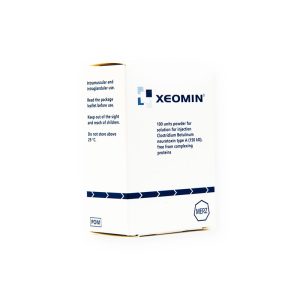
XEOMIN® 100u
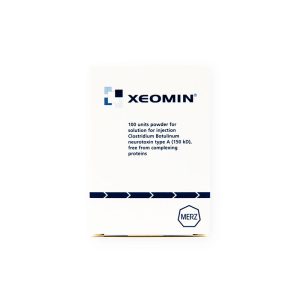
$ 409.00 Read More-+XEOMIN® 100u (English Alternative)
$ 409.00 Read More-+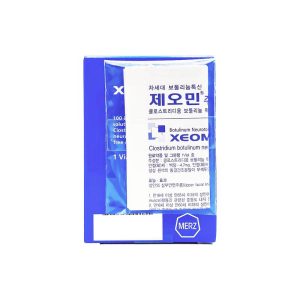
XEOMIN® 100u (English/Korean)
$ 389.00 Read More-+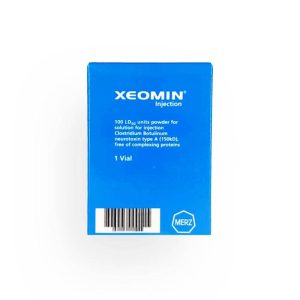
XEOMIN® 100u (Polish)
$ 389.00 Read More-+Merz Pharmaceuticals’ incobotulinumtoxinA stands apart from every other botulinum toxin type A on one detail: no complexing proteins ride along with the neurotoxin. European aesthetic clinics see this molecule branded as BOCOUTURE®; internationally and in the US, the same vial is XEOMIN®. Licensed medical and aesthetic professionals can buy XEOMIN® online through Direct Doctor Supply at competitive wholesale prices, with 24-hour license verification and temperature-controlled shipping worldwide.
What Is XEOMIN®? — And How Does BOCOUTURE® Relate?
XEOMIN® is Merz Pharmaceuticals’ brand of incobotulinumtoxinA, a prescription botulinum neurotoxin type A developed by Merz Pharmaceuticals (Frankfurt, Germany). It ships as a lyophilised powder in single-dose vials, reconstituted with preservative-free saline before intramuscular or intraglandular delivery. What is XEOMIN® made of? The ingredients in XEOMIN® run to three items: the purified 150 kDa neurotoxin, human serum albumin, and sucrose. No haemagglutinins. No non-toxin accessory proteins. That absence is the whole reason the literature nicknames incobotulinumtoxinA the “naked toxin” and the reason it draws attention in the first place.
XEOMIN® botulinum toxin has been on the US market since 2010 and is authorised across the EU as a medicinal product by national medicines authorities. Merz Pharmaceuticals in Germany, the same corporate group behind Belotero® and Radiesse®, makes XEOMIN®. By definition, botulinum toxin type A is a neurotoxin, and the prescription-only status follows from that classification.
XEOMIN® works by cleaving SNAP-25 and blocking acetylcholine release at the neuromuscular junction once at the presynaptic terminal. In turn, it produces localised, reversible chemodenervation. Onset is typically 3–7 days after each injection of XEOMIN®, with full effect at 10–14 days and duration around three months per treatment cycle [1].
BOCOUTURE® — same product, different name
BOCOUTURE® represents Merz’s aesthetic branding of incobotulinumtoxinA in European markets. Although the name and packaging differ, the formulation inside the vial remains the same as XEOMIN®. Only the carton and the regulatory dossier attached to each name change. BOCOUTURE® is authorised across Europe for aesthetic indications by national medicines authorities; XEOMIN® is the international and US brand, carrying a broader combined aesthetic-plus-therapeutic label under the FDA.
Protein-Free Formulation and Room-Temperature Storage
Diffusion
XEOMIN® was designed around a purified neurotoxin approach. During manufacturing, Merz removes accessory proteins commonly associated with other botulinum toxin formulations, leaving the active 150 kDa neurotoxin with only human serum albumin and sucrose as excipients [1][5]. Because the complexing proteins play no active role in muscle relaxation, removing them does not affect potency. Injectors often describe XEOMIN®’s spread from the injection point as somewhat more contained. Read that as a clinical impression rather than a controlled comparison. Dose, dilution, and needle placement still drive the outcome more than formulation does.
Immunogenicity over the long term
Complexing proteins are immunologically inert in most patients, but they represent additional foreign protein delivered with every session. Across years of repeat dosing, a lower total protein load carries a theoretical benefit in reducing the risk of neutralising antibody formation and consequent secondary non-response. Long-term repeat-injection data for incobotulinumtoxinA has been reassuring on this point [5]. Present it to patients as a plausible advantage over BOTOX®, DYSPORT® and every Korean BTX-A brand rather than as proven superiority.
Storage
Only XEOMIN® among BTX-A products carries an approved room-temperature storage option. Unopened vials can be held at up to 25°C throughout the labelled shelf life [1]. Every other commercially available BTX-A product needs unbroken 2°C–8°C refrigeration. For a clinic, that removes one cold-chain failure point at receiving, storage, and any satellite-site transport. For a distributor, it materially reduces the shipping risk on long international routes. Once reconstituted, XEOMIN® is refrigerated and used within 24 hours [1].
FDA Approvals, Indications, and Regulatory Status
XEOMIN® holds one of the widest FDA-approved indication sets in the botulinum toxin class, with six adult approvals to date [1]:
- Cervical dystonia in adults (2010)
- Blepharospasm in adults (2010)
- Glabellar lines (2011)
- Upper limb spasticity in adults (2015)
- Chronic sialorrhea (2018)
- Simultaneous treatment of upper facial lines (frown lines, forehead lines, crow’s feet), added via supplement s099 in July 2024 [1]
Paediatric extensions for spasticity and sialorrhea have followed. In day-to-day practice, what is XEOMIN® for now sits both narrower and broader than the old “just glabellar” shorthand. Aesthetically, XEOMIN® is approved in the US for the full upper face — the same three areas BOCOUTURE® has long covered under European national aesthetic licences — and used to soften the fine lines and wrinkles produced by repeated expression. Therapeutically, the label reaches cervical dystonia, blepharospasm, chronic sialorrhea, and XEOMIN® for muscle stiffness in upper limb spasticity. When a clinic runs both aesthetic and medical lists, that combined label is the practical reason XEOMIN® stays on the shelf. The benefits of XEOMIN® injections in either setting depend on effective use of XEOMIN® at the correct dose, dilution, and injection technique for each indication.
XEOMIN® is prescription-only in every market where it is licensed and is supplied only to licensed practitioners. Clinics that buy Korean botox alongside Western toxins usually keep XEOMIN® on the aesthetic list precisely for that indication breadth. It is the one BTX-A that covers the full upper face and four therapeutic uses under a single label.
Full XEOMIN® Product Range — Buy XEOMIN® 50U, 100U and 200U
XEOMIN® ships as a lyophilised powder in three unit sizes. Practitioners planning to buy XEOMIN® wholesale should match the vial to the caseload rather than defaulting to the middle size out of habit.
- XEOMIN® 50U — 50 units of incobotulinumtoxinA. Fits smaller aesthetic areas, single-region touch-ups, and low-dose precision work where a 100U vial would be wasted.
- XEOMIN® 100U — the standard presentation for most aesthetic and therapeutic protocols. Merz produces it in several labelling variants for different market registrations.
- XEOMIN® 200U — for higher-dose therapeutic sessions (cervical dystonia, upper limb spasticity, sialorrhea) and multi-area treatments where per-unit economics favour the larger vial.
- BOCOUTURE® 50U and 100U — the EU/UK aesthetic carton of the same incobotulinumtoxinA molecule (see the section above). Not a separate product.
- XEOMEEN® 100U — the Spanish-language label of the 100-unit vial for regulated Spanish-speaking markets.
XEOMIN® Compared to Other BTX-A Products
XEOMIN® vs BOTOX
BOTOX® (onabotulinumtoxinA, Allergan Aesthetics) is the reference product in the class and the one XEOMIN® is measured against most often. Both toxins block acetylcholine release at the presynaptic terminal. What separates them is what else rides in the vial: XEOMIN® is delivered as the isolated 150 kDa neurotoxin; BOTOX® keeps its complexing proteins.
The XEOMIN® and BOTOX® difference is threefold. Formulation splits along isolated neurotoxin against a bundled protein complex. Storage splits along room-temperature-tolerant against strictly refrigerated. And in patients returning for treatment year after year, the immunogenicity picture arguably favours the lower foreign-protein load. Unit potency is treated as 1:1 in practice, on the basis of a randomised head-to-head trial that showed non-inferiority at 24 units against 24 units for glabellar lines [2].
XEOMIN® vs DYSPORT
DYSPORT® (abobotulinumtoxinA, Ipsen with Galderma) is FDA-approved and authorised across the EU by national medicines authorities. Its EU/UK aesthetic-only carton is AZZALURE®. The critical distinction here is unit systems. DYSPORT® measures its potency in Speywood units, and Speywood units do not convert one-for-one with BOTOX® or XEOMIN® units.
Published comparative work supports a conversion of roughly 2.5 to 3 Speywood units per one BOTOX®/XEOMIN® unit, with 2.5:1 the ratio most consistently associated with comparable efficacy and adverse-event rates in cervical dystonia and glabellar lines [3]. In practice, a patient carrying 50 DYSPORT® units for glabellar treatment moves to around 20 XEOMIN® units, never 50. Getting the ratio wrong is the single most common dosing mistake in this comparison group.
Beyond units, DYSPORT®’s formulation and typical reconstitution give it a somewhat wider diffusion profile, which some injectors use across the frontalis but which calls for extra caution around the brow and eyelid. Storage stays with XEOMIN®’s room-temperature option; DYSPORT® requires 2°C–8°C throughout.
XEOMIN® vs LETYBO
LETYBO® (letibotulinumtoxinA, Hugel) received FDA approval on 29 February 2024 for glabellar lines and is authorised in the EU as a medicinal product [4]. It contains complexing proteins; XEOMIN® does not, and that molecular contrast repeats through every Korean BTX-A comparison.
The material differences are regulatory scope and evidence duration. XEOMIN® holds six FDA-approved indications spanning aesthetic and therapeutic use; LETYBO®’s US label is currently limited to glabellar lines. XEOMIN®’s Western approval history runs from 2010, versus 2024 for LETYBO®. Storage again favours XEOMIN®.
XEOMIN® vs NABOTA
NABOTA® (prabotulinumtoxinA, Daewoong) is marketed in the US as Jeuveau® by Evolus after FDA approval in February 2019 for glabellar lines, and in Europe as Nuceiva® (centrally authorised by the EMA in September 2019). Among the Korean BTX-A brands, it has the strongest US and EU regulatory footing.
On dosing, NABOTA®/Jeuveau® is treated 1:1 with BOTOX® in the US clinical dataset, and XEOMIN® is likewise 1:1, so the two are dose-comparable in daily protocols. Formulation-wise, NABOTA® carries the standard complexing-protein complex, and XEOMIN® stays protein-free. Where they truly separate is their indication range: NABOTA®/Jeuveau® is a single-indication aesthetic product on the US label; XEOMIN® adds cervical dystonia, blepharospasm, upper limb spasticity, sialorrhea, and, from July 2024, the simultaneous treatment of upper facial lines.
XEOMIN® vs BOTULAX
The BOTULAX® brand is Hugel’s Korean and export label for letibotulinumtoxinA. It shares its underlying toxin with LETYBO®, which is the version Hugel supplies into the US and Europe. The BOTULAX® carton is authorised in Korea by the MFDS and used widely across Asia and parts of Europe. It does not hold FDA approval, and its European medicinal-product status varies by national authority.
The complexing-protein complex is intact in BOTULAX®, and with it the theoretical immunogenicity gap against XEOMIN® under long-term repeat dosing. Units are broadly applied 1:1 with BOTOX® and XEOMIN® in practitioner protocols, though without the Phase III non-inferiority dataset that supports XEOMIN®’s 1:1 [2]. Clinics choose between them along a familiar axis: XEOMIN® for German-developed pharmaceutical manufacturing and a 15-year Western regulatory record; BOTULAX® for cost-competitive Korean supply. Clinics building a mixed formulary usually choose to buy Korean botox or even stock both.
Safety, Side Effects, and Special Considerations
Clinicians consistently see the same short list of XEOMIN® side effects in aesthetic practice: bruising at the injection point, mild localised swelling, and post-injection headache. XEOMIN® headache is one of the more commonly reported reactions in the first few days after treatment, and it typically resolves without intervention.
Serious reactions are uncommon but must be counselled through with every patient. XEOMIN® may cause serious side effects, including spread of toxin effect beyond the injection site, life threatening allergic reaction, wheezing or asthma symptoms, dizziness or feeling faint, and dysphagia [1]. XEOMIN® carries the class-wide boxed warning for distant toxin spread. A technique-dependent side effect of XEOMIN® in upper-face work is eyelid or brow ptosis; in therapeutic neck-and-shoulder protocols, dysphagia and neck weakness are the effects of XEOMIN® to watch for. Individual results may vary.
Use in pregnancy is not recommended; safety in pregnancy has not been established, and the US label advises use only when clearly needed [1]. On excipients, XEOMIN® is not vegan. Human serum albumin, a stabiliser derived from human blood, is one of the two inactive components.
Where to Buy XEOMIN® Online at Wholesale Prices
Direct Doctor Supply has been a trusted wholesale supplier of botulinum toxin products for licensed aesthetic and medical practitioners since 2014. Verified clinics can buy XEOMIN® online here at competitive wholesale pricing, with a price-beat programme, free shipping on orders over $1,000, a 14-day delivery guarantee, temperature-controlled shipping, and license verification completed within 24 hours.
Buy XEOMIN® Wholesale from Direct Doctor Supply
Every order ships LOT-verified from authentic Merz stock, accompanied by supplier documentation and, on request, certificate-of-analysis paperwork. There is no minimum order. Volume-based wholesale savings apply across the 50U, 100U, and 200U vials, and clinics that stock more than one neurotoxin brand can buy botulinum toxins from Direct Doctor Supply’s wider range and consolidate the whole purchase into a single shipment.
For pricing, availability, or purchase-order support, the Direct Doctor Supply support team is the fastest route in. Verify your license and purchase XEOMIN® online today, or reach out to the support team for a wholesale quote.
Frequently Asked Questions
What is XEOMIN®?
XEOMIN® is Merz Pharmaceuticals’ brand of incobotulinumtoxinA, a prescription botulinum toxin type A supplied without complexing proteins.
What does it mean that XEOMIN® has no complexing proteins?
Its formulation contains the purified 150 kDa neurotoxin with human serum albumin and sucrose, without the accessory bacterial proteins present in some other botulinum toxin products.
Can unopened XEOMIN® be stored at room temperature?
Yes. Unreconstituted XEOMIN® can be stored at temperatures up to 25°C according to its labeled storage conditions. Once reconstituted, it requires refrigeration.
Which XEOMIN® vial sizes are available?
XEOMIN® is supplied in 50U, 100U, and 200U presentations, allowing practices to select a vial size according to treatment volume and clinical use.
How does XEOMIN® differ from BOTOX®?
XEOMIN® contains incobotulinumtoxinA without complexing proteins, while BOTOX® contains onabotulinumtoxinA with associated proteins. Their storage requirements also differ.
How can licensed practices order XEOMIN® from Direct Doctor Supply?
Verified practitioners can purchase XEOMIN® through Direct Doctor Supply with LOT-verified stock, wholesale ordering support, and documentation assistance.
Disclaimer: All content on this website is intended for informational purposes and does not constitute medical advice.
Citations and Resources
[1] U.S. Food and Drug Administration. “BOTOX® (OnabotulinumtoxinA) for Injection: Prescribing Information.” U.S. Food and Drug Administration, revised 2024, www.accessdata.fda.gov/drugsatfda_docs/label/2024/125360s099lbl.pdf.
[2] Sattler, Gerhard et al. “Noninferiority of incobotulinumtoxinA, free from complexing proteins, compared with another botulinum toxin type A in the treatment of glabellar frown lines.” Dermatologic surgery : official publication for American Society for Dermatologic Surgery [et al.] vol. 36 Suppl 4 (2010): 2146-54. doi:10.1111/j.1524-4725.2010.01706.x
[3] Yun, Ji Young et al. “Dysport and Botox at a ratio of 2.5:1 units in cervical dystonia: a double-blind, randomized study.” Movement disorders : official journal of the Movement Disorder Society vol. 30,2 (2015): 206-13. doi:10.1002/mds.26085
[4] U.S. Food and Drug Administration. “LETYBO (LetibotulinumtoxinA-wlbg) for Injection: Full Prescribing Information.” U.S. Food and Drug Administration, revised 2024, www.accessdata.fda.gov/drugsatfda_docs/label/2024/761225s000lbl.pdf.
[5] Truong, Daniel D et al. “Sustained efficacy and safety of repeated incobotulinumtoxinA (Xeomin(®)) injections in blepharospasm.” Journal of neural transmission (Vienna, Austria : 1996) vol. 120,9 (2013): 1345-53. doi:10.1007/s00702-013-0998-9
Content prepared by Direct Doctor Supply’s editorial team.
Sourcing and accuracy for this page follow our Editorial Policy: claims are cross-checked against clinical literature, regulatory filings, and manufacturer specifications before anything is published.