

SHARE THIS ARTICLE
Lumigan
Lumigan Eyelashes – Longer, Thicker Lashes
Sep 2, 2025
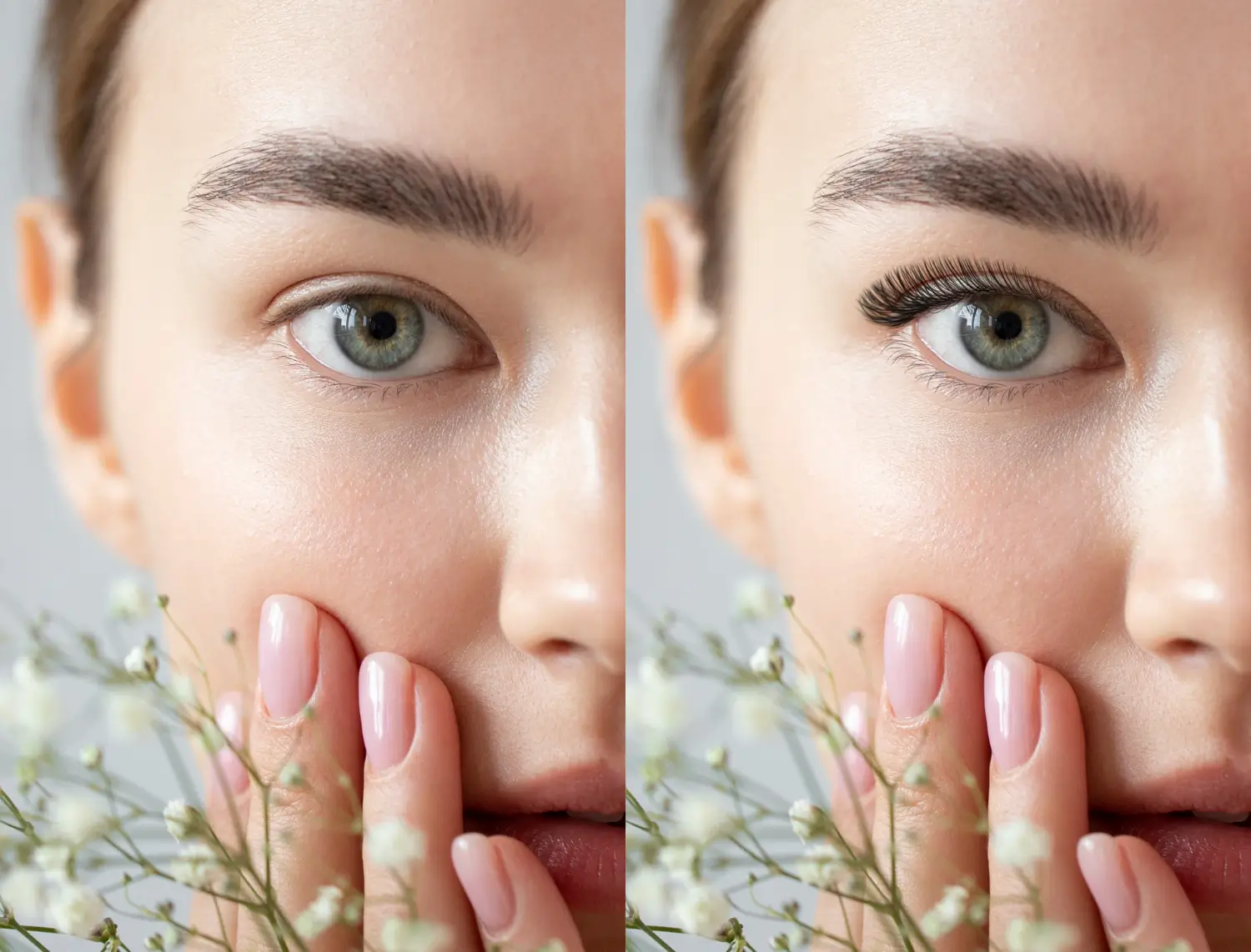
Did you know that the average eyelash only grows to about 10 millimeters and lasts around 150 days before naturally shedding? Unlike scalp hair, eyelashes spend very little time in their active growth phase, which naturally limits their length and density. This biological constraint has inspired research into ways to safely extend the lash growth cycle.
One unexpected discovery came with Lumigan (bimatoprost ophthalmic solution), a prescription medication initially developed to lower eye pressure in patients with glaucoma. Doctors noticed a secondary effect: patients’ lashes gradually became longer, thicker, and darker. While Lumigan itself is not approved for cosmetic use, this finding led to the development of Latisse, a bimatoprost product specifically approved for enhancing eyelashes.
In this article, we’ll explore the science behind Lumigan eyelashes and its effects, review the clinical evidence, and discuss safety considerations, including possible side effects like eyelid skin darkening and iris pigmentation.
Key Takeaways
- Lumigan (bimatoprost) was developed for glaucoma but was later observed to stimulate eyelash growth, leading to the FDA approval of Latisse for cosmetic use.
- Lash enhancement occurs because Lumigan extends the anagen (growth) phase of hair follicles, producing longer, thicker, and darker lashes over time.
- Results are gradual, often appearing after 8–12 weeks of consistent use, and are reversible once treatment stops.
- Common side effects include eyelid skin darkening, eye redness (hyperemia), and irritation. Less common risks include iris pigmentation changes and unintended hair growth if the solution spreads beyond the lash line.
- Cosmetic use of Lumigan is considered off-label; only Latisse is FDA-approved for enhancing eyelashes.
- Healthcare providers play a key role in counseling patients, setting realistic expectations, and reinforcing safe application practices.
About: Trusted by over 2,000+ global clients since 2014, Direct Doctor Supply has become a leading supplier of cosmetic, skincare, and orthopedic products for medical and aesthetic professionals. Direct Doctor Supply offers a wide range of authentic brand-name products at competitive wholesale prices, sourced from around the world.
Mechanism of Lumigan Eyelashes Enhancement
Lumigan (bimatoprost) promotes eyelash growth by extending the anagen phase, the active stage of the hair cycle responsible for lash length and pigmentation. When applied consistently to the eyelid margins, bimatoprost interacts with prostaglandin receptors in the hair follicles, stimulating lashes to grow longer, thicker, and darker over time.[1]

Unlike standard cosmetic mascaras or serums, which only create the appearance of fullness, Lumigan induces biological changes at the follicular level. Because the process works with the body’s natural growth cycle, results emerge gradually, usually after several weeks of regular use. Once treatment is stopped, lashes return to their original state within a few months, underscoring the reversible nature of these cosmetic effects.
Treatments that promote longer, thicker growth can make the eyes appear more defined and expressive. However, under-eye hollows and shadows may remain noticeable, which can affect the overall appearance. For a more balanced, refreshed look, some individuals consider pairing lash enhancement with targeted dermal fillers such as Restylane® or Belotero® to address tear trough volume loss. When a qualified medical professional selects and administers them appropriately, these fillers may soften the appearance of under-eye hollows and complement the enhanced lash profile.
Clinical Evidence of Lumigan-Induced Lash Growth
Lumigan was initially designed for glaucoma management, but its unexpected cosmetic side effect quickly attracted attention. Patients noticed visible changes in lash length and density during treatment, sparking research into bimatoprost’s role in hair follicle stimulation. This ultimately led to the development of Latisse, an FDA-approved product specifically indicated for eyelash hypotrichosis.
Recent Research on Bimatoprost Safety and Tolerability
A 2026 systematic review and meta-analysis compared preservative-free bimatoprost 0.01% with other formulations for glaucoma and ocular hypertension. Researchers found comparable intraocular pressure-lowering effects, with fewer cases of conjunctival hyperemia among patients using the preservative-free formulation. At Week 12, 57.3% experienced no conjunctival hyperemia, compared with 43.6% receiving preserved bimatoprost. Although the findings do not address eyelash growth, they offer updated insights into bimatoprost formulations and ocular tolerability.[5]
Key Studies & Clinical Reports
- Review of Optometry (2008): This article highlights anecdotal and clinical evidence of increased lash length, thickness, and pigmentation among glaucoma patients treated with Lumigan.[3]
- Bimatoprost Gel Suspension Study: This research demonstrates significant lash enhancement when bimatoprost was applied directly to the lash base, reinforcing its follicle-stimulating effects.
These findings firmly link Lumigan’s therapeutic properties to its aesthetic benefits. For clinicians, they provide clear evidence that bimatoprost can enhance lashes, while also guiding conversations about regulatory distinctions between Lumigan dosage for glaucoma and the approved cosmetic use of Latisse.
Safety Risks Associated with Lumigan Eyelash Use
While the cosmetic potential of Lumigan is well established, its off-label use for lash growth requires careful consideration of possible side effects. Documented reactions include:
- Periocular Hyperpigmentation: Gradual darkening of the skin around the eyes, which is usually mild and often reversible once treatment stops.
- Eyelid Skin Discoloration: Noticeable pigmentation of the eyelid skin, sometimes resolving completely after discontinuation.
- Conjunctival Hyperemia: Redness of the eye, generally mild and subsiding after the medication is withdrawn.
Additional risks with prolonged or imprecise application include:

- Eye irritation or dryness, particularly with extended topical exposure.
- Iris pigmentation changes, rare when applied only to the lash line but documented in some patients.
- Unintended hair growth if the solution spreads beyond the targeted area.
Patients should be informed that while many cosmetic changes are reversible, other effects, like iris darkening,g may be permanent. Proper application technique, along with routine follow-up, helps minimize these risks and supports safe use.
Guidance for Clinicians Discussing Cosmetic Effects of Lumigan
Healthcare providers often field questions about Lumigan eyelashes and its potential. Clear, evidence-based counseling is essential to balance cosmetic interest with medical safety.
What Clinicians Should Do
- Explaining the mechanism of lash growth, emphasizing that results appear gradually, usually after several weeks.
- Outlining potential side effects, noting which are temporary (e.g., eyelid hyperpigmentation) and which may persist (e.g., iris pigmentation).
- Comparing Lumigan and Latisse: both contain bimatoprost, but only Latisse is FDA-approved for cosmetic use, while Lumigan’s use for lash growth remains off-label.
- Recommending precise application techniques to avoid product spread and minimize unintended effects.
- Framing safety appropriately: Bimatoprost has been well-tolerated in studies; however, patients using it solely for cosmetic purposes should be closely monitored.
By setting realistic expectations and reinforcing safe application practices, clinicians can help patients make informed choices that align with both their health and cosmetic goals.
Conclusion
The interest in Lumigan eyelashes began with an unexpected observation in glaucoma patients: bimatoprost treatment could produce longer, thicker, and darker lashes. By influencing the natural lash growth cycle, bimatoprost offers effects beyond those of conventional cosmetic products.
However, patients should understand the potential side effects, including eyelid darkening, eye redness, and possible iris pigmentation. Importantly, Latisse, not Lumigan, is FDA-approved for eyelash enhancement. Healthcare provider guidance and proper application are essential for understanding the benefits, risks, and limitations of bimatoprost-based treatments.
FAQs
1. How does Lumigan cause eyelash growth?
It works by prolonging the anagen growth phase, allowing lashes to grow longer, thicker, and darker with regular use.
2. How long before I see results from Lumigan?
Most patients notice visible lash changes within 8–12 weeks, with full results typically by 16 weeks.
3. Are the eyelash changes permanent after using Lumigan?
No. After stopping treatment, lashes gradually return to baseline within a few months.
4. What side effects come with using Lumigan?
Possible reactions include periocular hyperpigmentation, conjunctival hyperemia, and mild eye irritation. These effects often improve after discontinuation, though some may persist.
5. Can an individual use Lumigan instead of Latisse for eyelash growth?
Both contain bimatoprost, but only Latisse has FDA approval for cosmetic lash enhancement. Using Lumigan for this purpose is off-label.
6. Is eyelash enhancement in glaucoma patients safe?
Bimatoprost has been well-tolerated in glaucoma studies, but safety for purely cosmetic use should be evaluated on a case-by-case basis.
7. Can unintended areas develop hair growth with Lumigan?
Yes. If the solution spreads beyond the lash line, unwanted hair growth can occur, highlighting the importance of precise application.
Citations
Cleveland Clinic. Prostaglandins. Cleveland Clinic2022. Accessed October 2, 2026. https://my.clevelandclinic.org/health/articles/24411-prostaglandins
Fernandez‐Gonzalez P, Truchuelo‐Díez MT, Gómez‐Sánchez MJ. Open clinical trial evaluating the efficacy of a novel eyelash growth enhancer with peptides and glycosaminoglycans. Journal of Cosmetic Dermatology. 2024;23(6):2170-2180. doi:10.1111/jocd.16265
O.D AGKOD and Joseph Sowka. Lumigan: Good for Lashes? www.reviewofoptometry.com. Accessed October 2, 2026. https://www.reviewofoptometry.com/article/lumigan-good-for-lashes
Bioequivalence Study With Clinical Endpoint Comparing Bimatoprost Ophthalmic Solution 0.01% to LUMIGAN® In The Treatment of Chronic Open-Angle Glaucoma. ClinicalTrials.gov Identifier: NCT04890106. Updated 2021. https://clinicaltrials.gov/study/NCT04890106
Sourcing and accuracy for this article follow our Editorial policy: claims are cross-checked against clinical literature, regulatory filings, and manufacturer specifications before anything is published