Epithalon
Showing all 2 results
-
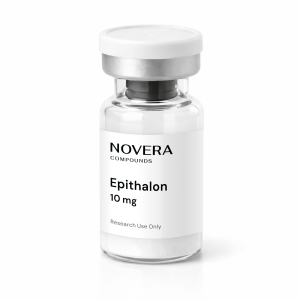

Epithalon 10mg
$ 38.00 Read More-+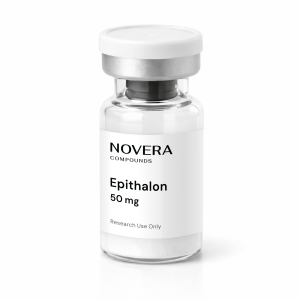
Epithalon 50mg
$ 138.00 Read More-+Epithalon is a synthetic tetrapeptide composed of four amino acids (Ala-Glu-Asp-Gly) that is primarily studied for telomerase activation, cellular renewal, and pineal gland support, placing it within the longevity and anti-aging peptide category. The compound is of growing interest to longevity medicine specialists, anti-aging clinicians, integrative medicine physicians, and compounding pharmacists evaluating protocols for healthy aging and circadian regulation. Practitioners seeking sourcing guidance and documentation support may contact the Direct Doctor Supply support team. Below is a clinical overview covering mechanism, evidence tiers, dosing, and comparisons for the Epithalon peptide.
Epithalon or Epitalon? Longevity Tetrapeptide Identity & Cellular Renewal
Epithalon is a synthetic tetrapeptide composed of four amino acids (Ala-Glu-Asp-Gly), derived from Epithalamin, a natural pineal gland polypeptide, and originally developed by Professor Vladimir Khavinson at the St. Petersburg Institute of Bioregulation and Gerontology. It is primarily studied for telomerase activation, longevity and cellular renewal, and circadian rhythm regulation [1]. Epithalon remains a research compound and is not FDA-approved.
One of the most common questions among practitioners is whether Epithalon and Epitalon are different compounds. They are not. The terms represent different transliterations of the same Russian-derived peptide sequence, Ala-Glu-Asp-Gly. Both refer to the same synthetic tetrapeptide developed within the Russian bioregulator peptide research tradition.
Epithalon occupies a distinct position within the longevity and anti-aging category, acting at the level of telomere biology and epigenetic regulation rather than through metabolic, tissue-repair, or GH-axis pathways. Practitioners should note that much of the existing literature originates from Soviet and Russian institutional sources; while historically significant, many of these studies would not meet current standards for clinical trial design and should be evaluated accordingly [1].
How Epithalon Works: Telomerase Activation, Epigenetics & Pineal Function
The primary mechanism associated with Epithalon is telomerase activation. In vitro research demonstrated that the peptide induces expression of the catalytic subunit of telomerase and promotes telomere elongation in human somatic cells [2]. This evidence, while important, comes from a single in vitro study within the Russian institutional research tradition and has not been replicated in large-scale controlled human trials [2].
Researchers have also proposed an epigenetic mechanism. Preclinical findings indicate Epithalon may influence chromatin organization and DNA methylation patterns in aging cells, with hypothesized effects on gene expression profiles associated with cellular renewal [1]. Human confirmation of these effects remains limited.
Pineal gland function represents another area of interest. The pineal gland regulates melatonin production and governs sleep-wake cycles. Studies in aged monkeys and elderly people reported that pineal peptide preparations including Epitalon helped restore nighttime melatonin secretion and normalize circadian rhythm amplitude, with investigators noting that individuals with pineal functional insufficiency showed the most pronounced response [3].
Additional preclinical investigations have examined antioxidant activity, with animal studies reporting reductions in lipid peroxidation and oxidative stress markers [1]. Animal and early human data also suggest possible improvements in T-lymphocyte activity in aging populations, though the evidence quality remains limited and primarily institutional in origin [1].
An important clinical nuance involves cancer biology. Because telomerase is also active in many cancer cells, practitioners frequently ask whether telomerase activation carries oncologic risk. Animal model data have not demonstrated tumorigenic effects attributable to Epithalon; in a rodent colon carcinogenesis model, Epitalon attenuated tumor cell proliferation and was associated with increased apoptosis in colon tumors [5]. These findings are animal data only and do not constitute a human safety claim. Patients with active or suspected malignancies require careful clinical assessment before any longevity-focused intervention.
Epithalon Peptide Benefits: Longevity, Sleep Quality & Immune Support
Epithalon has been studied for several potential applications in healthy aging, circadian regulation, and cellular maintenance. Evidence quality varies substantially across outcomes, with most findings originating from preclinical or Soviet-era institutional research.
- Longevity and lifespan support: Rodent studies reported increases in mean and maximum lifespan with long-term Epitalon treatment [1]. These findings have not been confirmed in human trials and should be interpreted as animal-model data only.
- Sleep quality improvement: Studies in aged non-human primates and elderly people reported normalization of melatonin secretion and circadian rhythm amplitude following treatment with pineal peptide preparations including Epitalon [3]. Evidence originates from Russian institutional sources and requires independent replication.
- Circadian rhythm regulation: Through its effects on pineal gland function, Epithalon has been investigated for circadian rhythm support in aging populations experiencing sleep-wake disturbances [3].
- Retinal function support: A human clinical study reported a positive effect in 90% of patients with retinitis pigmentosa following Epitalon administration, representing some of the stronger available clinical evidence for this compound [4]. This study originates from a Russian institutional setting; methodology should be evaluated accordingly.
- Immune function support: Early human data suggest possible restoration of T-cell activity in aging individuals [1]. Evidence remains preliminary and originates primarily from Soviet-era institutional protocols.
Epithalon Dosing, Administration & Legal Status
All Epithalon dosing references are practitioner-reported or research-extrapolated. No FDA-approved dosing protocol exists, and all approaches require individualized clinical assessment.
Commonly discussed protocols involve subcutaneous administration of 5 to 10 mg daily for 10 to 20 days per cycle, typically repeated once or twice per year. Some compounding settings have explored nasal spray formulations for circadian rhythm and sleep applications; comparative bioavailability data between injectable and intranasal routes remain limited.
For reconstitution, practitioners commonly use bacteriostatic water. Once reconstituted, storage at 2 to 8°C with protection from light is recommended in research settings. Professionals evaluating whether to buy Epithalon wholesale for research purposes should check for wholesale buying options that include purity testing documentation, batch consistency records, and manufacturing standards verification.
Current Legal Status
- United States (as of June 2026): Epithalon is not approved by the FDA. While it was removed from the FDA’s 503A Category 2 regulatory safety list, it has not yet been placed on the 503A Bulks List. It remains a gray-market research compound; notably, the FDA Pharmacy Compounding Advisory Committee (PCAC) has formally docketed Epitalon for a review vote on July 24, 2026, to evaluate its potential future inclusion on the 503A Bulks List for insomnia.
- Australia (as of June 2026): Epithalon is not approved by the Therapeutic Goods Administration (TGA) and is absent from the Australian Register of Therapeutic Goods (ARTG). Furthermore, in June 2026, the TGA officially designated unapproved anti-aging and performance peptides as a nationwide compliance priority, significantly scaling up domestic enforcement, border seizures, and regulatory penalties for unauthorized distribution or advertising.
- Athletics and WADA Compliance: Epithalon is not explicitly named on the 2026 WADA Prohibited List. However, sports medicine professionals must note that WADA enforces a strict catch-all provision under Section S2 (Peptide Hormones, Growth Factors, and Mimetics) that bans any unapproved substance with similar chemical structure or biological effects. Because Epithalon acts upstream as a genetic and neuroendocrine mimetic, its administration in competitive athletics carries high anti-doping violation risks.
Epithalon vs GHK-Cu, MOTS-c & SS-31
Although Epithalon, GHK-Cu, MOTS-c, and SS-31 are all associated with longevity research, they act through distinct biological pathways, addressing different hallmarks of cellular aging.
Epithalon vs GHK-Cu
Epithalon focuses on telomere biology and epigenetic regulation, while GHK-Cu primarily influences collagen synthesis, extracellular matrix remodeling, wound healing, and antioxidant activity. Human evidence is generally stronger for GHK-Cu in skin and tissue-level applications, whereas Epithalon is studied in relation to upstream cellular aging mechanisms. In comprehensive longevity protocols, the two peptides are often viewed as complementary: GHK-Cu addresses tissue-level regeneration while Epithalon targets cellular and genomic aging.
Epithalon vs MOTS-c
MOTS-c targets mitochondrial metabolism through AMPK activation and is primarily discussed in relation to insulin sensitivity, metabolic health, and exercise adaptation. Epithalon, by contrast, focuses on genomic aging, telomerase activation, and cellular senescence. Practitioners may consider MOTS-c when metabolic or mitochondrial dysfunction is the primary concern and Epithalon when telomere-related aging mechanisms are the focus. Both may play complementary roles in comprehensive longevity protocols.
Epithalon vs SS-31
SS-31 supports mitochondrial function through interactions with cardiolipin and by reducing mitochondrial reactive oxygen species, while Epithalon focuses on genomic integrity and telomere maintenance. Both fall within the longevity category but address fundamentally different biological hallmarks of aging. Stacking rationale is strong when both mitochondrial dysfunction and cellular senescence are clinically relevant in the same patient profile.
How Can Licensed Practitioners Source or Buy Epithalon?
Epithalon is available for research purposes to qualified licensed professionals only and is not intended for retail or consumer use. When evaluating suppliers, practitioners should prioritize those offering verifiable purity documentation, certificate of analysis (COA) availability, LOT number traceability, and documented sterility testing. Sourcing from unverified vendors carries meaningful risk to research integrity.
The Direct Doctor Supply support team provides sourcing direction and documentation support for licensed professionals seeking guidance on where to buy Epithalon online from verified research-grade suppliers. Practitioners with sourcing or documentation questions are encouraged to contact the Direct Doctor Supply support team directly.
FAQs
1. What is Epithalon peptide, and is it the same as Epitalon?
Epithalon is a synthetic tetrapeptide composed of four amino acids (Ala-Glu-Asp-Gly), derived from the natural pineal peptide Epithalamin and originally developed by Professor Vladimir Khavinson [1]. Epithalon and Epitalon refer to the same compound and differ only in transliteration from Russian. It is a research peptide and is not FDA-approved.
2. How does Epithalon work, and what is telomerase activation?
Epithalon is primarily studied for its ability to induce telomerase activity and promote telomere elongation in human somatic cells [2]. Researchers also investigate its effects on chromatin organization and DNA methylation [1], as well as pineal gland melatonin regulation [3]. Much of this evidence remains preclinical or originates from Soviet-era institutional studies with methodological limitations.
3. What are the Epithalon peptide benefits?
Potential benefits studied include longevity and cellular renewal, circadian rhythm regulation, improvements in sleep quality, retinal function support, and immune function [1][3][4]. Evidence quality varies substantially by outcome; many claims are supported primarily by preclinical or Soviet-era institutional research. Practitioners should distinguish clearly between animal-model findings and human clinical evidence before discussing these outcomes with patients.
4. What is the Epithalon dosing protocol?
Practitioner-reported protocols commonly involve 5 to 10 mg subcutaneously daily for 10 to 20 days per cycle, typically repeated once or twice annually. Nasal spray formulations are available through some compounding settings for circadian and sleep applications. All dosing is practitioner-reported and research-extrapolated; no FDA-approved protocol exists, and individualized assessment is required.
5. How does Epithalon compare to MOTS-c and SS-31?
Epithalon focuses on telomerase activation and epigenetic regulation at the genomic level [1][2]. MOTS-c primarily targets metabolic and mitochondrial pathways through AMPK activation, while SS-31 addresses mitochondrial membrane protection through cardiolipin binding. These peptides target distinct biological hallmarks of aging and may serve complementary roles in comprehensive longevity protocols.
Sources
- Araj SK, Brzezik J, Mądra-Gackowska K, Szeleszczuk Ł. Overview of Epitalon-Highly Bioactive Pineal Tetrapeptide with Promising Properties. Int J Mol Sci. 2025;26(6):2691. Published 2025 Mar 17. doi:10.3390/ijms26062691
- Khavinson VKh, Bondarev IE, Butyugov AA. Epithalon peptide induces telomerase activity and telomere elongation in human somatic cells. Bull Exp Biol Med. 2003;135(6):590-592. doi:10.1023/a:1025493705728
- Korkushko OV, Lapin BA, Goncharova ND, et al. Normalizing effect of the pineal gland peptides on the daily melatonin rhythm in old monkeys and elderly people. Adv Gerontol. 2007;20(1):74-85.
- Khavinson V, Razumovsky M, Trofimova S, Grigorian R, Razumovskaya A. Pineal-regulating tetrapeptide epitalon improves eye retina condition in retinitis pigmentosa. Neuro Endocrinol Lett. 2002;23(4):365-368.
- Kossoy G, Zandbank J, Tendler E, et al. Epitalon and colon carcinogenesis in rats: proliferative activity and apoptosis in colon tumors and mucosa. Int J Mol Med. 2003;12(4):473-477.
For licensed medical professionals only. This content is for informational purposes only and does not constitute medical advice.
Content prepared by Direct Doctor Supply’s editorial team.
Sourcing and accuracy for this page follow our Editorial Policy: claims are cross-checked against clinical literature, regulatory filings, and manufacturer specifications before anything is published.