MOTS-C
Showing all 2 results
-
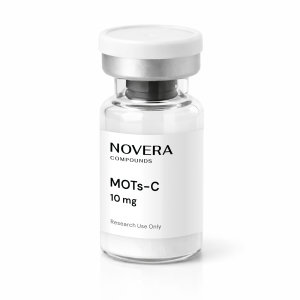

MOTs-C 10mg
$ 55.00 Read More-+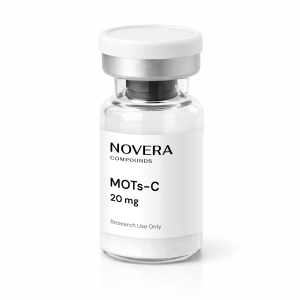
MOTs-C 20mg
Read MoreMOTS-c is a mitochondrial-encoded peptide derived from the 12S rRNA gene that functions as an exercise mimetic, activating AMPK to improve insulin sensitivity and replicate the metabolic benefits of physical activity. Longevity medicine specialists, sports medicine physicians, and anti-aging practitioners evaluating mitochondrial health support and insulin resistance management will find a clinical overview of MOTS-c’s mechanisms, dosing considerations, and research base in the guide below. Practitioners seeking sourcing guidance or documentation support for MOTS-c may contact the Direct Doctor Supply support team.
MOTS-c as a Longevity & Exercise Mimetic Peptide Profile
MOTS-c (Mitochondrial Open Reading Frame of the 12S rRNA-c) is a mitochondrial-encoded peptide, not a nuclear DNA-derived compound, that functions as an exercise mimetic within cellular metabolism [1]. Endogenous MOTS-c levels increase during physical activity and naturally decline with age, positioning MOTS-c as a compound of relevance to longevity and anti-aging research, with relevance across metabolic medicine and sports medicine protocols [2], [4].
Exogenous MOTS-c supplementation has been studied in preclinical models and emerging early human research for the following applications:
- Insulin resistance reduction
- Metabolic health support
- Physical performance in sedentary or exercise-limited populations
- Mitochondrial function preservation
This mechanistic profile, which couples exercise-mimetic activity with age-related declines in endogenous levels, underpins its emerging role in longevity medicine and metabolic disease research [2].
What is MOTS-c and What is it Used For?
MOTS-c originates from the mitochondrial 12S rRNA sequence and functions as a mitochondrial-derived peptide with endocrine-like signaling properties [1]. In preclinical research, endogenous MOTS-c levels increase during exercise and decline with aging, making exogenous supplementation a focus of study for replicating exercise-induced metabolic adaptations in patients unable to achieve therapeutic exercise intensity [4].
Early human data and practitioner-reported use suggest applications for supporting insulin sensitivity, maintaining glucose homeostasis, enhancing physical performance, and preserving mitochondrial function as part of longevity protocols. As a research compound, MOTS-c is not FDA-approved, and the available evidence base remains predominantly preclinical or early-stage [2], [5].
Mitochondrial-Derived Peptide for Therapeutic Exploitation
The discovery of MOTS-c reflects a broader recognition that mitochondria function as endocrine-like signaling organelles capable of producing bioactive peptides that regulate systemic metabolism and longevity traits [2]. This represents a paradigm shift in how clinicians conceptualize the mitochondrial contribution to aging and metabolic disease, positioning mitochondrial-derived peptides as a distinct therapeutic class.
The peptide translocates from the mitochondrion to the nucleus under metabolic stress, engaging metabolic master regulators that coordinate gene expression across tissues and replicating the metabolic adaptation triggered by exercise [3].
For metabolic disease clinicians, this positions mitochondrial-derived peptides as a class complementary to conventional pharmacotherapy. For sports medicine physicians, MOTS-c’s exercise-mimetic profile may be of interest to patients with contraindications to high-intensity training, though practitioners should note its prohibited status under WADA before considering any sport-related application [5].
MOTS-c Treatment Improves Physical Performance — Exercise Mimetic Application
In preclinical models, MOTS-c administration has been shown to improve physical performance and metabolic flexibility, replicating key adaptations associated with endurance training [4]. Studies have shown enhanced glucose uptake in skeletal muscle, increased fat oxidation, and improved exercise capacity in animal models [1], [4].
These outcomes are particularly relevant in research contexts involving populations unable to exercise at therapeutic intensity due to age, comorbidity, or functional limitations. The exercise mimetic identity of MOTS-c makes it a focus of interest in longevity medicine research, though all physical performance claims remain based on preclinical data at this stage.
What Does MOTS-c Peptide Do? AMPK Mechanism & Metabolic Action
AMPK Activation and the Master Metabolic Regulator
The primary mechanistic action of MOTS-c centers on activation of AMPK (AMP-activated protein kinase), the master metabolic regulator of cellular energy homeostasis [1]. AMPK activates catabolic pathways and inhibits anabolic pathways in response to signals of energy depletion.
In preclinical models, MOTS-c-induced AMPK activation has been associated with [1]:
- Improved insulin sensitivity through enhanced glucose transporter translocation in skeletal muscle
- Increased glucose oxidation
- Reduced hepatic lipogenesis
These changes parallel the metabolic adaptations observed with endurance exercise. Enhanced glucose uptake reduces fasting and postprandial glucose levels; increased fat oxidation improves metabolic flexibility, the ability to shift between carbohydrate and fat as fuel sources. These findings are relevant for practitioners researching insulin resistance and metabolic syndrome, though human evidence remains limited to early-stage observations [2].
Mitochondria-to-Nucleus Retrograde Signaling
Beyond direct AMPK activation, MOTS-c translocates to the nucleus under metabolic stress and activates nuclear gene programs regulating muscle metabolism, mitochondrial biogenesis, and energy homeostasis [3]. This mitochondria-to-nucleus communication, known as retrograde signaling, is a feedback pathway by which mitochondrial status is relayed to the genome, triggering transcriptional adaptation. MOTS-c functions as a mitochondrial-derived signaling molecule coordinating whole-body metabolic programming.
In aging populations, mitochondrial-derived signaling is attenuated and endogenous MOTS-c levels decline, contributing to age-related insulin resistance, metabolic inflexibility, and a decline in physical performance [2], [4]. Exogenous MOTS-c supplementation has been studied as a means of addressing this attenuated signaling in aged or metabolically dysfunctional populations.
MOTS-c Benefits: Physical Performance, Longevity Biomarkers, and Metabolic Outcomes
Preclinical research findings for MOTS-c include [1], [4]:
- Improved physical performance, including enhanced running capacity and exercise endurance in animal models
- Improved longevity-associated biomarkers, including enhanced metabolic flexibility, improved glucose homeostasis, and preserved mitochondrial function
- Increased metabolic flexibility
- Reduced insulin resistance
Early human data and practitioner-reported applications suggest potential benefits for metabolic optimization, energy production, and anti-aging protocols, though all claims require appropriate evidence-tier qualification and remain observational, lacking animal model data [2].
Practitioners should design baseline and follow-up biomarker assessments, including glucose, insulin, and lipid panels, to objectively evaluate metabolic parameters rather than relying on subjective report alone.
MOTS-c Dosage, When to Take and Legal Status
MOTS-c dosing in research and clinical practice is entirely practitioner-reported, as no FDA-validated human dosing protocol exists [5]. Common dosing in longevity and sports medicine research contexts ranges from 5–10 mg administered weekly as a subcutaneous injection. Practitioners seeking to buy MOTS-c wholesale from verified suppliers should confirm that the product includes documented stability and purity assays to ensure the reconstituted peptide maintains potency throughout its shelf life.
Reconstitution uses bacteriostatic water for antimicrobial preservation. Once reconstituted, the peptide should be stored at 2–8°C and protected from light. When buying online or evaluating research-grade suppliers, practitioners should prioritize vendors providing third-party purity analysis, stability documentation, and clear sourcing transparency.
Timing and Circadian Considerations
When to take MOTS-c depends on the clinical application and the patient’s circadian biology. For metabolic optimization in longevity protocols, morning administration (6–8 AM) aligns with natural circadian AMPK activation and supports metabolic signaling during the active phase [3].
For physical performance applications, pre-exercise administration (30–60 minutes before training) is reported by practitioners as a timing approach to support exercise-induced metabolic adaptation. Timing should be individualized and documented in clinical notes to assess tolerability and response.
Regulatory Status and WADA Considerations
- MOTS-c is not FDA-approved in the United States and is not included on the 503A compounding list.
- It is also not TGA-approved in Australia [5].
- MOTS-c is prohibited at all times under the World Anti-Doping Agency (WADA) Prohibited List, classified under Section S4.4 (Hormone and Metabolic Modulators) as an activator of AMP-activated protein kinase (AMPK) [5]. WADA has explicitly named “Mitochondrial open reading frame of the 12S rRNA-c (MOTS-c)” as a prohibited substance. Competitive athletes subject to anti-doping codes must not use MOTS-c, and sports medicine practitioners should be aware of this classification before considering any protocol.
WADA classifications are subject to revision; practitioners should verify the current Prohibited List for the most up-to-date status.
Side effects in preclinical and early human data are generally minimal. Injection site reactions, including localized erythema, are the most commonly reported finding [5]. Long-term human safety data are absent, and careful patient screening and monitoring are warranted.
Where Do Practitioners Source MOTS-c for Research Protocols?
MOTS-c is a research compound available to qualified licensed medical professionals only. It is not available for general consumer purchase, and sourcing from verified, research-grade suppliers is essential to ensure purity, stability, and the integrity of documentation.
When evaluating suppliers, practitioners should confirm:
- A valid certificate of analysis (CoA) from an accredited third-party laboratory
- LOT number traceability for each batch
- Documented purity and stability assays appropriate to peptide research standards
Practitioners seeking to buy MOTS-c online or to identify verified research-grade suppliers may contact the Direct Doctor Supply support team for sourcing guidance and documentation. The support team can connect practitioners with suppliers meeting research-grade purity and traceability standards. For guidance on how to order MOTS-c through verified channels, contact the Direct Doctor Supply support team directly.
MOTS-c vs SS-31 and NAD
MOTS-c vs SS-31
MOTS-c and SS-31 represent two distinct mechanistic entry points into mitochondrial longevity. MOTS-c activates AMPK and engages mitochondria-to-nucleus metabolic signaling, priming cellular energy adaptation and metabolic flexibility [1], [3]. SS-31 binds to cardiolipin within the inner mitochondrial membrane, stabilizing electron transport chain complexes and reducing mitochondrial reactive oxygen species production. MOTS-c addresses the signaling layer; SS-31 addresses the structural layer.
Clinically, MOTS-c suits practitioners focused on metabolic aging, insulin sensitivity, and exercise mimetic research applications. SS-31 is better positioned to support mitochondrial structural integrity and reduce oxidative stress. Many longevity practitioners employ both concurrently: MOTS-c activates beneficial metabolic signaling while SS-31 provides the membrane-level structural foundation for optimal mitochondrial function.
Note: This comparison is based on independent preclinical findings from different study designs and populations. No direct head-to-head RCT between MOTS-c and SS-31 currently exists; any mechanistic comparison is indirect.
MOTS-c vs NAD
MOTS-c and NAD represent different entry points into overlapping mitochondrial longevity pathways. MOTS-c functions as a peptide-mediated metabolic signaling molecule, activating AMPK and coordinating mitochondrial-to-nuclear communication [1], [3]. NAD+ serves as an essential cofactor supporting sirtuin enzyme activation, PARP-mediated DNA damage repair, and mitochondrial biogenesis. MOTS-c activates the signaling layer; NAD replenishes the cofactor substrate.
Clinically, MOTS-c prioritizes insulin sensitivity and exercise mimetic effects; NAD-boosting interventions emphasize sirtuin-driven repair and biogenesis [2]. Comprehensive longevity protocols frequently combine both: MOTS-c drives metabolic signaling while NAD replenishes the cofactor pools necessary for sustained downstream repair. This additive approach appears in the research literature on longevity medicine, though direct clinical trial evidence for the combination remains limited.
Note: This comparison draws on independent preclinical and early human findings across different study designs. No direct head-to-head RCT comparing MOTS-c and NAD interventions currently exists; the comparison is indirect.
FAQs
What is MOTS-c peptide, and what is it used for?
MOTS-c is a mitochondrial-encoded peptide that functions as an exercise mimetic by activating AMPK and supporting metabolic flexibility [1]. Endogenous MOTS-c levels increase during physical activity and decline with age, making it relevant to practitioners evaluating longevity, insulin resistance reduction, and physical performance support in research contexts [2], [4]. As a research compound, MOTS-c is not FDA-approved [5].
What does MOTS-c do, and how does it work?
MOTS-c activates AMPK (AMP-activated protein kinase), improving insulin sensitivity, enhancing glucose uptake in skeletal muscle, and increasing fat oxidation [1]. The peptide translocates to the nucleus under metabolic stress, activating gene programs that regulate muscle metabolism and energy homeostasis [3]. In preclinical research, MOTS-c has been shown to improve physical performance by replicating exercise-induced metabolic adaptations in animal models [4].
What is the MOTS-c dosage, and when should it be taken?
Practitioner-reported MOTS-c dosing ranges from 5–10 mg per week subcutaneously; no FDA-validated human protocol exists [5]. Morning timing (6–8 AM) is reported to support circadian metabolic alignment for longevity applications. Practitioners and athletes should note that MOTS-c is prohibited at all times under the WADA Prohibited List as of June 2026 and is not permitted in competitive sport [5].
How does MOTS-c compare to SS-31?
MOTS-c activates AMPK-mediated metabolic signaling to enhance insulin sensitivity and exert exercise-mimetic effects [1]; SS-31 stabilizes the inner mitochondrial membrane to reduce oxidative stress. MOTS-c addresses the metabolic signaling layer while SS-31 addresses membrane-level structural protection. Practitioners often consider both for complementary mechanistic coverage in longevity protocols, though no direct comparison trial exists.
Is MOTS-c legal, and what are the side effects?
MOTS-c is a research compound, not FDA-approved in the U.S. or TGA-approved in Australia [5]. As of mid-2026, MOTS-c is prohibited at all times under the WADA Prohibited List (Section S4.4) as an AMPK activator; competitive athletes subject to anti-doping codes must not use it [5]. Side effects reported in preclinical and early human data are minimal, with injection site reactions being most common. Long-term human safety data are absent, requiring careful patient screening and monitoring.
References
1. Lee C, Zeng J, Drew BG, et al. The mitochondrial-derived peptide MOTS-c promotes metabolic homeostasis and reduces obesity and insulin resistance. Cell Metab. 2015;21(3):443–454. https://pubmed.ncbi.nlm.nih.gov/25738459/
2. Kong BS, Lee C, Cho YM. Mitochondrial-encoded peptide MOTS-c, diabetes, and aging-related diseases. Diabetes Metab J. 2023;47(3):315–324. doi:10.4093/dmj.2022.0333
3. Wan W, Zhang L, Lin Y, et al. Mitochondria-derived peptide MOTS-c: effects and mechanisms related to stress, metabolism and aging. J Transl Med. 2023;21(1):36. Published 2023 Jan 20. doi:10.1186/s12967-023-03885-2
4. Reynolds JC, Lai RW, Woodhead JST, et al. MOTS-c is an exercise-induced mitochondrial-encoded regulator of age-dependent physical decline and muscle homeostasis. Nat Commun. 2021;12:4932. https://pubmed.ncbi.nlm.nih.gov/33473109/
5. What is the MOTS-c peptide? U.S. Anti-Doping Agency. https://www.usada.org/spirit-of-sport/what-is-mots-c-peptide/
For licensed medical professionals only. This content is for informational purposes only and does not constitute medical advice.
Content prepared by Direct Doctor Supply’s editorial team.
Sourcing and accuracy for this page follow our Editorial Policy: claims are cross-checked against clinical literature, regulatory filings, and manufacturer specifications before anything is published.