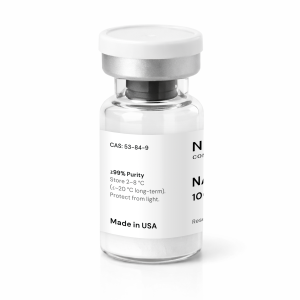
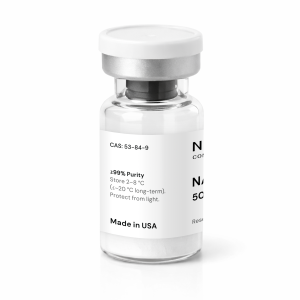
NAD Peptide
Showing all 2 results
-
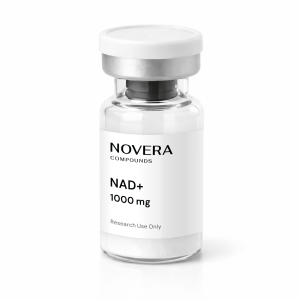

NAD+ 1000mg
$ 150.00 Read More-+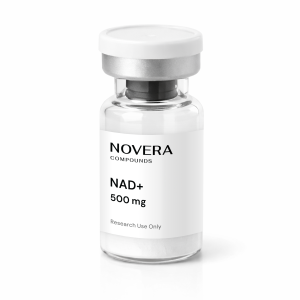
NAD+ 500mg
$ 90.00 Read MoreNicotinamide adenine dinucleotide (NAD+) is a coenzyme central to cellular energy production, DNA repair, and immune system function, though the term “NAD peptide” remains a widely used convention in longevity and peptide therapy contexts. This guide provides a structured clinical reference for longevity medicine specialists, integrative medicine physicians, and anti-aging clinicians evaluating NAD+ therapy across injectable, intramuscular, and IV drip administration routes. Practitioners seeking sourcing guidance or documentation support for NAD may contact the Direct Doctor Supply support team.
Is NAD a Peptide? What NAD+ Is & What It Is Used For
NAD+ (nicotinamide adenine dinucleotide) is a coenzyme, not a peptide [1]. It plays an essential role in ATP production, DNA repair, cellular energy metabolism, and immune system function. Although the term “NAD peptide” is commonly used across peptide therapy, longevity medicine, and IV infusion practices, the active compound is NAD+ itself — a dinucleotide coenzyme composed of nicotinamide and adenine nucleotides connected through phosphate groups rather than amino acids. For practitioners asking whether NAD is a peptide, the biochemical answer is no, though the commercial label is an accepted industry convention that this guide uses throughout.
NAD+ levels decline with aging and in several chronic disease states [1], [4]. This decline is associated with reduced mitochondrial efficiency, impaired cellular repair mechanisms, and metabolic dysfunction, and it provides the primary rationale for NAD+ supplementation research.
NAD+ is studied in the context of:
- Subcutaneous and intramuscular (IM) injections
- IV drips for rapid NAD+ repletion
- Oral precursor compounds such as nicotinamide riboside (NR) and nicotinamide mononucleotide (NMN)
What Does NAD Peptide Do? Mechanism of Action
When clinicians ask what the NAD peptide does, the primary objective is to restore intracellular NAD+ levels to support mitochondrial electron transport and ATP production under metabolic stress [1].
NAD+ acts through several key mechanisms:
- Sirtuin activation: NAD+ is the essential cofactor for sirtuins (SIRT1–SIRT7), which regulate gene expression, mitochondrial biogenesis, and cellular resilience. Reduced NAD+ availability is associated with decreased sirtuin activity and age-related metabolic decline (preclinical and human evidence) [1].
- PARP activation: NAD+ fuels poly(ADP-ribose) polymerase (PARP) enzymes, which drive DNA damage detection and strand-break repair, linking NAD+ directly to genomic maintenance in tissues exposed to oxidative stress [1].
- Immune system support: NAD+ supports macrophage and T-cell function, providing a mechanistic basis for its inclusion in immune-support protocols, though claims of immune benefit remain mechanistically plausible rather than clinically validated at this stage [1].
NAD and MOTS-C are often referenced together in practitioner discussions as complementary compounds: NAD+ supports energy and repair pathways, while MOTS-C is investigated for exercise-mimetic and metabolic signaling effects via AMPK activation (preclinical evidence). Practitioners sometimes consider both within broader longevity protocols given their distinct but potentially additive mechanisms.
NAD Peptide Benefits: Cellular Energy, Immunity & Mental Health
NAD+ benefits are primarily associated with cellular energy production and repair. Evidence varies across the following areas:
- Cellular energy: Early human studies on NAD+ precursors and clinical observations suggest potential improvements in mitochondrial efficiency and ATP production, though evidence of clinical outcomes remains limited and variable [2].
- Cellular repair: NAD+ is required for PARP-mediated DNA repair pathways that maintain genomic stability. Most supporting evidence remains preclinical or mechanistically extrapolated [1].
- Metabolic health: Early human and preclinical findings suggest NAD+ may support insulin sensitivity, fat oxidation, and mitochondrial efficiency, leading to its inclusion in some metabolic health and weight management protocols as an adjunctive option rather than a primary therapy [2], [4].
- Cognitive and mental health: Preliminary practitioner-reported experiences suggest potential support for cognitive fatigue and emotional resilience, and early investigations have explored NAD+ depletion in mood-related contexts. These applications remain mechanistically plausible rather than clinically validated, and human evidence is insufficient to draw conclusions at this stage [2], [4].
Overall, the strongest evidence supports the role of NAD+ in cellular energy metabolism, while its immune, metabolic, and neurocognitive applications remain under active investigation [2].
NAD Peptide Dosage, Where to Inject & Administration
Because injectable NAD+ lacks FDA-approved prescribing information, all NAD peptide dosage guidance should be considered practitioner-reported or derived from research-use references [5].
Commonly reported protocols include:
- Subcutaneous or IM injections: Approximately 100–500 mg per session
- IV drips: Approximately 250–1,000 mg administered over one to four hours, depending on patient tolerance and practitioner preference
Frequency varies and requires individualized clinical assessment. For professionals researching where to inject NAD peptide, subcutaneous administration is typically performed in the abdomen or thigh, while intramuscular injections are commonly delivered into the deltoid or gluteal muscles using standard aseptic technique. IV drips should be administered exclusively by appropriately trained clinical personnel.
Many longevity clinics consider NAD therapy delivered through IV drips to be the most direct route for rapid NAD+ replenishment. Infusion rate is an important tolerability factor; practitioner-reported experience indicates that slower administration reduces flushing, nausea, chest discomfort, and other infusion-related symptoms [2].
Practitioners seeking to buy NAD peptide wholesale for larger clinical networks should standardize dosing documentation, storage procedures, and administration protocols across treatment locations. Storage requirements vary by formulation, but pharmaceutical-grade NAD+ products are commonly refrigerated and protected from light. Product-specific stability data, sterility testing, and handling guidance should be reviewed before implementation.
NAD Peptide Side Effects & Safety
Available evidence suggests NAD+ protocols are generally well tolerated under appropriate clinical supervision [2]. Reported side effects are typically mild and transient.
IV infusion reactions may include:
- Flushing
- Nausea
- Abdominal discomfort
- Headache
- Warmth or chest tightness
- Fatigue
Practitioner-reported experience indicates many of these symptoms are rate-dependent and often improve when infusion speed is reduced.
Subcutaneous and IM administration may produce localized reactions including mild pain, erythema, swelling, or bruising at the injection site. These effects are generally self-limiting.
A review of NAD+-boosting supplementation across human studies found that most reported adverse events were non-serious, though study quality and duration varied considerably [2]. Long-term randomized controlled trial data for injectable NAD+ remain limited. Clinicians should communicate that current safety conclusions are based largely on early human data, observational evidence, and practitioner experience rather than large-scale outcome trials [2], [4].
For professionals evaluating suppliers, when buying online, review sterility testing, endotoxin data, certificates of analysis, and lot-specific potency documentation before incorporating any NAD+ formulation into clinical protocols.
Legal Status of NAD Therapy (As of 2026)
As of 2026, NAD+ is not FDA-approved as a prescription drug in the United States [5]. Injectable NAD+ operates in a regulatory gray area distinct from oral precursors such as NR and NMN, which are generally available as dietary supplements [5]. Practitioners should confirm current federal, state, and institutional requirements before implementing NAD therapy protocols, as regulatory guidance may evolve.
Compounded NAD+ may be obtained through pharmacies operating under applicable compounding frameworks, with emphasis on sterility, quality control, and supplier validation. The 503A and 503B compounding status for injectable NAD+ should be verified at the time of implementation, as classifications are subject to change. In Australia, TGA classification varies by formulation and route of administration (current as of 2026); local regulatory review is required prior to clinical use.
Interest in NAD+ protocols continues to grow as research explores the relationship between age-related NAD+ decline, mitochondrial dysfunction, and cellular resilience [4]. As research evolves, clinicians should continue to evaluate the quality of evidence, regulatory status, and patient-specific considerations before implementing NAD+-based protocols.
How Do Licensed Practitioners Source NAD for Research and Clinical Protocols?
NAD+ in injectable and IV form is intended for use by qualified licensed medical professionals only. It is not available for general consumer purchase. Sourcing from verified, research-grade suppliers is essential to ensure purity, sterility, and documentation integrity.
When evaluating suppliers, practitioners should confirm:
- A valid certificate of analysis (CoA) from an accredited third-party laboratory
- LOT number traceability for each batch
- Sterility and endotoxin testing documentation
- Documented potency and stability data appropriate to the intended route of administration
Practitioners seeking to buy NAD peptide online or to identify research-grade suppliers may contact the Direct Doctor Supply support team for sourcing guidance and documentation. The support team can connect practitioners with suppliers meeting research-grade purity and traceability standards. For guidance on how to source NAD through verified channels, contact the Direct Doctor Supply support team directly.
NAD Peptide vs MOTS-C & SS-31
NAD Peptide vs MOTS-C
NAD+ and MOTS-C represent different entry points into overlapping mitochondrial longevity pathways. NAD+ supports mitochondrial ATP production, sirtuin activation, and PARP-mediated DNA repair as a foundational cellular cofactor [1]. MOTS-C is a mitochondrial-derived peptide that activates AMPK signaling and regulates metabolic adaptation through mitochondria-to-nucleus communication (preclinical evidence). NAD+ is often prioritized for broad mitochondrial support, systemic energy depletion, and age-related NAD+ decline, while MOTS-C is more targeted toward insulin resistance and reduced exercise tolerance. Because they act at different nodes of mitochondrial regulation, combination use is sometimes considered in broader metabolic and longevity research protocols.
Note: This comparison is based on independent preclinical and early human findings from different study designs and populations. No direct head-to-head RCT comparing NAD+ and MOTS-C interventions currently exists; any mechanistic comparison is indirect.
NAD Peptide vs SS-31
NAD+ and SS-31 take structurally different approaches to mitochondrial support. NAD+ restores the intracellular cofactor availability required for energy metabolism, DNA repair, and sirtuin activity, addressing the energetic and repair-substrate layers [1]. SS-31 (elamipretide) targets cardiolipin in the inner mitochondrial membrane to stabilize electron transport chain function and reduce oxidative stress, addressing the structural and membrane-level layer. Preclinical and early clinical evidence suggests that SS-31 may be more relevant to mitochondrial membrane dysfunction, whereas NAD+ is favored for systemic energy depletion and impaired repair capacity [2]. The two approaches are mechanistically complementary and are sometimes considered together in mitochondrial medicine research.
Note: This comparison draws on independent preclinical and early clinical findings from different study designs. No direct head-to-head RCT comparing NAD+ and SS-31 currently exists; the comparison is indirect.
FAQs
Is NAD a peptide?
No. NAD+ (nicotinamide adenine dinucleotide) is a coenzyme rather than a peptide [1]. The term “NAD peptide” is a widely used commercial convention, but the active molecule is a dinucleotide involved in cellular energy production, DNA repair, and metabolic regulation. Practitioners evaluating NAD+ should understand this distinction when reviewing product documentation and research literature.
What does NAD peptide do?
NAD+ replenishes intracellular NAD+ pools that support ATP production, mitochondrial function, sirtuin activity, and PARP-mediated DNA repair pathways [1]. Human, preclinical, and practitioner-reported evidence suggests these mechanisms may contribute to cellular energy restoration and healthy aging processes, though clinical evidence remains limited and variable across applications [2].
What is NAD+ peptide used for?
NAD+-based protocols are commonly evaluated in longevity medicine, metabolic health programs, cellular repair strategies, and NAD therapy applications including IV drips and injectable routes [1], [4]. Most current uses are research-informed or off-label, as injectable NAD+ is not FDA-approved as a drug [5].
What is the NAD peptide dosage?
Practitioner-reported dosing commonly ranges from 100–500 mg for subcutaneous or IM administration and approximately 250–1,000 mg for IV drips over one to four hours. These doses are not FDA-validated and require individualized clinical assessment [5]. All dosing should be treated as practitioner-reported rather than established prescribing guidance.
Where to inject NAD peptide?
Subcutaneous injections are typically administered in the abdomen or thigh; IM injections are commonly given in the deltoid or gluteal muscles. IV administration should be performed by trained clinical personnel using established infusion protocols, with attention to infusion rate to minimize tolerability issues [2].
How does NAD compare to MOTS-C?
NAD+ primarily restores intracellular cofactor availability for energy production and cellular repair [1], whereas MOTS-C acts as a mitochondrial-derived signaling peptide that activates AMPK (preclinical evidence). NAD+ is often used for broad mitochondrial support and age-related energy depletion, while MOTS-C is more commonly used for metabolic and exercise-mimetic applications. The two mechanisms are distinct and potentially additive in comprehensive longevity research protocols.
How does NAD compare to SS-31?
NAD+ supports mitochondrial energy metabolism and repair by replenishing a critical cofactor [1], while SS-31 targets mitochondrial membrane stabilization and the reduction of oxidative stress through cardiolipin binding. The two approaches are mechanistically distinct and may be complementary in selected mitochondrial medicine protocols, addressing different structural and functional layers of mitochondrial health.
References
- Covarrubias AJ, Perrone R, Grozio A, Verdin E. NAD+ metabolism and its roles in cellular processes during ageing. Nat Rev Mol Cell Biol. 2021;22(2):119–141. https://pmc.ncbi.nlm.nih.gov/articles/PMC7963035/
- Freeberg KA, Udovich CC, Martens CR, Seals DR, Craighead DH. Dietary supplementation with NAD+-boosting compounds in humans: current knowledge and future directions. J Gerontol A Biol Sci Med Sci. 2023;78(12):2435–2448. doi:10.1093/gerona/glad106
- Martens CR, Denman BA, Mazzo MR, et al. Chronic nicotinamide riboside supplementation is well tolerated and elevates NAD+ in healthy middle-aged and older adults. Nat Commun. 2018;9(1):1286. https://pubmed.ncbi.nlm.nih.gov/29599478/
- Vinten KT, Trętowicz MM, Coskun E, et al. NAD+ precursor supplementation in human ageing: clinical evidence and challenges. Nat Metab. 2025;7(10):1974-1990. doi:10.1038/s42255-025-01387-7
- S. Food and Drug Administration. FDA reminds compounders to use ingredients suitable for sterile compounding. 2024. https://www.fda.gov/drugs/human-drug-compounding/fda-reminds-compounders-use-ingredients-suitable-sterile-compounding
Content prepared by Direct Doctor Supply’s editorial team.
Sourcing and accuracy for this page follow our Editorial Policy: claims are cross-checked against clinical literature, regulatory filings, and manufacturer specifications before anything is published.