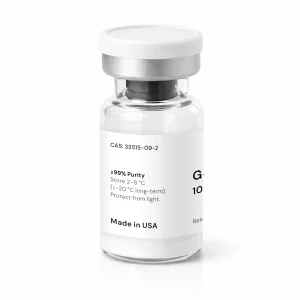
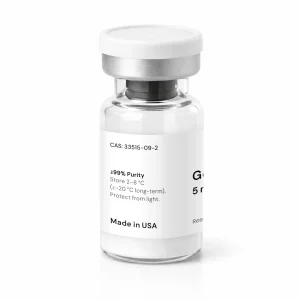
Gonadorelin
Showing all 2 results
-
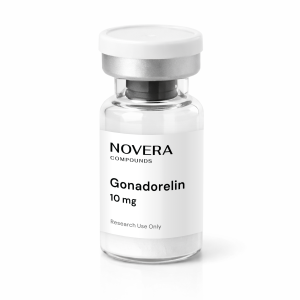

Gonadorelin 10mg
$ 55.00 Read More-+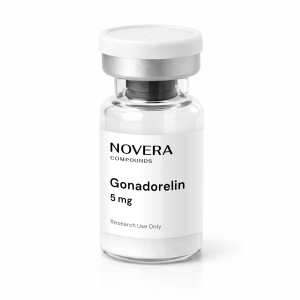
Gonadorelin 5mg
Read MoreGonadorelin is a synthetic gonadotropin-releasing hormone (GnRH) analogue that stimulates pulsatile luteinizing hormone (LH) and follicle-stimulating hormone (FSH) release, making it a recognized research tool in testosterone support and fertility-preservation protocols. Urologists, endocrinologists, men’s health clinicians, and TRT specialists evaluating its role as a hormonal peptide adjunct will find purity documentation, storage guidance, and sourcing support through the Direct Doctor Supply support team. The clinical guide below reviews its mechanism, dosing considerations, regulatory status, and comparator peptides relevant to sexual health research.
How Gonadorelin Works, Pulsatile GnRH Mechanism & HPG Axis
Gonadorelin is a synthetic GnRH analogue structurally identical to endogenous gonadotropin-releasing hormone. [1] It supplements or replaces the hypothalamic GnRH signal when the HPG axis is suppressed, acting on anterior pituitary gonadotrophs to stimulate pulsatile LH and FSH release. [1] LH then activates Leydig cells to produce testosterone, while FSH stimulates Sertoli cells to support spermatogenesis. In research and clinical discussions, it is most commonly evaluated as a TRT adjunct for preserving HPG axis function, maintaining testicular volume, and supporting fertility-related processes in men receiving exogenous testosterone.
In men on testosterone replacement therapy, exogenous testosterone suppresses HPG axis activity through negative feedback, reducing endogenous LH and FSH output and leading to testicular atrophy and impaired spermatogenesis. Gonadorelin acts upstream at the pituitary level, rather than directly at androgen receptors, and based on established endocrine physiology and practitioner-reported experience, may restore pulsatile GnRH signaling to counteract this suppression.
Pulsatile dosing is mechanistically critical. Short-term pulsatile administration stimulates gonadotropin release, whereas continuous or prolonged administration suppresses it via hypophyseal receptor downregulation, paradoxically reducing LH and FSH output and suppressing testosterone—the opposite of the intended effect. [2] This distinction must be clearly understood before evaluating any TRT adjunct protocol involving Gonadorelin.
Gonadorelin for Testosterone: TRT Adjunct Protocol & HCG Comparison
Gonadorelin does not directly replace testosterone. It stimulates pulsatile LH release from the pituitary, which in turn activates Leydig cell testosterone synthesis — an indirect mechanism grounded in established endocrine physiology, though clinical application in TRT settings remains largely practitioner-reported.
Men on TRT require exogenous testosterone to maintain androgen levels. Gonadorelin preserves the HPG axis signaling that exogenous testosterone suppresses, with the clinical goals of preventing testicular atrophy and supporting spermatogenesis. Both androgen replacement and HPG axis support address the dual objective of maintaining therapeutic testosterone levels while minimizing gonadal shutdown.
Gonadorelin vs Human Chorionic Gonadotropin (HCG)
These two agents intervene at different points in the HPG axis:
- Gonadorelin: Acts at the pituitary (upstream), restoring both LH and FSH signaling. It stimulates the full gonadotropin response, which is mechanistically relevant for fertility-focused protocols where spermatogenesis preservation is a clinical consideration.
- HCG: Mimics LH directly at the testes (downstream), bypassing the pituitary. It provides testicular stimulation and testosterone support but does not restore FSH.
For practitioners evaluating pulsatile HPG axis support during TRT, the distinction in HPG axis intervention point and FSH engagement is the key clinical differentiator.
Gonadorelin Dosage for Men & Storage Requirements
Practitioner-reported protocols for Gonadorelin dosage in men commonly reference 100-200 mcg administered subcutaneously two to three times weekly, typically on non-testosterone injection days to mimic natural pulsatile GnRH release. No FDA-validated TRT adjunct regimen currently exists; dose optimization requires individualized assessment based on baseline hormone levels and clinical response.
Appropriate inter-dose spacing is mechanistically relevant: pulsatile stimulation of the HPG axis depends on adequate intervals between administrations to maintain receptor sensitivity. Continuous or inappropriately spaced dosing risks hypophyseal receptor downregulation and paradoxical testosterone suppression. [2]
Storage Requirements
- Reconstitute with bacteriostatic water
- Store at 2-8°C post-reconstitution; protect from light
- Do not freeze; freezing disrupts peptide structure
- Discard unused portions within the recommended window per compounding pharmacy guidelines (typically 14-30 days)
Practitioners considering where to purchase Gonadorelin for research purposes should review available certificates of analysis, batch-specific purity documentation, and post-reconstitution stability data. These details are standard quality indicators when evaluating research-grade peptide suppliers. Those looking to buy Gonadorelin online or explore wholesale purchasing options are encouraged to contact the Direct Doctor Supply support team for sourcing guidance and documentation.
Gonadorelin Side Effects & Legal Status
Available data on Gonadorelin side effects at practitioner-reported doses suggest it is generally well tolerated. Adverse events are typically limited to:
- Mild injection-site reactions (localized redness or swelling)
- Transient hormonal fluctuations, including LH and FSH surges
Long-term safety data for TRT adjuncts remain limited, and this gap should be acknowledged in any clinical evaluation. The critical safety consideration is continuous (non-pulsatile) dosing, which leads to receptor downregulation and, paradoxically, suppresses testosterone. Pulsatile protocol adherence is essential; inappropriate inter-dose intervals produce counterproductive results.
Current Regulatory Status
- United States: Gonadorelin Acetate is not an FDA-approved drug product currently marketed in the U.S., as historical branded versions (such as Factrel) have been discontinued by their manufacturers. However, because it possesses a history of FDA approval and is not on the FDA’s list of substances withdrawn for safety or efficacy reasons, it remains permissible for individual patient compounding by licensed 503A compounding pharmacies with a valid prescription.
- Australia: Listed as a Schedule 4 (Prescription Only Medicine) substance under the Therapeutic Goods Administration (TGA) Poisons Standard. It requires a valid prescription from a registered Australian medical practitioner.
- WADA: Gonadotropin-releasing hormone (GnRH) and its analogues are classified under Section S2 of the WADA Prohibited List. They are banned at all times (both in-competition and out-of-competition) for all athletes subject to anti-doping protocols.
Gonadorelin vs Kisspeptin & Oxytocin
versus Kisspeptin
Kisspeptin and Gonadorelin target different intervention points in the HPG axis. Kisspeptin acts at the hypothalamic level, stimulating endogenous GnRH release and preserving the full hypothalamic-pituitary cascade. Gonadorelin acts one step downstream, directly replacing the GnRH signal at the pituitary without engaging hypothalamic GnRH pulse generation. In TRT contexts where hypothalamic output is profoundly suppressed, Gonadorelin provides more direct pituitary stimulation. Kisspeptin may be preferred where upstream hypothalamic modulation is the clinical objective, though current TRT evidence for Kisspeptin remains primarily preclinical. For practitioners evaluating pulsatile HPG axis support during TRT, gonadorelin is the more established option.
versus Oxytocin
Gonadorelin and Oxytocin address distinct clinical problems within the sexual health peptide category. Gonadorelin provides direct HPG axis hormonal support by stimulating LH and FSH, thereby promoting testosterone production and spermatogenesis. Oxytocin functions as a neuropeptide influencing social bonding, stress modulation, and aspects of sexual function, with no HPG axis engagement or testosterone support. A practitioner evaluating a patient requiring testicular preservation and testosterone support during TRT would consider Gonadorelin; one working with anxiety-related or relational sexual health presentations may find Oxytocin more relevant. They are distinct tools within the same broader category.
How Can Practitioners Source or Buy Gonadorelin for Research?
Research-grade Gonadorelin is available only to qualified, licensed medical professionals. When evaluating suppliers, practitioners should verify:
- Certificates of analysis (CoA) with batch-specific purity data
- LOT number traceability
- Third-party testing documentation
- Post-reconstitution stability information and storage recommendations
Direct Doctor Supply provides sourcing guidance and documentation support to help practitioners identify verified research-grade suppliers. Those seeking information on how to order Gonadorelin through reputable channels or looking to buy Gonadorelin wholesale are encouraged to contact the Direct Doctor Supply support team for sourcing guidance.
FAQs
1. What is Gonadorelin used for?
Gonadorelin is a synthetic GnRH analogue used in endocrine research and clinical discussions involving HPG axis support, testosterone regulation, and fertility preservation. In TRT contexts, practitioner-reported use focuses on maintaining pulsatile LH and FSH signaling during exogenous testosterone administration to preserve testicular function and spermatogenesis.
2. Does Gonadorelin increase testosterone, and how does it work?
Gonadorelin indirectly supports testosterone production by stimulating pulsatile LH release from the pituitary, which activates Leydig cells in the testes. This mechanism is grounded in established endocrine physiology, though clinical application in TRT settings remains largely practitioner-reported. Pulsatile dosing is essential; continuous administration leads to receptor downregulation and, paradoxically, suppresses testosterone.
3. What is the Gonadorelin dosage for men, and does it need to be refrigerated?
Practitioner-reported protocols commonly reference 100-200 mcg administered subcutaneously two to three times weekly, typically on non-testosterone injection days. After reconstitution, Gonadorelin requires refrigeration at 2-8°C, protection from light, and should not be frozen. No FDA-validated TRT adjunct protocol currently exists; dosing requires individualized clinical assessment.
4. How does Gonadorelin differ from HCG as a TRT adjunct?
Gonadorelin acts at the pituitary to stimulate both LH and FSH, preserving the full gonadotropin response. HCG mimics LH directly at the testes, bypassing the pituitary and providing no FSH support. This difference in the HPG axis intervention point is clinically significant for fertility-focused TRT patients, in whom preservation of spermatogenesis is a priority.
5. What are the Gonadorelin side effects, and is it legal?
At practitioner-reported doses, Gonadorelin is generally well tolerated, with adverse events typically limited to mild injection-site reactions and transient hormonal fluctuations. Continuous (non-pulsatile) dosing poses a strict risk of receptor downregulation and testosterone suppression. Regulatory status varies by region: In the U.S., Gonadorelin can be legally prepared by licensed 503A compounding pharmacies with a valid, patient-specific prescription, given its historical FDA-approved status. In Australia, it is a Schedule 4 prescription-only medication under the TGA Poisons Standard. Under WADA S2 rules, it is prohibited at all times (both in- and out-of-competition) for all competitive athletes.
Sources
- Schally AV, Arimura A, Kastin AJ, et al. Gonadotropin-releasing hormone: one polypeptide regulates secretion of luteinizing and follicle-stimulating hormones. Science. 1971;173(4001):1036-1038. doi:10.1126/science.173.4001.1036
- Gonadorelin and analogues. In: Aronson JK, ed. Meyler’s Side Effects of Drugs: The International Encyclopedia of Adverse Drug Reactions and Interactions. 16th ed. Elsevier; 2016:584-591. doi:10.1016/B978-0-444-53717-1.00819-2.
- Gonadorelin acetate. U.S. Food and Drug Administration. Search Orphan Drug Designations and Approvals. Available at: https://www.accessdata.fda.gov/scripts/opdlisting/oopd/detailedIndex.cfm?cfgridkey=17086
- World Anti-Doping Agency. International Standard Prohibited List. 2026. WADA; 2025. https://www.wada-ama.org/sites/default/files/2025-09/2026list_en_final_clean_september_2025.pdf
For licensed medical professionals only. This content is for informational purposes only and does not constitute medical advice.
Content prepared by Direct Doctor Supply’s editorial team.
Sourcing and accuracy for this page follow our Editorial Policy: claims are cross-checked against clinical literature, regulatory filings, and manufacturer specifications before anything is published.