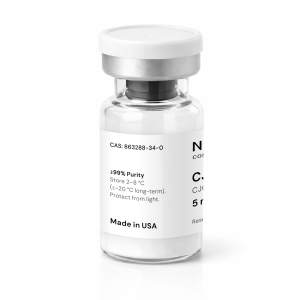
CJC-1295
Showing all 5 results
-
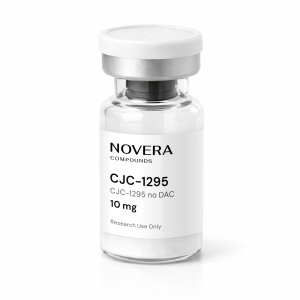

CJC-1295 – No DAC 10mg
$ 55.00 Read More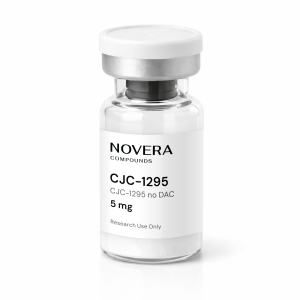
CJC-1295 – No DAC 5mg
Read More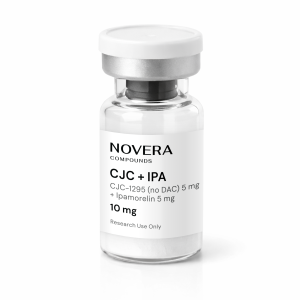
CJC-1295 – No DAC 5mg + IPA 5mg
$ 65.00 Read More-+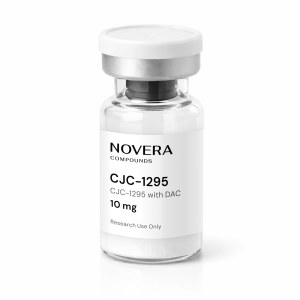
CJC-1295 – With DAC 10mg
$ 75.00 Read More-+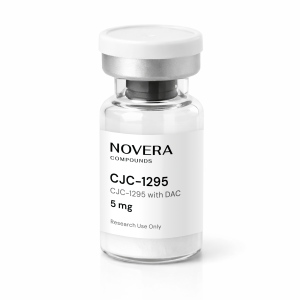
CJC-1295 – With DAC 5mg
Read MoreCJC-1295 is a synthetic growth hormone-releasing hormone (GHRH) analog developed with Drug Affinity Complex (DAC) technology that extends its half-life to approximately 6 to 8 days, enabling once-weekly dosing for sustained GH pulse elevation. The compound is of interest to sports medicine physicians, anti-aging clinicians, and compounding pharmacists evaluating GH axis research and body composition discussions, most commonly in combination with Ipamorelin. Practitioners seeking sourcing guidance and documentation support may contact the Direct Doctor Supply support team. Check out the clinical overview covering mechanism, dosing, safety, and comparisons on the CJC-1295 peptide below.
What Is CJC-1295? DAC Mechanism & Duration of Action
CJC-1295 is a long-acting synthetic GHRH analog that uses DAC technology to bind albumin in plasma, extending its half-life to approximately 6 to 8 days and enabling once-weekly subcutaneous dosing for sustained growth hormone release [1]. Categorized as a muscle growth and performance peptide, it is most commonly evaluated in GH axis research and performance protocols, frequently alongside Ipamorelin.
Key characteristics include:
- Synthetic GHRH analog activity: CJC-1295 mimics endogenous GHRH by binding to GHRH receptors on anterior pituitary somatotrophs, stimulating pulsatile GH release and downstream IGF-1 production. Pulsatile GH secretion is preserved despite continuous stimulation [2].
- Extended duration of action: DAC technology utilizes a C-terminal maleimide reactive group (attached to an added lysine residue) that forms a stable, covalent bond with the free thiol group on the Cysteine-34 (Cys34) residue of circulating serum albumin. This bioconjugation creates a long-lived depot effect, protecting the peptide from rapid renal filtration and proteolysis. The result is an estimated terminal half-life of approximately 6 to 8 days, compared with the rapidly cleared, short-acting profiles of Sermorelin and Tesamorelin [1][2].
- Once-weekly subcutaneous dosing: Stable plasma levels are typically reached within 2 to 3 weeks of initiating weekly administration, a practical advantage for practitioners and patients in long-duration research protocols [1].
- Distinction from CJC-1295 without DAC: CJC-1295 with DAC should not be confused with Modified GRF 1-29 (CJC-1295 without DAC), which has a half-life of approximately 30 minutes, requires more frequent dosing, and produces a different GH release pattern.
CJC-1295 is not FDA-approved for any human indication. CJC-1295 free base and its DAC-containing forms were proposed for exclusion from the 503A Bulk Drug Substances List, a position supported by the Pharmacy Compounding Advisory Committee (PCAC). Based on these cited FDA materials, the compound has not been established as eligible for routine compounding by licensed U.S. pharmacies and is positioned as a non-approved research compound in this draft [3].
CJC-1295 + Ipamorelin: Combination Protocol & Mechanism
CJC-1295 with Ipamorelin is the most commonly evaluated pairing in GH axis and performance-focused protocols. The combination is discussed because both compounds stimulate endogenous GH release through distinct receptor pathways, with mechanistic rationale suggesting additive effects that neither achieves alone.
CJC-1295 acts on GHRH receptors to increase GH pulse amplitude, while Ipamorelin targets the growth hormone secretagogue receptor (GHS-R), also known as the ghrelin receptor, to initiate GH pulse activity [1]. Ipamorelin’s selective receptor profile, with no significant elevation in cortisol or prolactin, is frequently cited as the reason it is the preferred GHS-R partner for CJC-1295 in practitioner-reported protocols.
Practitioner-reported combination dosing involves CJC-1295 at 1 to 2 mg once weekly and Ipamorelin at 100 to 300 mcg two to three times daily or before sleep. This pairing is based entirely on mechanistic rationale and anecdotal practice patterns, not established comparative clinical evidence. Pre-sleep administration is a common practice convention based on the predominantly nocturnal pattern of endogenous GH secretion; however, this timing strategy has not been clinically validated as superior or optimized. No large-scale randomized controlled trial has validated this specific dual-regimen.
CJC 1295 for Muscle Growth, Recovery & Body Composition
Human studies have confirmed that CJC-1295 produces statistically significant, dose-dependent, and sustained elevations in GH and IGF-1 levels [1][2]. These data establish a clear biomarker effect. What they do not establish are clinical outcomes.
Human trials have not demonstrated that CJC-1295 produces fat loss, muscle accretion, improved recovery, or other physical changes as proven therapeutic effects. These outcomes are hypothesized on the basis of the known biology of the GH/IGF-1 axis and must be framed accordingly:
- Fat oxidation: GH-mediated lipolysis in visceral adipose tissue is a theoretical basis for weight loss discussions in body composition protocols, but no controlled human trial has confirmed this outcome with CJC-1295.
- Lean mass and recovery: Elevated IGF-1 is associated with muscle protein synthesis and connective tissue support in the broader GH literature; whether CJC-1295-driven IGF-1 elevation translates to these outcomes in humans remains investigator-reported and unvalidated by controlled trial.
- Sleep quality: Pre-sleep dosing to amplify nocturnal GH pulses is cited as a quality-of-life rationale in anti-aging protocols; this remains a practitioner-reported, not clinically validated, outcome.
All outcome claims should be interpreted strictly within a hypothesized or investigator-reported framework, not as established therapeutic effects.
Is CJC-1295 Safe? Side Effects & Legal Status
Data from initial human trials indicate that CJC-1295 was safe and relatively well tolerated within the small, highly specific study populations evaluated, with no serious adverse events reported [1][2]. However, this limited database does not justify a conclusion of broad or long-term safety for widespread use. The absence of Phase 2 or Phase 3 controlled efficacy and safety trials means the long-term risk profile remains unknown.
Commonly discussed side effects include:
- Water retention and mild edema: Associated with IGF-1-mediated sodium retention; generally described as transient in practitioner literature and initial trial reporting.
- Injection site reactions: Redness, swelling, or mild irritation after subcutaneous administration, consistent with standard peptide injection responses.
- Long-term IGF-1 elevation: Sustained IGF-1 activity may influence cellular growth and proliferation pathways. Potential long-term risks remain cautionary and non-definitive; clinicians should exercise particular care in patients with a personal or family history of hormone-sensitive conditions.
Current Regulatory Status
- FDA: CJC-1295 is not FDA-approved for any human indication. CJC-1295 free base and its DAC-containing forms were proposed for exclusion from the 503A Bulk Drug Substances List, a position supported by the PCAC. The compound has not been established as eligible for routine compounding by licensed U.S. pharmacies and is positioned as a non-approved research compound in this draft [3].
- WADA: CJC-1295 falls directly under WADA’s prohibited-peptide framework and is banned in sport under the current Prohibited List [4]. Competitive athletes should treat this compound as strictly prohibited and verify the current Prohibited List before any contact with the substance.
Regulatory status may vary by jurisdiction. Professionals evaluating sourcing options when buying online should prioritize vendors with verifiable analytical testing, sterility documentation, and supply chain transparency.
CJC-1295 vs Sermorelin, Tesamorelin & Ipamorelin
CJC-1295 is frequently compared with other GHRH analogs and GH secretagogues because differences in half-life, receptor class, dosing frequency, and regulatory status directly influence protocol selection.
CJC-1295 vs Sermorelin
Both CJC-1295 and Sermorelin are GHRH analogs targeting the same receptor, but their pharmacokinetic profiles differ substantially. Sermorelin has a short half-life and is typically administered nightly to more closely mimic physiological GH pulsatility, while CJC-1295 provides sustained GH elevation with once-weekly dosing. Practitioners prioritizing dosing convenience tend to favor CJC-1295; those seeking a release pattern closer to endogenous GH cycling may prefer Sermorelin.
CJC-1295 vs Tesamorelin
Both are GHRH analogs, but Tesamorelin is shorter-acting and requires daily dosing compared with CJC-1295’s once-weekly schedule. Tesamorelin is FDA-approved for reducing excess visceral fat in HIV-associated lipodystrophy, making it the only approved GHRH analog in that therapeutic category, while CJC-1295 remains a non-approved research compound. Practitioner preference typically reflects regulatory context, dosing convenience, and whether the clinical objective centers on an approved indication or investigational GH research.
CJC-1295 vs Ipamorelin
CJC-1295 and Ipamorelin target different receptor systems and are not direct alternatives. CJC-1295 acts on GHRH receptors to increase GH pulse amplitude, while Ipamorelin activates GHS-R to initiate GH pulse release [1]. For most practitioners the relevant question is whether combining them may produce additive GH stimulation through complementary pathways. Ipamorelin’s selectivity, with no significant cortisol or prolactin elevation, makes it the preferred GHS-R partner in mechanistic rationale and practitioner convention.
Practitioner selection among these options ultimately depends on dosing frequency preference, regulatory context, desired GH release pattern, and individual research protocol objectives.
How Can Practitioners Source or Buy CJC-1295?
CJC-1295 is available for research purposes to qualified licensed professionals only and is not intended for retail or consumer use. When evaluating suppliers, practitioners should prioritize those offering verifiable purity documentation, certificate of analysis (COA) availability, LOT number traceability, and documented sterility testing. Sourcing from unverified vendors carries meaningful risk to research integrity.
The Direct Doctor Supply support team provides sourcing direction and documentation support for licensed professionals seeking guidance on where to buy CJC-1295 online from verified research-grade suppliers. Practitioners with sourcing or documentation questions are encouraged to contact the Direct Doctor Supply support team directly.
FAQs
1. What is CJC-1295, and what does it do?
CJC-1295 is a long-acting GHRH analog that uses DAC technology to bind albumin, extending its half-life to approximately 6 to 8 days [1]. Human studies confirm that CJC-1295 produces sustained, dose-dependent elevations in GH and IGF-1 levels; these are biomarker effects, not proven clinical outcomes such as fat loss or muscle accretion. It remains a non-approved research compound.
2. What is the difference between CJC-1295 with and without DAC?
CJC-1295 with DAC binds circulating albumin via a covalent bond at the Cys34 residue, extending its half-life to approximately 6 to 8 days and enabling once-weekly dosing [1][2]. CJC-1295 without DAC, also called Modified GRF 1-29, has a half-life of approximately 30 minutes and requires more frequent administration. Both target the same GHRH receptor pathway but differ significantly in GH release pattern and dosing schedule.
3. Why is CJC-1295 combined with Ipamorelin, and does it work?
CJC-1295 and Ipamorelin act through distinct receptor systems, with CJC-1295 increasing GH pulse amplitude via GHRH receptors and Ipamorelin initiating GH pulse activity via GHS-R [1]. The pairing is based on mechanistic rationale and anecdotal practice patterns; no large-scale randomized controlled trial validates this specific dual-regimen. Ipamorelin’s selective receptor profile, with no significant cortisol or prolactin elevation, makes it the preferred partner in practitioner convention.
4. What are the CJC-1295 side effects — is it safe?
Initial human trial data indicate CJC-1295 was well tolerated within small study populations, with no serious adverse events reported [1][2]. Fluid retention, transient edema, and localized injection site reactions are the most commonly discussed side effects. Potential long-term risks associated with sustained IGF-1 elevation remain non-definitive; the limited clinical database does not support a conclusion of broad or long-term safety.
5. Is CJC-1295 legal, and what is its WADA status?
CJC-1295 is not FDA-approved for any human indication. The FDA proposed its exclusion from the 503A Bulk Drug Substances List, a position supported by the PCAC; based on these materials, the compound has not been established as eligible for routine compounding by licensed U.S. pharmacies and is positioned as an unapproved research compound [3]. CJC-1295 falls directly under WADA’s prohibited-peptide framework and is banned in sport under the current Prohibited List [4]. Competitive athletes should treat this compound as strictly prohibited and verify the current Prohibited List before any contact with the substance.
Sources
- Teichman SL, Neale A, Lawrence B, Gagnon C, Castaigne JP, Frohman LA. Prolonged stimulation of growth hormone (GH) and insulin-like growth factor I secretion by CJC-1295, a long-acting analog of GH-releasing hormone, in healthy adults. J Clin Endocrinol Metab. 2006;91(3):799-805. doi:10.1210/jc.2005-1536
- Jetté L, Léger R, Thibaudeau K, et al. Human growth hormone-releasing factor (hGRF)1-29-albumin bioconjugates activate the GRF receptor on the anterior pituitary in rats: identification of CJC-1295 as a long-lasting GRF analog. Endocrinology. 2005;146(7):3052-3058. doi:10.1210/en.2004-1286
- Pharmacy Compounding Advisory Committee Meeting Materials — CJC-1295. U.S. Food and Drug Administration. December 4, 2024. https://www.fda.gov/media/183583/download
- The Prohibited List. World Anti-Doping Agency. 2026. https://www.wada-ama.org/en/prohibited-list
- Sackmann-Sala L, Ding J, Frohman LA, Kopchick JJ. Activation of the GH/IGF-1 axis by CJC-1295, a long-acting GHRH analog, results in serum protein profile changes in normal adult subjects. Growth Horm IGF Res. 2009;19(6):471-477. doi:10.1016/j.ghir.2009.03.001
For licensed medical professionals only. This content is for informational purposes only and does not constitute medical advice.
Content prepared by Direct Doctor Supply’s editorial team.
Sourcing and accuracy for this page follow our Editorial Policy: claims are cross-checked against clinical literature, regulatory filings, and manufacturer specifications before anything is published.