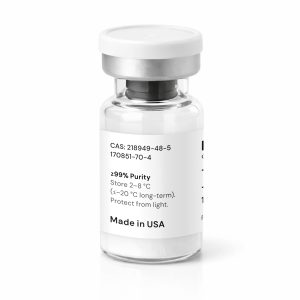
Ipamorelin
Showing all 5 results
-
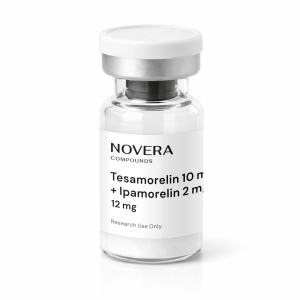

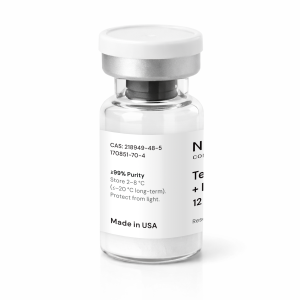
2X Blend: Tesamorelin 10mg + Ipamorelin 2mg
$ 95.00 Read More-+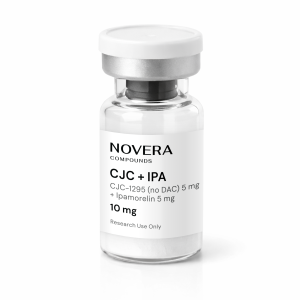
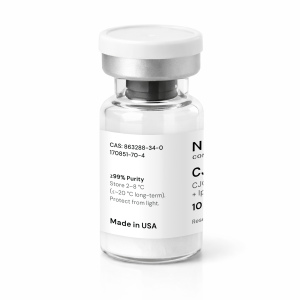
CJC-1295 – No DAC 5mg + IPA 5mg
$ 65.00 Read More-+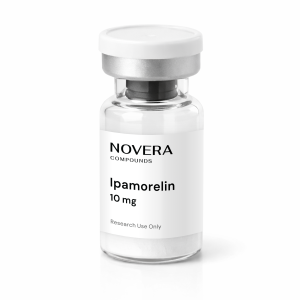
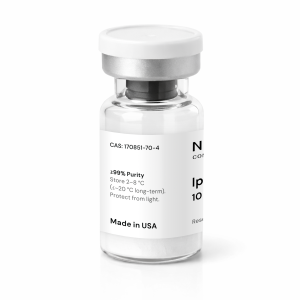
Ipamorelin 10mg
$ 55.00 Read More-+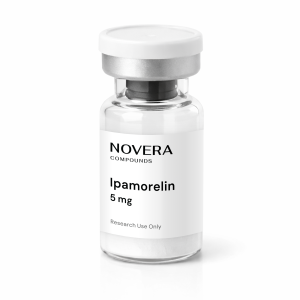
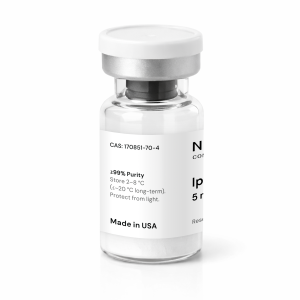
Ipamorelin 5mg
Read More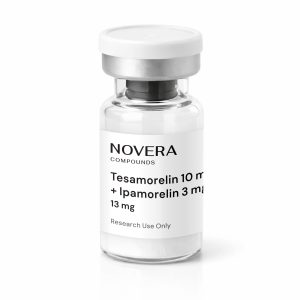
Tesamorelin 10mg + Ipamorelin 3mg
$ 99.00 Read More-+Ipamorelin is a selective GHS-R agonist pentapeptide that stimulates pulsatile growth hormone release without meaningful increases in cortisol or prolactin in available studies, a selectivity profile that distinguishes it from earlier GHRPs and makes it a commonly discussed partner in GH optimization and body composition research. [1] Sports medicine physicians, anti-aging clinicians, and body composition practitioners evaluating GH secretagogue protocols will find purity documentation, storage guidance, and sourcing support through the Direct Doctor Supply support team. The clinical guide below reviews its mechanism, applications, safety profile, and combination strategies.
What Does Ipamorelin Do? Selective GH Release & No Cortisol or Prolactin
Ipamorelin is a selective pentapeptide GHS-R agonist that stimulates pulsatile growth hormone release. In preclinical and early human studies, it has not produced meaningful elevations in cortisol or prolactin, which distinguishes it from earlier growth hormone-releasing peptides and supports its use in longer-term research protocols. [1] It is most commonly evaluated in combination with CJC-1295, as the two compounds target complementary receptor pathways to support natural growth hormone production while preserving physiological pulsatility. [2]
Ipamorelin works by binding to GHS-R receptors on pituitary somatotroph cells, initiating pulsatile GH release. This then subsequently stimulates downstream IGF-1 production. [1] [2] Unlike exogenous GH administration, Ipamorelin amplifies endogenous GH secretion rather than replacing it, maintaining the body’s normal pulsatile signaling architecture. Early human data and practitioner-reported experience have linked this mechanism to potential downstream effects on body composition, lean muscle, and recovery, though evidence for hard clinical outcomes in healthy adults remains mixed and limited, and these associations should not be interpreted as established effects.
Earlier GHRPs, including GHRP-2 and GHRP-6, have been associated with activity across additional endocrine pathways involving ACTH, cortisol, and prolactin. In available preclinical and early human research, Ipamorelin did not produce meaningful increases in these pathways, supporting its evaluation in protocols where endocrine selectivity is a research priority. [1] Large-scale randomized controlled trials are lacking, and long-term safety conclusions remain limited.
Unlike GHRP-6, which exhibits substantially greater ghrelin-like activity, Ipamorelin does not appear to significantly stimulate appetite in available study data. [1] [5] This distinction is clinically relevant in body composition and weight management research contexts where appetite management is a consideration.
Ipamorelin CJC-1295 Stack: Mechanism & Combination Protocol
The Ipamorelin and CJC-1295 combination is one of the most frequently discussed GH optimization strategies in sports medicine and anti-aging research. The two peptides are not competing alternatives; they activate distinct receptor systems through complementary pathways. Ipamorelin acts as a selective GHS-R agonist, initiating GH pulse release without meaningful interference from cortisol or prolactin in available studies. [1] CJC-1295 targets the GHRH receptor, enhancing the amplitude and duration of those pulses in human subjects. [3] Because they engage distinct regulatory mechanisms, some practitioners view the combination as providing broader stimulation of the GH axis than either compound alone, though direct human evidence comparing the combination with monotherapy remains limited. [2]
The selectivity profile of Ipamorelin is a key reason it is commonly discussed as a partner in this stack over older GHRPs. The absence of meaningful effects on cortisol, prolactin, or appetite in available studies allows protocols to be structured without the endocrine interference associated with less selective compounds.
Practitioner-reported Combination Dosing
No FDA-approved dosing protocol exists for this combination. The following are anecdotal and practitioner-reported references, not evidence-based clinical guidance, and require individualized assessment:
- Ipamorelin: 100-300 mcg administered subcutaneously two to three times daily
- Pre-sleep administration: used by some practitioners based on the biological plausibility of aligning with the nocturnal GH peak, though this rationale is protocol-based rather than established by controlled human data
- CJC-1295 (DAC form): commonly referenced as once-weekly due to its prolonged activity [3]
- Timing: independent administration is typically noted, as the compounds act through distinct receptor pathways
Ipamorelin Benefits: Lean Muscle Mass, Weight Loss & Recovery
The potential benefits of Ipamorelin are hypothesized to arise from downstream GH and IGF-1 activity rather than from direct peptide effects on muscle or fat tissue. Evidence strength varies considerably by indication, and most body composition claims in healthy adults rest on mechanistic reasoning and practitioner-reported experience rather than robust controlled human trials.
- Lean muscle mass: Ipamorelin does not directly stimulate muscle protein synthesis. Any potential effects on lean muscle mass are hypothesized to occur through GH-mediated increases in IGF-1 production, which has been associated with protein synthesis and satellite cell activation in the broader GH/IGF-1 literature. Direct human evidence for lean muscle outcomes from Ipamorelin specifically is limited.
- Body weight and fat metabolism: GH has a recognized role in lipolysis and energy metabolism, and some practitioners incorporate Ipamorelin into protocols targeting body weight and fat reduction on this basis. [2] Human evidence for clinically meaningful fat-loss outcomes from Ipamorelin specifically is limited and should not be overstated.
- Recovery and sleep quality: GH secretion naturally peaks during sleep. Some practitioners administer Ipamorelin before sleep based on the biological plausibility of amplifying this nocturnal pulse. Practitioner-reported observations include reduced perceived recovery time and improved training readiness, though these remain anecdotal and have not been validated by large controlled human studies.
Ipamorelin Side Effects, Safety & Legal Status
Compared with other compounds in the GH secretagogue class, the reported side-effect profile of Ipamorelin is relatively limited in the available studies. Commonly discussed adverse events include mild injection-site redness, swelling, and temporary irritation following subcutaneous administration; these are consistent with peptide injections in general rather than with the specific properties of Ipamorelin.
Some practitioners report transient water retention during protocols associated with elevated IGF-1 levels, which appears to be related to downstream GH signaling rather than direct peptide toxicity and is typically described as mild and temporary.
In preclinical and early human studies, Ipamorelin did not produce meaningful elevations in cortisol or prolactin, representing the most clinically significant safety differentiator relative to earlier GHRPs. [1] No long-term randomized controlled trials have established definitive safety outcomes, and significant evidence gaps remain for extended use in humans.
Legal and Regulatory Status (current as of 2026)
- United States: Ipamorelin is not FDA-approved for therapeutic use and is not currently included on the FDA 503A Bulk Drug Substances List. In the US context, it is treated as a research compound. Verify current regulatory guidance before considering any protocol, as compounding lists are subject to change.
- Australia: Ipamorelin does not have general TGA approval for therapeutic use. Confirm current status using current government resources before use.
- WADA: Growth hormone secretagogues are listed as prohibited substances in-competition under the S2 category of the 2026 WADA Prohibited List. [4] Athletes must independently verify the current anti-doping rules before participating in any protocol involving GH secretagogues.
Ipamorelin vs CJC-1295 & Sermorelin
Available research suggests that Ipamorelin has a relatively selective safety profile among GH secretagogues, although regulatory limitations and long-term evidence gaps remain important considerations.
Ipamorelin vs CJC-1295
The comparison between Ipamorelin and CJC-1295 is best understood as a partnership question rather than an either/or choice. Ipamorelin stimulates GH pulse initiation via GHS-R activation, while CJC-1295 enhances pulse amplitude and duration via GHRH receptor activation; because the receptor pathways are complementary, practitioners frequently discuss combining the two rather than selecting one. [2] [3] Ipamorelin monotherapy may be more appropriate when a practitioner prefers shorter, more physiological GH elevations without the prolonged depot effect associated with DAC-containing CJC-1295 formulations; the combination is more relevant when broader pathway engagement is the research objective.
Ipamorelin vs Sermorelin
The Ipamorelin vs. Sermorelin comparison centers on receptor class and selectivity. Ipamorelin acts as a GHS-R agonist, while Sermorelin is a GHRH analog; both stimulate endogenous GH release through distinct receptor systems with different selectivity profiles. [2] Sermorelin may be preferred by practitioners who favor a GHRH-analogue-first approach and value its historical regulatory context. Ipamorelin may be considered when endocrine selectivity is a research priority, given available data suggesting minimal cortisol, prolactin, and appetite effects. Practitioner choice depends on receptor targeting preference, protocol objectives, and whether stack compatibility with a GHS-R agonist is a consideration.
How Can Practitioners Source or Buy Ipamorelin for Research?
Research-grade Ipamorelin is available only to qualified, licensed medical professionals. When evaluating suppliers, practitioners should confirm:
- Certificates of analysis (CoA) with batch-specific purity data
- LOT number traceability
- Independent third-party purity verification
- Storage stability documentation and cold-chain handling records
Direct Doctor Supply provides sourcing guidance and documentation support to help licensed practitioners identify verified research-grade suppliers. Those looking to buy Ipamorelin online or to check wholesale buying options are encouraged to contact the Direct Doctor Supply support team for sourcing guidance. Practitioners who need to buy Ipamorelin wholesale can reach the support team directly. When buying online, reviewing CoA documentation and supplier traceability records is standard due diligence.
FAQs — Ipamorelin Peptide
1. What is Ipamorelin used for?
Ipamorelin is a selective GHS-R agonist pentapeptide researched for GH optimization, body composition support, recovery, and lean muscle mass protocols. It stimulates pulsatile GH release, leading to downstream IGF-1 production, and is most commonly discussed in combination with CJC-1295. Ipamorelin is not FDA-approved for therapeutic use and is treated as a research compound in the US context.
2. What does Ipamorelin do — does it raise cortisol or prolactin?
Ipamorelin binds to GHS-R receptors on pituitary somatotroph cells, stimulating pulsatile GH release. In preclinical and early human studies, it did not produce meaningful increases in ACTH, cortisol, or prolactin, which distinguishes it from older secretagogues such as GHRP-2 and GHRP-6. [1] Natural GH production is amplified rather than replaced.
3. Does Ipamorelin increase appetite?
Available study data suggest Ipamorelin does not significantly increase appetite. Unlike GHRP-6, it does not appear to strongly activate ghrelin-mediated hunger pathways, which is cited as an advantage in body composition and weight management research protocols. [1] [5]
4. What is the Ipamorelin dosage — and how does it combine with CJC-1295?
Practitioner-reported protocols commonly reference 100-300 mcg administered subcutaneously two to three times daily or before sleep; these are anecdotal references, not evidence-based clinical guidance, and require individualized assessment. When discussed in combination with CJC-1295, the compounds are typically administered independently as they target separate receptor systems. No FDA-validated dosing protocol exists.
5. What are the Ipamorelin side effects — is it legal?
Reported side effects primarily include mild injection-site irritation and transient water retention. In the available research, no meaningful elevations in cortisol or prolactin were observed compared with older secretagogues. [1] Ipamorelin is not FDA-approved for therapeutic use, is not currently on the FDA 503A compounding list, does not have general TGA approval, and is prohibited in-competition under WADA S2 regulations. [4] Regulatory status should be independently verified, as policies are subject to change.
Sources
- Raun K, Hansen BS, Johansen NL, et al. Ipamorelin, the first selective growth hormone secretagogue. Eur J Endocrinol. 1998;139(5):552-561. doi:10.1530/eje.0.1390552
- Ishida J, Saitoh M, Ebner N, Springer J, Anker SD, Von Haehling S. Growth hormone secretagogues: history, mechanism of action, and clinical development. J Clin Endocrinol Metab. 2020;3(1):25-37. doi:10.1002/rco2.9
- Ionescu M, Frohman LA. Pulsatile secretion of growth hormone (GH) persists during continuous stimulation by CJC-1295, a long-acting GH-releasing hormone analog. J Clin Endocrinol Metab. 2006;91(12):4792-4797. doi:10.1210/jc.2006-1702
- World Anti-Doping Agency. 2026 Prohibited List. https://www.wada-ama.org/en/prohibited-list
- Venkova K, Mann W, Nelson R, Greenwood-Van Meerveld B. Efficacy of ipamorelin, a novel ghrelin mimetic, in a rodent model of postoperative ileus. J Pharmacol Exp Ther. 2009;329(3):1110-1116. doi:10.1124/jpet.108.149211
For licensed medical professionals only. This content is for informational purposes only and does not constitute medical advice.
Content prepared by Direct Doctor Supply’s editorial team.
Sourcing and accuracy for this page follow our Editorial Policy: claims are cross-checked against clinical literature, regulatory filings, and manufacturer specifications before anything is published.