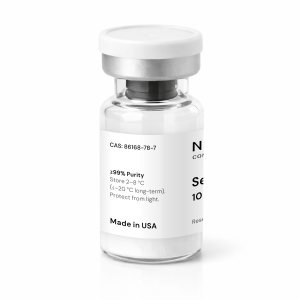
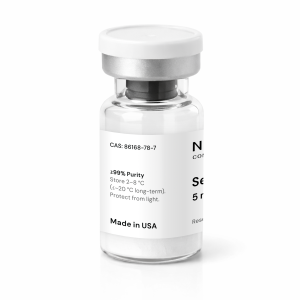
Sermorelin
Showing all 2 results
-
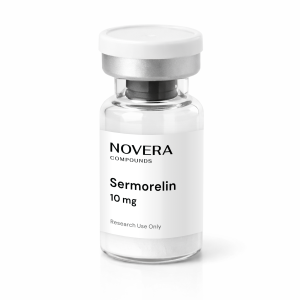

Sermorelin 10mg
$ 55.00 Read More-+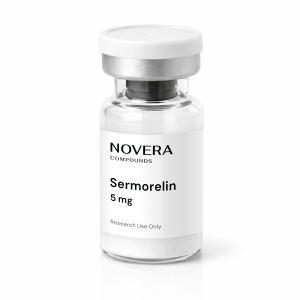
Sermorelin 5mg
Read MoreSermorelin is a synthetic growth hormone-releasing hormone (GHRH) analogue composed of the first 29 amino acids of endogenous GHRH, studied for its ability to stimulate natural pituitary growth hormone pulsatility in anti-aging, endocrinology, and sports medicine settings. Anti-aging clinicians, sports medicine physicians, endocrinologists, and compounding pharmacists will find a structured clinical reference covering Sermorelin’s mechanism, evidence base, dosing, safety profile, and comparisons with related GHRH analogues in the guide below. Practitioners seeking sourcing guidance or documentation support for Sermorelin may contact the Direct Doctor Supply support team.
What Is Sermorelin & What Does It Do? Benefits & Before and After
Sermorelin is a synthetic GHRH analogue composed of the first 29 amino acids of endogenous GHRH, which stimulates the pituitary gland to increase natural growth hormone pulsatility rather than supplying exogenous human growth hormone [1]. It is commonly discussed in relation to adult-onset growth hormone deficiency, body composition support, weight loss, and muscle growth and performance protocols.
Its primary function is to stimulate the pituitary gland to produce growth hormone in a pulsatile, physiological manner while preserving the body’s natural feedback mechanisms [1]. Historically studied for pediatric growth hormone deficiency, it has since attracted attention among adults seeking growth hormone optimization [1].
Practitioners commonly discuss Sermorelin in relation to:
- Adult-onset growth hormone deficiency
- Body composition management
- Muscle growth and performance
- Recovery support
- Age-related declines in natural growth hormone production
Unlike direct administration of human growth hormone, Sermorelin stimulates the pituitary to release growth hormone endogenously. This distinction is one of the peptide’s most important clinical characteristics and is relevant to practitioners who prefer approaches that work within existing physiological pathways [2].
Evidence from controlled human studies indicates that Sermorelin can increase both growth hormone (GH) and insulin-like growth factor-1 (IGF-1) concentrations [1]. GHRH analogues stimulate endogenous GH secretion by activating pituitary somatotroph cells, and GH and IGF-1 elevation is supported by human clinical data [1], [2].
Improvements in body composition, recovery, and metabolic outcomes have generally been reported in smaller studies and practitioner-reported settings, and results should be interpreted with appropriate caution and individualized to patient characteristics [1].
Sermorelin Before and After: What Changes Can Be Expected?
Growth hormone-mediated changes typically occur gradually. Practitioner-reported observations and early human data suggest that improvements in body composition may become noticeable after approximately three to six months of consistent use [1]. Potential changes reported in these settings include:
- Increased lean body mass
- Reduced body fat percentage
- Improved exercise recovery
- Enhanced sleep quality
- Better overall physical performance
These effects are attributed to increased GH secretion and downstream IGF-1 activity [1], [2]. Outcomes vary significantly based on age, baseline endocrine function, nutrition, exercise habits, and overall health status, and should not be presented as guaranteed individual results.
Sermorelin Benefits
Several potential benefits of Sermorelin have been reported, with the strength of evidence varying by outcome:
- Growth hormone production support: Human clinical evidence indicates Sermorelin stimulates the pituitary gland’s production of growth hormone [1].
- Body composition and weight loss: Early human data and practitioner-reported experiences suggest that increased GH activity may contribute to favorable changes in body composition and support weight-loss efforts when combined with appropriate lifestyle interventions [1].
- Lean muscle growth: GH and IGF-1 are involved in protein synthesis and tissue repair; some practitioners use Sermorelin in protocols intended to support lean muscle growth and performance, though supporting evidence remains limited outside of GH stimulation data [1], [2].
- Sleep quality: Practitioner-reported data frequently cite improved sleep quality, potentially related to the relationship between GH secretion and sleep architecture [2].
- Recovery support: Enhanced tissue repair and exercise recovery are commonly discussed applications, though available evidence is less robust than data supporting GH stimulation itself [1].
Human growth hormone products supply GH directly to the body. Sermorelin, by contrast, stimulates endogenous GH production by activating GHRH receptors on pituitary somatotrophs [2]. Because Sermorelin relies on an intact pituitary response, it preserves physiological regulatory pathways and natural feedback systems [2]. This distinction explains why many clinicians view Sermorelin as a more physiologically aligned approach to supporting natural growth hormone production.
How Sermorelin Works: GHRH Mechanism & Natural GH Stimulation
Sermorelin functions by binding to GHRH receptors on anterior pituitary somatotroph cells, triggering growth hormone synthesis and release [1], [2]. Growth hormone subsequently promotes hepatic production of IGF-1, which mediates many of the downstream anabolic and metabolic effects associated with GH physiology.
The mechanism follows this sequence:
Sermorelin → GHRH receptor activation → Pulsatile GH release → Increased IGF-1 production
This pathway mirrors natural endocrine signaling more closely than direct GH administration [2].
A defining characteristic of Sermorelin is its relatively short half-life, typically reported as approximately 10–20 minutes [1]. Many practitioners consider this a beneficial feature because it preserves the natural pulsatility of growth hormone release. Somatostatin feedback also remains intact, allowing the endocrine system to maintain normal regulatory functions and limiting the risk of excessive GH secretion [2].
For professionals evaluating research-grade peptides, purity standards are especially important when assessing compounds that interact directly with endocrine pathways. When buying online, verification of manufacturing quality, storage conditions, and batch consistency should remain central considerations.
Sermorelin Dosage: Injections & Tablets
No active FDA-approved dosing protocol for Sermorelin currently exists [5]. All dosage information should be understood as practitioner-reported guidance and research-use reference rather than validated clinical recommendation.
- Sermorelin Injections: The primary route of administration discussed in clinical and research settings. Commonly referenced dosing ranges from 200 mcg to 500 mcg administered subcutaneously once daily, typically in the evening to coincide with the body’s natural nocturnal growth hormone peak [1]. Many practitioners individualize protocols according to age, baseline IGF-1 levels, treatment goals, clinical response, and laboratory monitoring. Because endocrine responses vary significantly among individuals, there is no universal Sermorelin dosage appropriate for every patient.
- Sermorelin Tablets: Oral compounded Sermorelin formulations have appeared in the marketplace, but peptide molecules are generally degraded in the gastrointestinal tract, resulting in limited bioavailability. Injectable administration remains the preferred route in most research and practitioner settings [1].
Reconstitution and Storage
Lyophilized Sermorelin is commonly reconstituted using bacteriostatic water. After reconstitution, refrigeration at 2-8°C is typically recommended to maintain stability [1]. Professionals should always consult product-specific handling instructions and supporting documentation before use. Practitioners evaluating options to buy Sermorelin wholesale for larger clinic networks should confirm that the supplier’s documentation includes batch traceability, cold-chain management, and purity certification for each supply cycle.
Is Sermorelin Safe? Side Effects & Tolerability
Available historical clinical data suggest Sermorelin demonstrates a favorable tolerability profile when used appropriately under medical supervision [1]. Much of the safety information originates from its prior FDA approval for pediatric growth hormone deficiency as Geref. Geref was withdrawn from the market for commercial rather than safety reasons [5].
The most frequently reported Sermorelin side effects are generally mild and transient [1]:
- Injection site irritation, redness, or swelling
- Flushing
- Headache
- Dizziness
Most reactions resolve without intervention and do not require discontinuation.
Hormonal Monitoring
Available studies indicate that Sermorelin does not typically produce clinically significant elevations in cortisol or prolactin at standard dosing levels [1]. Prolonged use may warrant periodic monitoring of IGF-1, growth hormone markers, metabolic parameters, and clinical symptoms to ensure endocrine responses remain within acceptable ranges.
Legal Status of Sermorelin
Geref, the original branded Sermorelin formulation, was previously FDA-approved for pediatric growth hormone deficiency but was withdrawn for commercial rather than safety reasons [5]. Sermorelin currently has no active FDA-approved indication [5]. Practitioners should verify the current regulatory status independently before making prescribing or procurement decisions, as guidance may evolve.
Compounding Considerations
Because no FDA-approved Sermorelin product is currently marketed, practitioners should carefully review the regulatory framework governing compounded formulations. Availability may depend on federal and state requirements, including compliance with applicable Section 503A regulations. Regulatory requirements can change over time, making ongoing verification essential before evaluating sourcing options or protocol implementation.
WADA and Athletic Use
Growth hormone-releasing factors and analogues, including Sermorelin, fall under the World Anti-Doping Agency (WADA) S2 category and are prohibited in competition [4]. Athletes and their treating practitioners should review the current WADA Prohibited List before considering any protocol involving growth hormone-releasing peptides.
Sourcing Sermorelin: Guidance for Licensed Practitioners
Sermorelin is a research-grade compound available only to qualified licensed medical professionals. It is not available for general consumer purchase. Sourcing from verified suppliers with appropriate documentation standards is essential to ensure purity, stability, and batch consistency.
When evaluating suppliers, practitioners should confirm:
- A valid certificate of analysis (CoA) from an accredited third-party laboratory
- LOT number traceability for each batch
- Bacteriostatic water compatibility and reconstitution guidance documentation
- Cold-chain integrity and storage compliance appropriate to lyophilized peptides
Practitioners seeking to buy Sermorelin online or to identify verified research-grade suppliers may contact the Direct Doctor Supply support team for sourcing guidance and documentation. For guidance on evaluating Sermorelin sourcing options for single- or multi-patient clinic protocols, contact the Direct Doctor Supply support team directly.
Sermorelin vs CJC-1295 & Tesamorelin
Sermorelin vs Tesamorelin
Both Sermorelin and Tesamorelin are GHRH analogues designed to stimulate pituitary growth hormone secretion, but they differ substantially in regulatory standing and clinical evidence [1], [3]. Tesamorelin is the only GHRH analogue currently marketed in the United States with active FDA approval, indicated for reduction of excess visceral fat in the stomach area in HIV-infected adults with lipodystrophy, and supported by Phase 3 randomized controlled trial data [3]. Sermorelin, while historically used in broader GH optimization discussions, does not currently carry FDA approval [5].
When clinicians require an approved indication supported by robust human data, Tesamorelin’s regulatory standing is the decisive factor; Sermorelin may be considered in broader discussions of physiological GH support, where regulatory approval is not the primary criterion.
Sermorelin vs CJC-1295
Sermorelin and CJC-1295 both stimulate growth hormone-releasing pathways but differ substantially in pharmacokinetics [1]. Sermorelin has a short half-life of approximately 10–20 minutes, supporting daily nightly dosing aligned with natural endocrine rhythms and preserving pulsatile GH release [1], [2]. CJC-1295, particularly in its DAC-modified form, carries an elimination half-life of approximately 8 days, allowing once-weekly administration and potentially improving adherence for patients with compliance challenges.
Sermorelin may be preferred in protocols where preserving physiological pulsatility is the primary objective; CJC-1295 may be favored where dosing convenience and sustained GH stimulus are priorities. Some practitioners discuss stacking strategies combining both, though evidence supporting specific combinations remains limited and should be evaluated carefully.
FAQs
What is Sermorelin, and what is it used for?
Sermorelin is a synthetic GHRH analogue composed of the first 29 amino acids of endogenous GHRH, which stimulates the pituitary gland to increase natural growth hormone secretion [1]. It is commonly discussed in relation to adult-onset growth hormone deficiency, body composition support, weight loss, and muscle growth protocols. As a research compound with no current active FDA approval, Sermorelin use requires practitioner oversight and current regulatory verification [5].
How does Sermorelin work?
Sermorelin binds to GHRH receptors on pituitary somatotroph cells, triggering pulsatile growth hormone release and subsequent IGF-1 production [1], [2]. Its short half-life of approximately 10–20 minutes preserves natural GH pulsatility, and somatostatin feedback remains intact throughout [2]. Unlike human growth hormone, Sermorelin works by stimulating the body’s own endocrine pathways rather than supplying GH directly.
Does Sermorelin work?
Human clinical studies support Sermorelin’s ability to increase growth hormone and IGF-1 levels [1]. Body composition improvements have been reported in smaller studies and practitioner-reported settings over approximately three to six months, though results vary significantly by individual and should not be presented as guaranteed outcomes [1].
What is the Sermorelin dosage?
Practitioner-reported dosing commonly ranges from 200 mcg to 500 mcg administered subcutaneously once daily, typically in the evening to coincide with the nocturnal GH peak [1]. No FDA-approved dosing protocol currently exists [5]; dosage should be individualized based on clinical goals, laboratory findings, and patient-specific factors.
Is Sermorelin safe?
Historical clinical data suggest that Sermorelin is generally well tolerated under appropriate medical supervision, with common side effects including injection-site reactions, flushing, and headache, most of which are transient [1]. Periodic IGF-1 monitoring is advisable during prolonged use. Athletes should note that growth hormone-releasing factors are prohibited in competition under WADA S2 [4].
References
- Prakash A, Goa KL. Sermorelin: a review of its use in the diagnosis and treatment of children with idiopathic growth hormone deficiency. 1999;12(2):139–157. https://pubmed.ncbi.nlm.nih.gov/18031173/
- Walker RF. Sermorelin: a better approach to management of adult-onset growth hormone insufficiency? Clin Interv Aging. 2006;1(4):307–308. https://pmc.ncbi.nlm.nih.gov/articles/PMC2699646/
- S. Food and Drug Administration. Egrifta (tesamorelin for injection) prescribing information. https://www.accessdata.fda.gov/drugsatfda_docs/label/2019/022505Orig1s010lbl.pdf
- World Anti-Doping Agency. World Anti-Doping Code: the prohibited list. 2025 Prohibited List. https://www.wada-ama.org/en/prohibited-list
- S. Food and Drug Administration. Sermorelin acetate (Geref) historical approval and labeling history. https://www.accessdata.fda.gov/scripts/opdlisting/oopd/detailedIndex.cfm?cfgridkey=24687
All content on this website is intended for informational purposes and does not constitute medical advice.
Content prepared by Direct Doctor Supply’s editorial team.
Sourcing and accuracy for this page follow our Editorial Policy: claims are cross-checked against clinical literature, regulatory filings, and manufacturer specifications before anything is published.