Cagrilintide
Showing all 3 results
-
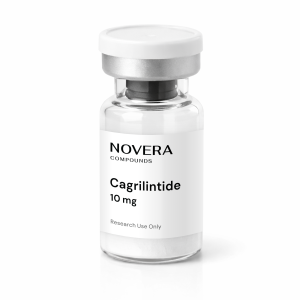

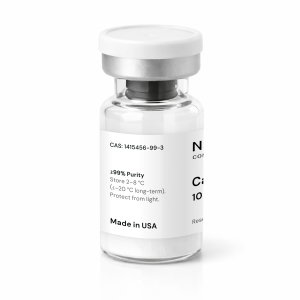
Cagrilintide 10mg
$ 129.00 Read More-+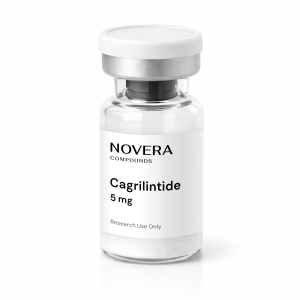
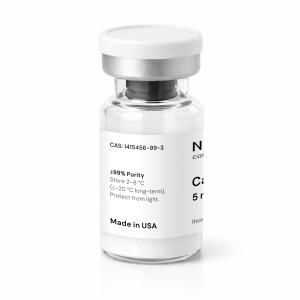
Cagrilintide 5mg
Read More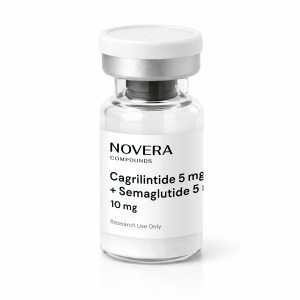
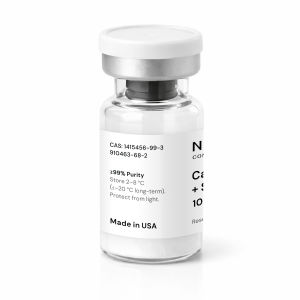
Cagrilintide 5mg + Semaglutide 5mg
$ 119.00 Read More-+Cagrilintide is a long-acting synthetic amylin analogue developed by Novo Nordisk that acts on amylin receptor complexes involving calcitonin receptor and RAMPs. It is mechanistically distinct from GLP-1 receptor agonists and is being studied in investigational weight-management and metabolic disease protocols. The compound is of growing interest to endocrinologists, obesity medicine specialists, metabolic disease clinicians, and research pharmacists evaluating the CagriSema combination and peptide therapy protocols. Practitioners seeking sourcing guidance and documentation support may contact the Direct Doctor Supply support team. Below is a clinical overview covering mechanism, trial data, dosing, and regulatory status on the Cagrilintide peptide.
Cagrilintide Half Life, Receptor Class & What It Is
Cagrilintide is a long-acting synthetic amylin analog derived from islet amyloid polypeptide (IAPP) and developed by Novo Nordisk. The compound is being evaluated in the Phase 3 REDEFINE program, including REDEFINE 1 in adults with overweight or obesity without diabetes and REDEFINE 2 in adults with overweight or obesity and type 2 diabetes [5][6]. Research has focused on appetite regulation, weight management, obesity, and type 2 diabetes. It is investigational and being evaluated in the REDEFINE Phase 3 programme; it is not approved for routine clinical use.
Cagrilintide has an extended elimination half‑life reported in the range of approximately 159–195 hours (about 7–8 days), supporting once‑weekly subcutaneous dosing in clinical trials [1]. This extended duration distinguishes it from earlier amylin analogs and positions it for research in chronic metabolic disease. Unlike GLP-1 receptor agonists such as Semaglutide and Tirzepatide, Cagrilintide acts on amylin receptor complexes involving calcitonin receptor and RAMPs in the hypothalamus and brainstem. This distinct mechanism underpins the rationale for combining Cagrilintide with GLP-1 therapies in investigational protocols such as CagriSema.
How Cagrilintide Works: Amylin Pathway & Appetite Regulation
Cagrilintide targets amylin receptor complexes in brainstem and hypothalamic regions implicated in satiety (area postrema, nucleus tractus solitarius). Phase 2 and mechanistic studies report reduced hunger perception, delayed gastric emptying, and effects on postprandial glucoregulatory hormones consistent with amylin signalling, though exact glucagon findings should be attributed to the original trial reports [2].
The complementary relationship between amylin and GLP-1 signaling forms the scientific basis for the CagriSema combination and its additive effects observed in Phase 3 weight reduction research.
Cagrilintide Benefits: Weight Loss & Metabolic Data
Research on Cagrilintide has focused on appetite regulation, weight reduction, and metabolic outcomes in populations with obesity and type 2 diabetes. All efficacy data cited reflect the relevant trial phase, estimand, and timepoint.
- Phase 2 monotherapy (4.5 mg): Up to 10.8% mean body‑weight reduction at week 26 versus 3.0% with placebo; dose‑finding Phase 2 report [2].
- REDEFINE 1 (adults with overweight or obesity without diabetes): The CagriSema fixed‑dose coformulation (2.4 mg/2.4 mg) produced a mean weight reduction of 22.7% at week 68 (trial product estimand) [3].
- REDEFINE 2 (adults with overweight or obesity and type 2 diabetes): CagriSema produced a mean weight reduction of 15.7% at week 68 (trial product estimand) and clinically relevant improvements in glycaemic control [4].
- Glycemic control: REDEFINE 2 data reported that 74% of participants with type 2 diabetes receiving CagriSema achieved an HbA1c level of 6.5% or below, compared with 15.9% in the placebo group [4].
- Pharmacokinetic profile: The half-life of approximately 159 to 195 hours supports once-weekly administration and stable plasma exposure in research settings [1].
Cagrilintide Starting Dose & Administration
In clinical trial protocols, cagrilintide dosing is investigational and begins with 0.3 mg once weekly, followed by gradual escalation over several weeks to improve gastrointestinal tolerability. The standard documented trial initiation dose is 0.3 mg once weekly, escalating over approximately 16 weeks toward higher investigational target doses, including the 2.4 mg/2.4 mg fixed-dose co-formulation regimen used in CagriSema studies [2].
Gradual titration is incorporated into trial protocols to improve gastrointestinal tolerability, as nausea and vomiting are most common during early treatment phases or rapid dose escalation [2]. Slow upward adjustment has become standard practice in research settings evaluating long-acting metabolic peptides.
Professionals considering whether to buy Cagrilintide wholesale for research purposes should check for wholesale buying options that include handling standards, shipping controls, and stability documentation, as formulation integrity is especially relevant for long-acting peptides.
Cagrilintide Side Effects & Legal Status
Controlled human studies have identified side effects consistent with gastrointestinal tolerability patterns associated with both amylin analogs and GLP-1 receptor agonists. The most commonly reported adverse events are gastrointestinal (nausea, vomiting, diarrhea), typically mild to moderate and most frequent during dose escalation; gradual titration improved tolerability in trials [2].
As of mid-2026, Cagrilintide remains investigational and not approved for routine clinical use. The peptide is limited to authorized research and clinical trial settings. Clinicians should interpret investigational findings cautiously and verify regulatory status before patient discussions, as the landscape continues to evolve. Professionals evaluating supply options when buying online should prioritize vendors with verifiable purity documentation, COA availability, and sterility testing standards.
Cagrilintide vs Semaglutide, Tirzepatide & Retatrutide
Cagrilintide is increasingly compared with established and investigational metabolic therapies as interest in obesity pharmacotherapy grows. These compounds differ in receptor class, mechanism, approval status, and reported weight reduction outcomes.
versus Semaglutide
Cagrilintide and Semaglutide differ fundamentally in receptor targeting. Cagrilintide acts on amylin receptor complexes involving calcitonin receptor and RAMPs, while Semaglutide is a GLP-1 receptor agonist approved as Ozempic and Wegovy. Phase 2 monotherapy data showed up to 10.8% body-weight reduction with cagrilintide, while semaglutide obesity trials have reported greater weight-loss efficacy in separate studies [2]. REDEFINE 1 Phase 3 data demonstrated that CagriSema achieved a mean 22.7% weight reduction at week 68, exceeding either agent used alone, indicating the two compounds function more effectively in combination than as direct competitors [3].
versus Tirzepatide
The Cagrilintide vs. Tirzepatide comparison centers on two distinct receptor strategies. Tirzepatide is a dual GLP-1/GIP receptor agonist approved as Mounjaro and Zepbound, whereas Cagrilintide is an investigational amylin analog. SURMOUNT-1 reported approximately 20% to 22% body-weight reduction at the 15 mg dose over 72 weeks in a separate trial, compared with up to 10.8% with Cagrilintide monotherapy at week 26 [7]. REDEFINE 1 Phase 3 CagriSema data reporting 22.7% mean weight reduction at week 68 suggest that amylin-based combination therapy may reach comparable efficacy through an entirely different biological pathway [3].
versus Retatrutide
Cagrilintide and Retatrutide are both investigational agents advancing through late-stage development, with neither currently approved for routine clinical use. Retatrutide combines agonism at GLP-1, GIP, and glucagon receptors, while Cagrilintide targets amylin receptor pathways.
Retatrutide has shown approximately 24% body-weight reduction in phase 2 obesity research at the highest studied dose over 48 weeks [8], while REDEFINE 1 Phase 3 data reported 22.7% mean weight reduction with CagriSema at week 68 [3]. The primary differentiator for clinicians following the pipeline is mechanistic: amylin/GLP-1 combination signaling versus triple GLP-1/GIP/glucagon agonism.
Where Can Practitioners Source or Buy Cagrilintide?
Cagrilintide is available for research purposes to qualified licensed professionals only and is not intended for retail or consumer use. When evaluating suppliers, practitioners should prioritize those offering verifiable purity documentation, certificate of analysis (COA) availability, LOT number traceability, and documented sterility testing. Sourcing from unverified vendors carries meaningful risk to research integrity.
The Direct Doctor Supply support team provides sourcing direction and documentation support for licensed professionals seeking guidance on where to buy Cagrilintide online from verified research-grade suppliers. Practitioners with sourcing or documentation questions are encouraged to contact the Direct Doctor Supply support team directly.
FAQs
1. What is Cagrilintide, and what is it used for?
Cagrilintide is a long-acting synthetic amylin analog derived from IAPP and developed by Novo Nordisk. The peptide acts on amylin receptor complexes involving calcitonin receptor and RAMPs in the hypothalamus and brainstem to suppress appetite, slow gastric emptying, and reduce post-prandial glucagon. Current Phase 3 investigational programs are evaluating the compound for weight management and type 2 diabetes. It is investigational and not approved for routine clinical use.
2. What is the Cagrilintide half-life — and how is it dosed?
Cagrilintide has a half-life of approximately 159 to 195 hours (about 7 to 8 days), supporting once-weekly subcutaneous administration with stable plasma concentrations [1]. Clinical trial protocols begin with a 0.3 mg starting dose as a titration starting point, escalating gradually toward higher investigational targets over approximately 16 weeks. No approved dosing guidance currently exists; all dose references are trial-derived.
3. What are the Cagrilintide benefits and weight loss data?
Phase 2 monotherapy data reported up to 10.8% body weight reduction at the 4.5 mg dose versus 3.0% with placebo at week 26 [2]. REDEFINE 1 Phase 3 data reported 22.7% mean weight reduction with CagriSema versus 2.3% with placebo at week 68 in adults without diabetes (trial product estimand) [3]; REDEFINE 2 reported 15.7% versus 3.1% in adults with type 2 diabetes (trial product estimand) [4].
4. How does Cagrilintide compare to tirzepatide?
Cagrilintide is an investigational amylin receptor agonist, whereas Tirzepatide is a dual GLP-1/GIP receptor agonist approved for several metabolic indications. SURMOUNT-1 reported up to 20 to 22% weight reduction at the maximum 15 mg dose over 72 weeks; Cagrilintide monotherapy reported up to 10.8% at week 26 [7]. REDEFINE 1 Phase 3 CagriSema data suggest amylin-based combination therapy may achieve comparable efficacy through distinct receptor pathways [3].
5. What are the Cagrilintide side effects — is it approved?
The most commonly reported side effects include nausea, vomiting, diarrhea, and mild injection site reactions, consistent with amylin and GLP-1 class effects and manageable through slow titration [2]. As of mid-2026, Cagrilintide remains investigational and is not approved for routine clinical use outside authorized clinical trial settings.
Sources
- Enebo LB, Berthelsen KK, Kankam M, et al. Safety, tolerability, pharmacokinetics, and pharmacodynamics of concomitant administration of multiple doses of cagrilintide with semaglutide 2·4 mg for weight management: a randomised, controlled, phase 1b trial. Lancet. 2021;397(10286):1736-1748. doi:10.1016/S0140-6736(21)00845-X
- Lau DCW, Erichsen L, Francisco AM, et al. Once-weekly cagrilintide for weight management in people with overweight and obesity: a multicentre, randomised, double-blind, placebo-controlled and active-controlled, dose-finding phase 2 trial. Lancet. 2021;398(10317):2160-2172. doi:10.1016/S0140-6736(21)01751-7
- Garvey WT, Blüher M, Osorto Contreras CK, et al. Coadministered Cagrilintide and Semaglutide in Adults with Overweight or Obesity. N Engl J Med. 2025;393(7):635-647. doi:10.1056/NEJMoa2502081
- Davies MJ, Bajaj HS, Broholm C, et al. Cagrilintide-Semaglutide in Adults with Overweight or Obesity and Type 2 Diabetes. N Engl J Med. 2025;393(7):648-659. doi:10.1056/NEJMoa2502082
- gov. REDEFINE 1: Cagrilintide-Semaglutide in Adults with Overweight or Obesity (NCT05567796). https://clinicaltrials.gov/study/NCT05567796
- gov. REDEFINE 2: Cagrilintide-Semaglutide in Adults with Overweight or Obesity and Type 2 Diabetes (NCT05394519). https://clinicaltrials.gov/study/NCT05394519
- Jastreboff AM, Aronne LJ, Ahmad NN, et al. Tirzepatide Once Weekly for the Treatment of Obesity. N Engl J Med. 2022;387(3):205-216. doi:10.1056/NEJMoa2206038
- Jastreboff AM, Kaplan LM, Frías JP, et al. Triple-Hormone-Receptor Agonist Retatrutide for Obesity – A Phase 2 Trial. N Engl J Med. 2023;389(6):514-526. doi:10.1056/NEJMoa2301972
For licensed medical professionals only. This content is for informational purposes only and does not constitute medical advice.
Content prepared by Direct Doctor Supply’s editorial team.
Sourcing and accuracy for this page follow our Editorial Policy: claims are cross-checked against clinical literature, regulatory filings, and manufacturer specifications before anything is published.