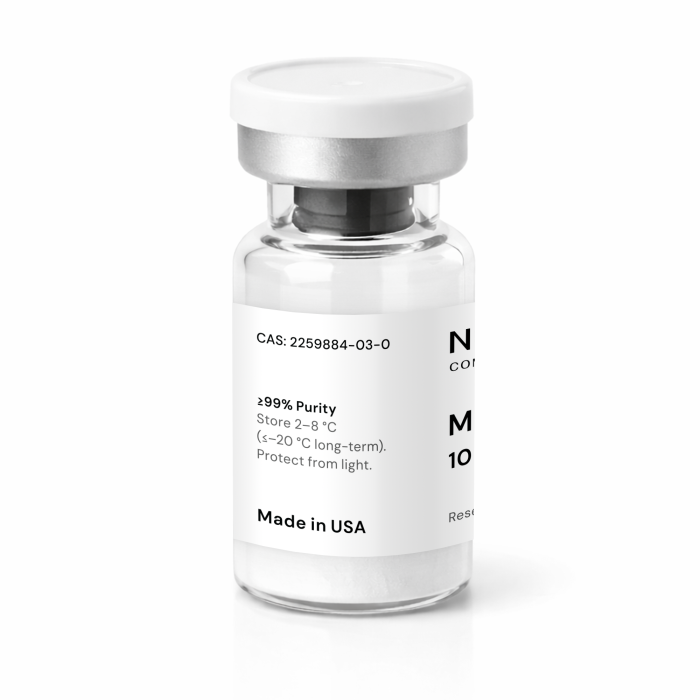
Mazdutide
Showing all 2 results
-
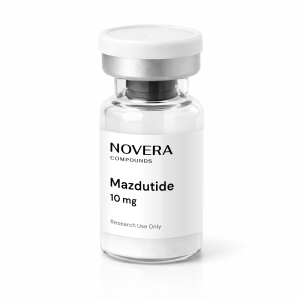

Mazdutide 10mg
Read More
Mazdutide 5mg
Read MoreMazdutide is a GLP-1 and glucagon receptor dual agonist developed by Innovent Biologics, distinguished from pure GLP-1 agents by its glucagon receptor activity, which drives increased energy expenditure and hepatic fat oxidation alongside appetite control. The compound is evaluated in endocrinology, obesity medicine, and metabolic disease research contexts, where its liver fat reduction profile has attracted particular clinical interest. Practitioners seeking sourcing guidance for research-grade Mazdutide may contact the Direct Doctor Supply support team; full mechanism details, trial data, and dosing considerations are covered in the clinical guide below.
Mazdutide: GLP-1 & Glucagon Receptor Dual Agonism — What Makes It Different
Mazdutide is a GLP-1 and glucagon receptor dual agonist developed by Innovent Biologics in partnership with Eli Lilly. In June 2025, it received approval from China’s National Medical Products Administration (NMPA) under the trade name Xinermei® for chronic weight management in adults with obesity. A second NMPA approval for glycemic control in type 2 diabetes mellitus (T2DM) followed later in 2025. [4]
The approved indications under Xinermei® reflect the following NMPA treatment criteria: [4]
- Adults with a BMI of 28 kg/m² or above (obesity)
- Adults with a BMI of 24 kg/m² or above who have at least one weight-related comorbidity (e.g., dyslipidemia, hypertension, or T2DM)
While most obesity therapies primarily reduce food intake, Mazdutide influences both sides of the energy balance by decreasing caloric consumption and increasing energy expenditure. [1]
What Does Mazdutide Peptide Do?
Mazdutide’s metabolic effects result from the complementary actions of its two receptor targets: [1][3]
GLP-1 receptor activation supports:
- Appetite suppression and reduced caloric intake
- Delayed gastric emptying
- Increased glucose-dependent insulin secretion
- Improved glycemic control
Glucagon receptor activation promotes:
- Increased energy expenditure
- Enhanced fat utilization and hepatic fat oxidation
- Reduced liver fat accumulation
- Improved metabolic flexibility
Mazdutide Peptide Benefits & Trial Data
Mazdutide has been evaluated in Phase 1b, 2, and 3 clinical programs for obesity, T2DM, and metabolic liver disease. [1][2][3][5]
Weight Reduction Benefits
In a Phase 2 randomized controlled trial (Nature Communications, 2023), participants achieved statistically significant reductions in body weight compared with placebo over 24 weeks. [1] The Phase 3 GLORY-1 trial (topline data, ADA/EASD 2024) further demonstrated clinically meaningful weight reductions in adults with overweight or obesity. [5]
Liver Fat Reduction Benefits
Liver fat reduction is one of the most distinctive features of Mazdutide. In the Phase 3 GLORY-1 trial, mean relative liver fat reductions in the general trial population were 63.3% at the 4.5 mg dose and 73.2% at the 6 mg dose. [5] Furthermore, a prespecified exploratory subgroup analysis (ADA 2024) showed that participants with high baseline liver fat content (≥10%) receiving the 6 mg dose achieved a relative reduction of approximately 80.2% at Week 48. [5] This differentiates Mazdutide from GLP-1/GIP therapies and has generated research interest in metabolic dysfunction-associated steatotic liver disease (MASLD).
Glycaemic Control in Type 2 Diabetes
In a Phase 2 trial (Diabetes Care, 2023), adults with T2DM receiving Mazdutide achieved meaningful reductions in HbA1c, body weight, and other metabolic markers. [2]
Mazdutide Dosage & Dosing Chart
There is currently no approved Mazdutide dosing protocol outside the NMPA-approved indications in China. All dosage information below should be interpreted as trial-derived or approval-contextualized guidance, not prescribing recommendations. [1][3][4]
Trial-Derived Dose Range
Clinical trials and the Xinermei® approved label have referenced the following weekly subcutaneous doses:
- 3 mg once weekly
- 5 mg once weekly
- 6 mg once weekly
- 9 mg once weekly
The 4.5 mg and 6 mg doses are those reflected in the NMPA-approved weight management indication for Xinermei®. [4] The 9 mg dose, investigated in the GLORY-2 trial for moderate-to-severe obesity, was submitted as a supplemental new drug application in 2025 and remains under active regulatory review as of 2026. [5]
Typical Trial Approach
Researchers generally employed gradual dose escalation strategies—initiating at a lower dose and titrating stepwise over several weeks—to improve tolerability and reduce gastrointestinal adverse events. [1][3]
Note: Current as of 2026. The dosing protocols referenced below are derived from the Chinese clinical development program and the Xinermei® Chinese prescribing guidelines and are provided as a reference point for global researchers. Mazdutide remains investigational outside China. Practitioners should verify dosing guidance against current regulatory requirements and applicable compounding pharmacy protocols.
Storage Guidelines
- Store at 2°C to 8°C (Do not freeze)
- Protect from direct light
- Maintain cold-chain handling where applicable
Mazdutide Side Effects & Safety Profile
Mazdutide demonstrates a safety profile consistent with other incretin-based therapies. No unexpected safety signals have been identified in published Phase 2 data, though long-term cardiovascular and metabolic outcomes continue to be evaluated in Phase 3 programs. [1][2][3]
- Common Side Effects: Primarily gastrointestinal (nausea, vomiting, diarrhea, constipation, abdominal discomfort, reduced appetite). Most are mild to moderate and occur during dose escalation. [1][3]
- Glucagon Receptor Considerations: Glucagon receptor activation has been associated with modest increases in heart rate in some studies. Cardiovascular monitoring may be considered for patients with existing cardiac risk factors. [1]
Long-Term Safety
Available data from Phase 2 studies and ongoing Phase 3 development programs have not identified major unexpected safety signals. Reported adverse events have largely been predictable and consistent with the known effects of GLP-1 and glucagon receptor agonism. [1][2][3]
As Mazdutide is a relatively new therapy, long-term safety outcomes including cardiovascular and metabolic effects over extended treatment durations continue to be evaluated through larger clinical trials and post-approval monitoring programs in China. Healthcare professionals evaluating Mazdutide for research contexts should account for this evidence gap when reviewing available data.
Global Regulatory Status (Current as of 2026)
- China: Approved by the NMPA (Xinermei®) in 2025 for chronic weight management and glycemic control in T2DM. [4]
- United States (FDA) / European Union (EMA) / Australia (TGA): Not approved. Investigational only; unavailable for routine clinical prescribing outside approved trials.
Note: Current as of 2026. Approval status, indications, and market availability may change as ongoing Phase 3 development programs mature and additional regulatory submissions are reviewed.
Mazdutide vs Retatrutide & Tirzepatide
Mazdutide is frequently evaluated alongside Retatrutide, Tirzepatide, and Semaglutide because all target metabolic pathways involved in obesity and glycemic control. Meaningful differences in receptor activity, clinical development status, and hepatic effects distinguish these therapies in a research and procurement context. [1][2]
Important note on comparisons: There are currently no direct, head-to-head randomized controlled trials (RCTs) comparing Mazdutide to Tirzepatide, Retatrutide, or Semaglutide. Cross-trial comparisons should be interpreted with caution, as study designs, patient populations, and endpoints differ across programs.
Mazdutide vs Retatrutide
The glucagon receptor is the shared clinical hook between Mazdutide and Retatrutide: both target GLP-1 and glucagon pathways, with liver fat reduction and energy expenditure as central features of each therapy’s profile. The primary structural difference is that Retatrutide incorporates a third receptor target — GIP — creating a GLP-1/GIP/glucagon triple-agonist profile that adds adipose-metabolic effects not present in Mazdutide’s dual-agonist design.
From a regulatory standpoint, the two compounds occupy different positions: Mazdutide has received NMPA approval in China as Xinermei®, while Retatrutide remains investigational globally (in the Phase 3 TRIUMPH trial). For researchers evaluating next-generation metabolic peptides, the choice between these two agents centers on whether GIP-mediated activity is a relevant variable for the research protocol and whether the regulatory footprint of one compound aligns better with institutional requirements. [1][4]
Mazdutide vs Tirzepatide
Mazdutide and Tirzepatide represent two distinct dual agonist profiles: Mazdutide targets GLP-1 and glucagon receptors, while Tirzepatide targets GLP-1 and GIP receptors. These distinct secondary receptor mechanisms produce distinct downstream effects, particularly on hepatic lipid metabolism and energy expenditure.
Tirzepatide benefits from extensive approval-backed evidence across multiple markets, with a mean weight reduction of approximately 22.5% at the highest dose in the SURMOUNT-1 trial. Mazdutide’s glucagon receptor arm drives hepatic fat oxidation and energy expenditure through a pathway that GIP-axis agents do not directly engage. For practitioners in research settings where liver fat is a primary endpoint of interest and where Mazdutide is accessible, that mechanistic distinction is the relevant clinical consideration — not a claim of superiority. [1][2]
Mazdutide vs Semaglutide
Semaglutide serves as the GLP-1-only reference point. While Semaglutide provides substantial weight loss and glycemic benefits across a well-established evidence base, it lacks glucagon receptor activity and does not directly engage the hepatic lipid oxidation and energy expenditure pathways associated with Mazdutide’s mechanism. [1]
Comparison Table
Feature Mazdutide Retatrutide Tirzepatide Semaglutide Receptors GLP-1 + Glucagon GLP-1 + GIP + Glucagon GLP-1 + GIP GLP-1 Mechanism Appetite + energy expenditure + hepatic fat oxidation Appetite + GIP adipose + energy expenditure Appetite + GIP adipose metabolism Appetite + insulin secretion Liver Fat Effect Glucagon-driven hepatic lipid oxidation Glucagon-mediated Modest — no glucagon arm Limited Weight Loss Data Phase 2 RCT (Ji et al., 2023); Phase 3 GLORY-1 topline [1][5] ~24.2% at 12 mg (Phase 2) ~22.5% (SURMOUNT-1) ~14.9% (STEP-1) Approval Status NMPA-approved China as Xinermei® (2025); investigational elsewhere [4] Investigational (Phase 3 TRIUMPH) FDA-approved (Mounjaro/Zepbound) FDA-approved (Ozempic/Wegovy/Rybelsus) GIP Receptor No Yes Yes No (Note: Data compiled from separate clinical trials; no direct head-to-head RCTs exist.)
Mazdutide’s glucagon-driven liver fat differentiation positions it for specific metabolic presentations where approved alternatives may leave a therapeutic gap. Procurement decisions depend on regulatory access, institutional requirements, and the receptor activity profile most relevant to the research protocol.
Sourcing Research-Grade Mazdutide: Guidance for Licensed Professionals
Mazdutide is a dual agonist that has attracted significant research interest across metabolic medicine, but identifying verified suppliers requires careful evaluation. Practitioners considering where to purchase Mazdutide for institutional or clinical research purposes should prioritize suppliers that can provide verifiable purity documentation, including a certificate of analysis (CoA), LOT number traceability, and independent third-party testing results.
Sourcing from unverified vendors carries meaningful risks: inconsistent peptide concentrations, undisclosed impurities, and inadequate cold-chain handling can all compromise research integrity. When evaluating options to buy Mazdutide online, researchers should confirm that supplier documentation meets institutional standards before finalizing any procurement decisions.
Research-grade Mazdutide is available only to qualified licensed professionals. Practitioners seeking guidance on where to buy Mazdutide or how to identify verified research-grade suppliers may contact the Direct Doctor Supply support team for sourcing direction and documentation support. The support team can connect licensed professionals with verified research-grade suppliers and provide guidance on the documentation requirements commonly associated with institutional procurement.
FAQs
1. What is Mazdutide peptide, and what is it used for?
Mazdutide is a GLP-1 and glucagon receptor dual agonist developed by Innovent Biologics and Eli Lilly. It is evaluated for weight reduction, liver fat management, and glycemic control in T2DM. It received NMPA approval in China in 2025 under the trade name Xinermei® and remains investigational outside China as of current 2026 data.
2. What does Mazdutide do, and how does it differ from Tirzepatide?
Mazdutide combines GLP-1 receptor activation with glucagon receptor activation, driving increased energy expenditure and hepatic fat oxidation alongside appetite reduction. Tirzepatide combines GLP-1 and GIP receptor activation, with the GIP arm primarily enhancing adipose and metabolic regulation. No head-to-head RCT comparing the two currently exists.
3. What is the Mazdutide dosage?
Dosing protocols referenced in the clinical literature and Xinermei® Chinese prescribing guidelines range from 3 mg to 9 mg administered once weekly by subcutaneous injection. The 4.5 mg and 6 mg doses are those reflected in the current NMPA-approved weight management indication. The 9 mg dose remains under supplemental regulatory review. All dosing outside NMPA-approved indications is based on trial data. Practitioners should consult applicable regulatory guidance and compounding pharmacy protocols for any off-trial use.
4. What are the Mazdutide peptide benefits?
Trial data include weight reduction (Phase 2 RCT, Ji et al. 2023), liver fat reduction (GLORY-1 general population and exploratory subgroup findings), and improved glycemic control in T2DM (Zhang et al. 2023). The safety profile is generally consistent with the GLP-1/glucagon agonist class. All claims are trial-derived and should not be interpreted as clinical prescribing guidance.
5. How does Mazdutide compare to Retatrutide?
Both Mazdutide and Retatrutide target GLP-1 and glucagon receptors, with liver fat reduction and energy expenditure as shared features. Retatrutide additionally activates the GIP receptor, qualifying it as a triple agonist. Mazdutide is NMPA-approved in China as Xinermei®; Retatrutide remains investigational globally. No head-to-head RCT between the two currently exists.
Citations
- Ji L, Jiang H, Cheng Z, et al. A phase 2 randomised controlled trial of mazdutide in Chinese overweight adults or adults with obesity. Nat Commun. 2023;14(1):8289. Published 2023 Dec 14. doi:1038/s41467-023-44067-4
- Zhang B, Cheng Z, Chen J, et al. Efficacy and Safety of Mazdutide in Chinese Patients With Type 2 Diabetes: A Randomized, Double-Blind, Placebo-Controlled Phase 2 Trial. Diabetes Care. 2024;47(1):160-168. doi:2337/dc23-1287
- Ji L, Gao L, Jiang H, et al. Safety and efficacy of a GLP-1 and glucagon receptor dual agonist mazdutide (IBI362) 9 mg and 10 mg in Chinese adults with overweight or obesity: A randomised, placebo-controlled, multiple-ascending-dose phase 1b trial. EClinicalMedicine. 2022;54:101691. Published 2022 Oct 7. doi:10.1016/j.eclinm.2022.101691
- Shirley M. Mazdutide: First Approval. Drugs. 2025;85(12):1621-1627. doi:10.1007/s40265-025-02249-y
- Innovent Biologics. Press release: Phase 3 GLORY trial results and exploratory liver fat findings (ADA/EASD presentations, 2024–2025). Published October 28, 2025. https://en.innoventbio.com/InvestorsAndMedia/PressReleaseDetail?key=558
For licensed medical professionals only. This content is for informational purposes only and does not constitute medical advice.
Content prepared by Direct Doctor Supply’s editorial team.
Sourcing and accuracy for this page follow our Editorial Policy: claims are cross-checked against clinical literature, regulatory filings, and manufacturer specifications before anything is published.