


SHARE THIS ARTICLE
Harmonyca
Harmonyca Juvederm – What Are the Differences?
Oct 8, 2024
According to the American Society of Plastic Surgeons, over 6 million dermal filler procedures were performed in 2020, highlighting the growing popularity of these non-surgical aesthetic procedures.
Two leading dermal fillers in the market are HArmonyCa and Juvederm. While both offer effective solutions for combating signs of aging, they differ in composition and how they deliver results.
In this article, we will explore the key distinctions between HArmonyCa and Juvederm, focusing on their formulations, benefits, and ideal treatment applications.
Key Takeaways
- HArmonyCa combines hyaluronic acid with calcium hydroxylapatite (CaHA) to stimulate collagen and deliver longer-lasting skin improvement. In contrast, Juvederm relies solely on hyaluronic acid for immediate volumization without collagen stimulation.
- HArmonyCa is designed for more extended collagen-boosting effects, while Juvederm focuses on immediate volume restoration and wrinkle correction, particularly for deeper facial lines.
- HArmonyCa provides long-term results that can last up to two years because of its collagen-stimulating properties. Juvederm’s effects are immediate but typically last around one year.
- Both fillers are considered safe, though they may cause minor side effects such as swelling or bruising at the injection site.
About: Trusted by over 2,000+ global clients since 2014, Direct Doctor Supply has become a leading supplier of cosmetic, skincare, and orthopedic products for medical and aesthetic professionals. Direct Doctor Supply offers a wide range of authentic brand-name products at competitive wholesale prices, sourced from around the world.
Formulation and Composition
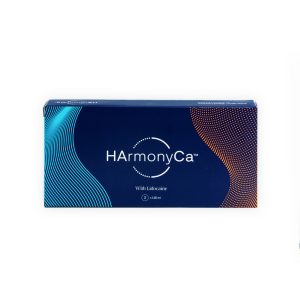
HArmonyCa is a hybrid dermal filler that combines calcium hydroxyapatite (CaHA) and cross-linked hyaluronic acid (HA). CaHA provides structural support and stimulates collagen production, while HA offers immediate hydration and volumizing effects. This combination helps restore facial volume, lift sagging skin, and improve skin texture.

On the other hand, Juvederm is a well-known hyaluronic acid-based dermal filler. Unlike HArmonyCa, it contains no calcium hydroxyapatite. Instead, Juvederm relies solely on HA to replenish lost volume and smooth out wrinkles. Without CaHA, Juvederm provides immediate results but lacks the same long-term collagen-stimulating benefits as HArmonyCa. Practitioners, clinics, and consumers looking to buy HarmonyCa online should understand how its dual-action formulation differs from HA-only fillers.
Application and Effectiveness
HArmonyCa combines hyaluronic acid with calcium hydroxylapatite to deliver long-lasting facial rejuvenation. The application process involves targeted injections into areas requiring volume and contouring, such as the cheeks and jawline.

Due to its collagen-boosting properties, HArmonyCa not only provides immediate volumization but also continues to improve skin firmness and elasticity over time. Patients typically observe smoother, firmer skin and a noticeable reduction in fine lines, with results lasting up to two years.
As for Juvederm, this filler is primarily used to restore volume and smooth deep wrinkles using hyaluronic acid alone. Applied through precise injections into the mid-to-deep layers of the skin, Juvederm’s smooth consistency ensures natural-looking results. It is particularly effective in filling wrinkles and adding volume to areas such as the lips and cheeks. While Juvederm provides instant results, they typically last up to one year, making it an ideal choice for those seeking quicker but shorter-term enhancements.
Recent Clinical Findings on HArmonyCa
A 2025 prospective, open-label, post-marketing study evaluated HArmonyCa for midface volume loss. Results showed significant aesthetic improvement, with many participants maintaining improvement through 12 months. The findings support HArmonyCa’s potential to restore midface volume and provide sustained rejuvenation. However, the study did not directly compare HArmonyCa with Juvederm, so the results do not establish the superiority or longer-lasting effects of either filler.[5]
Addressing Specific Skin Concerns
Thanks to its unique combination of hyaluronic acid and calcium hydroxylapatite (CaHA), HArmonyCa is highly effective in addressing fine lines and wrinkles. The CaHA component promotes collagen production, enhancing skin firmness and elasticity over time, making it ideal for patients seeking long-lasting skin rejuvenation.

Juvederm is better suited to restoring volume and targeting deeper wrinkles. It is especially useful in areas where the skin has lost fullness, such as the cheeks, lips, and nasolabial folds. Without CaHA, Juvederm focuses on providing immediate volume and contour improvement, delivering fast results that can last up to a year.
Safety Profile and Side Effects
HArmonyCa and Juvederm follow strict safety standards but may still cause side effects. Common reactions to HArmonyCa include mild swelling or redness at the injection site, while Juvederm may lead to temporary bruising or discomfort. Those exploring HArmonyCa filler reviews should consider both clinical evidence and potential injection-site reactions when evaluating the treatment.
A prospective, open-label, post-marketing study on HArmonyCa for midface soft tissue augmentation reported promising interim safety and effectiveness data.[1] Similarly, the FDA-approved Summary of Safety and Effectiveness Data (SSED) for Juvederm VOLUMA XC supports its safety and efficacy for cheek and chin augmentation. Clinical trials have also demonstrated its effectiveness across approved cosmetic applications.[2]
Conclusion
HArmonyCa and Juvederm offer effective solutions for skin rejuvenation, but they work differently. Harmonyca combines calcium hydroxylapatite to stimulate collagen production, providing long-lasting smoothness and firmness. In contrast, Juvederm focuses on deep wrinkle correction and volume restoration without calcium.
Both fillers are safe, but mild side effects like swelling or redness may occur. Ultimately, your choice depends on your specific skin concerns—whether you want long-term skin improvement or immediate volume enhancement.
FAQs
1. What makes HArmonyCa different from Juvederm?
HArmonyCa combines calcium hydroxylapatite (CaHA) and hyaluronic acid to promote collagen production and provide hydration. Juvederm only uses hyaluronic acid, focusing on immediate volume restoration.
2. Which filler provides longer-lasting results?
HarmonyCa can last up to two years because it stimulates collagen, while Juvederm typically lasts around one year.
3. Are there any side effects of Harmonyca or Juvederm?
Yes, both fillers may cause mild side effects such as swelling, bruising, or redness at the injection site, but these typically resolve within a few days.
4. Which areas are commonly treated with Harmonyca and Juvederm?
Both treat areas like the cheeks, jawline, and nasolabial folds. However, HArmonyCa’s collagen-boosting properties make it more suitable for long-term skin improvement, while Juvederm provides quicker volumization.
Citations
[1] Gritti, Alessandro, et al. HArmonyCa Was Well Tolerated Most Participants Treated with HArmonyCa Had Improved Investigator- and Participant-Assessed GAIS Ratings and Substantial Improvements in FACE-Q Scores: A Prospective, Open-Label, Post-Marketing Study of the Safety and Effectiveness of HArmonyCa Injectable Gel for Midface Soft Tissue Augmentation: Interim Analysis. https://faculty.im-aesthetics.com/img/evaluation/598-amwc-2024-harmonyca-mdr-po.pdf. Accessed 23 Sept. 2026.
[2] Summary of Safety and Effectiveness Data (SSED) – FDA. https://www.accessdata.fda.gov/cdrh_docs/pdf11/P110033S070B.pdf.
[3] 2023 Plastic Surgery Statistics. American Society of Plastic Surgeons.
[4] Dermal Fillers Market Share & Growth Analysis Report, 2023. Grand View Research.
[5] Gritti, Alessandro, et al. “A Prospective, Open-Label, Post Marketing Study of the Safety and Effectiveness of a Hyaluronic Acid and Calcium Hydroxyapatite Hybrid Injectable.” Journal of Cosmetic Dermatology, vol. 24, no. 9, Sept. 2025, p. e70430. doi:10.1111/jocd.70430. Accessed 23 Sept. 2026.
Sourcing and accuracy for this article follow our Editorial policy: claims are cross-checked against clinical literature, regulatory filings, and manufacturer specifications before anything is published