


SHARE THIS ARTICLE
Powerfill
Powerfill vs Sculptra – How Do They Compare?
Nov 7, 2024
Dermal fillers are among the most popular cosmetic procedures, and the global market for them is expected to grow by 12 to 14 percent annually over the next five years. These treatments restore volume and reduce wrinkles, which is crucial to a youthful appearance.
Powerfill and Sculptra are two prominent injectable treatments with unique properties and benefits. Powerfill offers immediate volumizing effects, while Sculptra gradually stimulates collagen production for long-lasting results.
In this article, we’ll compare Powerfill vs Sculptra, exploring their specific properties, benefits, and how to determine which option may be the best fit for your aesthetic goals.
Key Takeaways
- Powerfill and Sculptra are injectable treatments suited to different areas: Powerfill is for body contouring, and Sculptra is for facial rejuvenation.
- Powerfill provides immediate volume with collagen-building effects over time, while Sculptra gradually stimulates collagen for natural-looking volume in the face.
- Powerfill offers quick results but may need touch-ups, while Sculptra’s effects can last up to two years.
- Both treatments are generally safe, with common side effects like temporary swelling or bruising.
About: Trusted by over 2,000+ global clients since 2014, Direct Doctor Supply has become a leading supplier of cosmetic, skincare, and orthopedic products for medical and aesthetic professionals. Direct Doctor Supply offers a wide range of authentic brand-name products at competitive wholesale prices, sourced from around the world.
Formulations and Mechanisms of Action
Powerfill and Sculptra are advanced cosmetic treatments designed to improve body and facial contours by stimulating collagen production, each with a unique formulation and mechanism of action. While both offer natural-looking, lasting results, their approaches differ [1].

Powerfill is primarily used for body contouring, especially for buttock enhancement. It utilizes polylactic acid (PLA) microspheres to stimulate collagen production gradually, leading to natural-looking improvements in shape and volume over time. While Powerfill adds some immediate volume, its true benefits emerge as collagen builds up, providing subtle yet enduring changes without requiring invasive surgery.
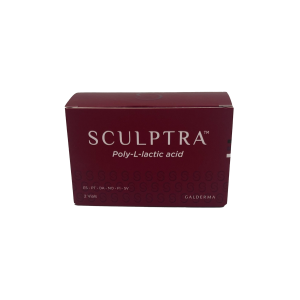
Meanwhile, Sculptra is formulated with poly-L-lactic acid (PLLA) to target facial volume loss. It stimulates collagen production in the deeper layers of the skin, gradually restoring volume and softening wrinkles over several months. Unlike traditional fillers, Sculptra’s effects unfold as the body produces collagen, creating fuller, more youthful contours in a natural progression.
Both treatments aim for natural-looking rejuvenation but differ in how they build volume over time. Powerfill can provide more immediate contour while also supporting longer-term collagen stimulation, whereas Sculptra relies more heavily on gradual collagen remodeling. Practices planning to order Powerfill wholesale should consider expected treatment volume, number of sessions, product storage requirements, and how often biostimulatory procedures are performed when planning inventory.
Powerfill vs Sculptra: Specific Indications and Clinical Efficacy
Powerfill is primarily indicated for body contouring, especially for those seeking to add volume to the buttocks. The Powerfill buttocks treatment offers immediate enhancement, making it ideal for patients who want fast, noticeable results in shaping and lifting [2].

On the other hand, Sculptra stimulates collagen to gradually restore volume, particularly in the face, helping with deep lines. While results take time, Sculptra offers longer-lasting, natural-looking fullness by working with the body’s processes.
Study Update: Clinical Efficacy of Powerfill vs Sculptra
Newer evidence provides a more relevant comparison between PDLLA-based biostimulators, the category that includes Powerfill, and PLLA-based products, the same polymer class used by Sculptra. A 2026 multicenter, randomized, split-face study compared a PDLLA + non-cross-linked hyaluronic acid formulation with a commonly used PLLA injectable for nasolabial fold correction in 33 participants. Each participant received three treatment sessions at four-week intervals. Both treatments produced significant improvements in wrinkle severity at every follow-up point through Week 24, and the PDLLA formulation was found to be noninferior to PLLA for nasolabial fold correction [3].
The study suggests that PDLLA- and PLLA-based biostimulators can both provide progressive correction through collagen-stimulating mechanisms, although their formulations and treatment behavior are not identical. The PDLLA product evaluated also contained non-cross-linked HA, which may contribute an earlier volumizing or hydrating effect alongside longer-term collagen remodeling. The researchers noted that additional studies are still needed to establish longer-term safety and durability.
Separate 2026 clinical research on PLLA facial rejuvenation has also demonstrated improvements in wrinkle severity, midface volume deficit, patient satisfaction, and structural skin changes over six months, further supporting the established role of PLLA biostimulators in gradual facial rejuvenation.
Although these studies did not directly compare Powerfill with Sculptra by brand name, they provide more current evidence for how PDLLA- and PLLA-based injectables perform clinically. Treatment selection should therefore consider formulation, intended treatment area, desired onset of correction, injection protocol, and the regulatory status of the specific product rather than assuming that all PDLLA or PLLA products behave identically.
Longevity of Results and Patient Satisfaction
Powerfill provides immediate volume enhancement, especially popular for body contouring, such as in the buttocks. While patients enjoy quick improvements, these effects generally require maintenance sessions over time to preserve optimal results.

In contrast, Sculptra works gradually by stimulating the body’s collagen production, leading to subtle, natural volume increases over several months. This collagen-building process allows Sculptra’s effects to last up to two years or longer, offering extended results that look and feel natural, particularly for facial treatments.
Patient Satisfaction Rates for Powerfill and Sculptra
Evaluating patients’ satisfaction levels after treatment with Powerfill and Sculptra offers insights into their efficacy and patient preferences. Both treatments have merits.
On Powerfill

Image Courtesy of Dr. Yulia Nearchou M.D.
The patient underwent a Powerfill procedure for buttock volume enhancement using polylactic acid. The treatment was painless, with immediate results and final effects visible after 3 months, lasting up to 5 years.
On Sculptra

Image Courtesy of The Parlor
Before and after the patient’s second Sculptra treatment, the procedure effectively stimulated collagen production, enhancing the face’s natural structure for a more youthful, fuller appearance.
The choice between Sculptra and Powerfill hinges on specific patient needs and desired outcomes.
Safety Profiles and Potential Side Effects
Both Powerfill and Sculptra are considered safe when administered by trained professionals, but each comes with unique considerations. Powerfill injections should be delivered precisely to avoid complications like uneven texture or mild discomfort. Patients should ensure a certified professional performs the treatment to reduce the risk of bruising, swelling, or infection.
Sculptra also requires an experienced practitioner due to its collagen-stimulating properties, which produce results over time. Incorrect injection depth or technique can lead to nodules or lumps as collagen builds up.
In terms of side effects, Powerfill patients might experience temporary redness, swelling, or mild discomfort at the injection site, which typically resolves within days. Sculptra may cause mild swelling, bruising, or in rare cases, the formation of small lumps if improperly injected.
Conclusion
Choosing between Powerfill and Sculptra ultimately depends on your aesthetic goals. Powerfill delivers immediate volume and quick results, ideal for those seeking fast enhancements, while Sculptra gradually builds natural-looking volume by stimulating collagen, offering longer-lasting outcomes. Although both treatments have mild, temporary side effects, they are generally well-tolerated.
Deciding between fast, visible results or gradual, enduring improvements can help you select the best option for your needs.
FAQs
1. What is Powerfill, and how does it work?
Powerfill is a cosmetic filler designed primarily for buttock enhancement. Unlike traditional fillers, it stimulates the body to produce collagen over time, providing natural-looking volume and contour.
2. How long do the results from Powerfill last?
The effects of Powerfill typically last several months to a year, depending on the individual. Since the body gradually breaks down the filler, periodic touch-ups may be needed to maintain the desired results.
3. Are there any side effects or risks with Powerfill?
Common side effects of Powerfill may include swelling, bruising, or redness at the injection site. Small lumps or infections can occur rarely. Most side effects are temporary and resolve without medical intervention.
4. How long does it take to see results from Powerfill?
Unlike some fillers that offer immediate volume, Powerfill’s results develop gradually as the body produces collagen. You may notice improvements within a few weeks, with full results visible in a few months.
Citations
[1] Leclerc, Olivier, Nils Peters, Alice Scaglione, and Jeff Waring. “From Extreme to Mainstream: The Future of Aesthetics Injectables.” McKinsey & Company, 20 Dec. 2021, https://www.mckinsey.com/industries/life-sciences/our-insights/from-extreme-to-mainstream-the-future-of-aesthetics-injectables.
[2] American Society of Plastic Surgeons. “Dermal Fillers.” American Society of Plastic Surgeons, 2018, https://www.plasticsurgery.org/cosmetic-procedures/dermal-fillers/types.
[3] Park, Je-Young, et al. “A Split Face Study Comparing the Effect of a PDLLA Based Product and PLLA on the Nasolabial Fold (NLF).” Skin Research and Technology, vol. 32, no. 1, 2026, article e70324. https://doi.org/10.1111/srt.70324.
Sourcing and accuracy for this article follow our Editorial policy: claims are cross-checked against clinical literature, regulatory filings, and manufacturer specifications before anything is published