

SHARE THIS ARTICLE
Silhouette threads
Silhouette Soft vs PDO Threads – Which to Choose?
Mar 19, 2025
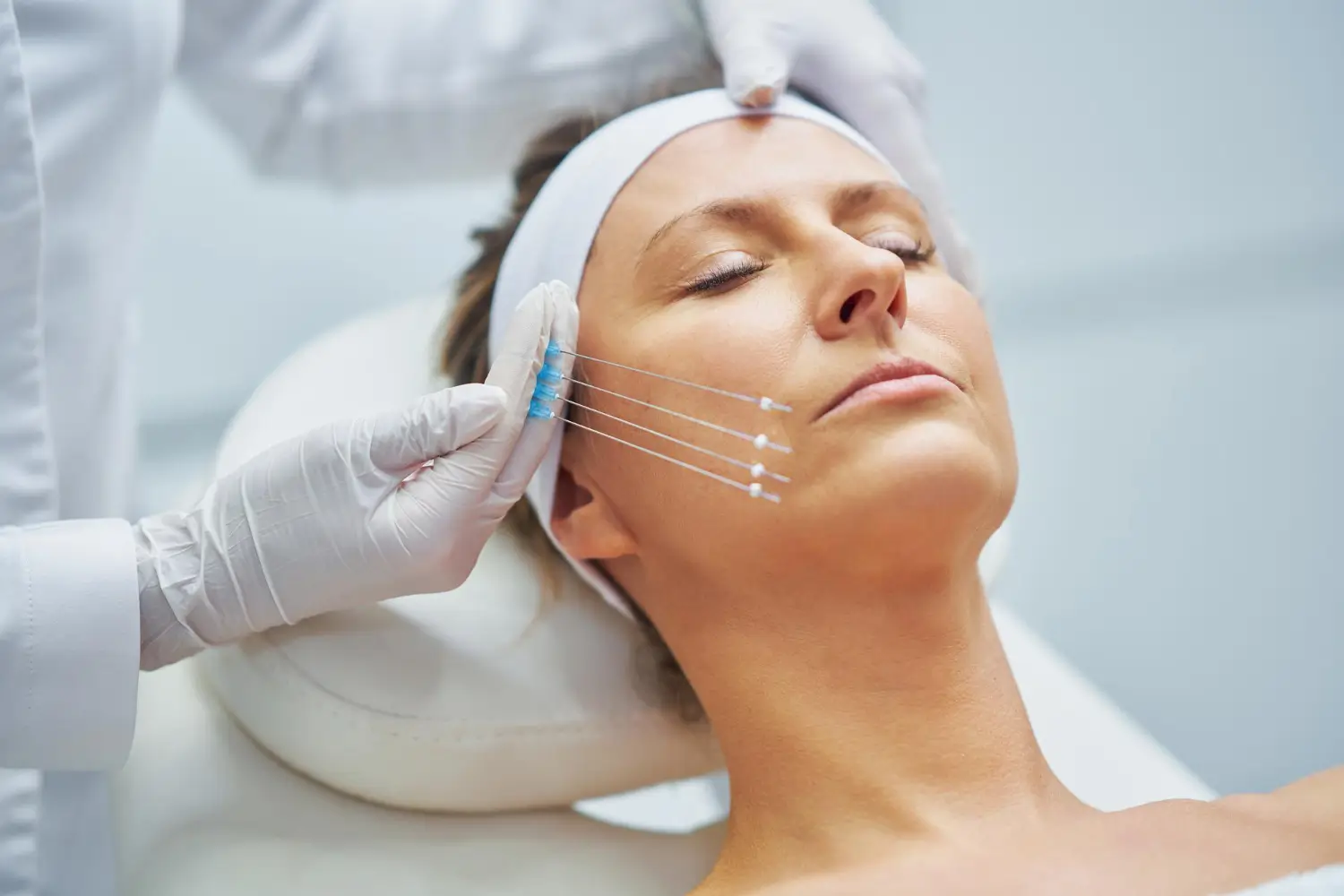
Did you know that thread lifts effectively reposition sagging facial tissues, delivering natural-looking results that can last up to two years? As a minimally invasive procedure, thread lifting is gaining popularity for restoring youthful contours without the extensive downtime associated with traditional surgery.
Two leading thread lift options that have drawn significant attention are Silhouette Soft and PDO threads. While both treatments aim to enhance facial contours and improve skin laxity, each offers unique characteristics, differing in their material composition, mechanism of action, and overall aesthetic outcomes.
In this article, we’ll explore the unique benefits of Silhouette Soft vs PDO threads, discussing how each works and what factors patients should consider when choosing the ideal treatment for their aesthetic goals.
Key Takeaways
- Silhouette Soft threads are made of PLLA, while PDO threads use polydioxanone. Both stimulate collagen but function differently.
- Silhouette Soft results last around 18–24 months, while PDO threads typically last 6–12 months.
- Silhouette Soft provides a stronger lift due to its bidirectional cones, while PDO threads focus more on collagen stimulation and skin tightening.
- Silhouette Soft is ideal for moderate skin sagging, while PDO threads suit mild to moderate cases.
- Both have a good safety profile when performed by trained practitioners, but Silhouette Soft may require more advanced technique because it uses bidirectional cones.
About: Trusted by over 2,000+ global clients since 2014, Direct Doctor Supply has become a leading supplier of cosmetic, skincare, and orthopedic products for medical and aesthetic professionals. Direct Doctor Supply offers a wide range of authentic brand-name products at competitive wholesale prices, sourced from around the world.
Composition and Mechanism of Action
Silhouette Soft threads are composed of Poly-L-Lactic Acid (PLLA), a biocompatible material known not only for its immediate lifting abilities but also for promoting natural collagen production over time. Silhouette Soft’s standout feature is its unique bidirectional cones, which anchor the threads within the skin and deliver a visibly enhanced lifting effect.
As the threads gradually dissolve, PLLA continues to stimulate collagen regeneration, offering sustained tightening and rejuvenation.

In comparison, PDO (Polydioxanone) threads consist of absorbable sutures widely recognized for their skin-rejuvenating effects and subtle lifting. Unlike Silhouette Soft, PDO threads don’t use cones; instead, they use barbs, screw-like structures, or smooth threads to provide structural support beneath the skin.
Their primary mechanism involves stimulating collagen production, making them ideal for skin tightening and moderate contour improvement rather than significant lifting. PDO threads are versatile, with various configurations available to meet diverse aesthetic goals.[1]
Qualified practitioners, clinics, and consumers can purchase Silhouette Threads wholesale or individually through Direct Doctor Supply and conveniently browse available aesthetic and medical products online.
Longevity and Efficacy of Results
Silhouette Soft threads generally provide longer-lasting results (18–24 months) than PDO threads (6–12 months). Their distinctive bidirectional cones anchor securely beneath the skin, providing a more sustained, noticeable lift. Additionally, as Poly-L-Lactic Acid (PLLA) gradually breaks down, it stimulates collagen production, extending skin-tightening benefits well beyond the threads’ lifespan. This makes Silhouette Soft particularly effective for lifting the midface and addressing jowls.
PDO threads offer a gentler immediate lift but excel at improving overall skin texture, elasticity, and firmness over time. Their results can vary based on factors such as thread configuration and individual metabolism. PDO threads suit patients seeking subtle skin tightening rather than significant lifting, highlighting how each thread type serves distinct aesthetic goals.
Patient Suitability and Expected Outcomes
Understanding the unique benefits of Silhouette Soft vs PDO threads is essential for anyone considering a thread lift. Each thread type targets specific patient needs, allowing tailored solutions that effectively rejuvenate and enhance facial contours.
Silhouette Soft is ideal for:
- Patients aged 35–55 with moderate skin sagging.
- Individuals looking for a non-surgical facelift alternative.
- Patients with mild jowling, nasolabial folds, and midface volume loss.
PDO Threads are best for:
- Younger patients with mild skin laxity.
- Those looking to improve skin texture rather than achieve significant lifting.
- Patients who prefer a more affordable thread lift option.
Ultimately, patients can expect Silhouette Soft to deliver immediate, noticeable lifting and volumizing effects, whereas PDO threads provide subtle yet meaningful improvements in overall skin quality and tightness.
Practitioner Perspectives: Ease of Use and Safety
Practitioners often find the Silhouette threads technique more technically challenging due to its cone-based anchoring system. When placed correctly, however, it offers a more predictable, longer-lasting lift. Proper training and experience are essential, as improper placement may lead to complications such as asymmetry or dimpling.
PDO threads, on the other hand, are generally easier to insert and come in different configurations, allowing practitioners to tailor treatments. The risk of complications is lower due to the smaller gauge and simpler application, but bruising and temporary swelling may still occur.
Both thread types have a good safety profile when performed by qualified professionals, with side effects typically limited to mild bruising, swelling, and temporary discomfort.
Clinical Data and Real-World Results
Clinical studies and before-and-after results have demonstrated the efficacy and safety of Silhouette Soft vs PDO threads as minimally invasive options for facial rejuvenation.

Research published highlighted Silhouette Soft’s ability to lift and reposition facial tissues effectively, resulting in significant improvements in skin laxity.[2] Patients reported high satisfaction rates, and adverse effects were minimal, showcasing its reliability as a non-surgical facelift alternative.
Similarly, PDO threads have shown promising results, especially in enhancing skin texture and elasticity. A study in the Journal of Advances in Medicine and Medical Research reported significant improvements in lower-face contouring and firmness, particularly around marionette lines, with effects lasting up to six months.

Additional research emphasized the collagen-stimulating properties of PDO threads, making them a versatile choice for improving overall skin quality.[3]
Conclusion
Choosing between Silhouette Soft vs PDO threads ultimately depends on the patient’s specific needs and aesthetic goals.
Silhouette Soft threads suit individuals seeking a more pronounced lifting effect and longer-lasting results. Conversely, PDO threads offer a gentler, less invasive approach and excel at skin tightening and collagen stimulation.
Consulting a qualified practitioner helps determine the most suitable treatment plan, ensuring results tailored to each patient’s unique concerns.
FAQs
1. Are Silhouette Soft threads painful?
A local anesthetic is used, making the procedure well-tolerated with minimal discomfort.
2. Can Silhouette Soft be combined with other treatments?
Yes, it can be used alongside dermal fillers, Botox, and skin resurfacing for enhanced rejuvenation.
3. What is the recovery time?
Most patients resume normal activities within a few days, though minor swelling and bruising may occur.
4. Are there any risks or side effects?
Common side effects include bruising, swelling, and temporary dimpling. Serious complications are rare when performed by an experienced professional.
Citations
[1] Contreras, Candelaria, et al. “Using PDO Threads: A Scarcely Studied Rejuvenation Technique. Case Report and Systematic Review.” Journal of Cosmetic Dermatology, vol. 22, no. 8, Apr. 2023. https://doi.org/10.1111/jocd.15709. Accessed 14 Oct. 2026.
[2] Samizadeh, Souphiyeh, et al. “Poly‑L‑Lactic Acid Cone Threads: Silhouette Soft Threads.” Thread Lifting Techniques for Facial Rejuvenation and Recontouring, Springer International Publishing, 2024, pp. 211–21.
[3] “What Is Skin Rejuvenation?” Verywell Health. Accessed 14 Oct. 2026. https://www.verywellhealth.com/skin-rejuvenation-5120583.
[4] Khiabanloo, S. R., R. Jebreili, E. Aalipour, N. Saljoughi, and A. Shahidi. “Outcomes in Thread Lift for Face and Neck: A Study Performed with Silhouette Soft and Promo Happy Lift Double Needle, Innovative and Classic Techniques.” Journal of Cosmetic Dermatology, vol. 18, no. 1, 2018, pp. 84‑93. doi:10.1111/jocd.12745.
[5] Park, J. H., J. W. Jeong, and J. U. Park. “Advanced Facial Rejuvenation: Synergistic Effects of Lower Blepharoplasty and Ultrasound‑Guided Mid‑Face Lift Using Polydioxanone (PDO) Threads.” Aesthetic Plastic Surgery, vol. 48, no. 9, 2024, pp. 1706‑1714.
Sourcing and accuracy for this article follow our Editorial policy: claims are cross-checked against clinical literature, regulatory filings, and manufacturer specifications before anything is published