

SHARE THIS ARTICLE
Aqualyx
Aqualyx Abdomen – Fat Dissolving Miracle Treatment
Jun 24, 2025
Abdominal fat is often one of the most stubborn areas to target with diet and exercise alone. In fact, the World Health Organization (WHO) reports that over 2.5 billion adults were overweight in 2022, with nearly 890 million classified as obese. Among these, abdominal fat remains one of the most challenging and concerning, both from a health and aesthetic perspective.
Enter Aqualyx—an innovative injectable treatment containing deoxycholic acid, a powerful compound designed to target and break down fat cells. Initially developed in Italy, Aqualyx is now approved in numerous countries and has become a popular solution for tackling stubborn fat in the abdomen, flanks, underarms, and more.
In this article, we’ll delve into Aqualyx abdomen mechanism of action, ideal treatment protocols, expected results, safety profile, and whether it lives up to its reputation as a “miracle treatment.”
Key Takeaways
- Clinicians inject Aqualyx, a minimally invasive solution, to target stubborn fat in areas such as the abdomen, flanks, and underarms.
- Ideal candidates are individuals with localized fat pockets who are close to their ideal weight, have good skin elasticity, and have realistic expectations.
- Dosage typically involves 5–10 mL per side of the abdomen, injected using a fan or grid pattern with a cannula, and requires 2–5 sessions spaced 4–6 weeks apart.
- Swelling, redness, bruising, and tenderness are common side effects, with swelling typically peaking within 48 hours. However, most patients can resume normal activities within 1–2 days.
- Combining Aqualyx with other treatments, such as RF, ultrasound cavitation, or lymphatic drainage massage, can enhance results, improving skin tightness and fat breakdown.
- While Aqualyx is not a weight-loss treatment, it’s an excellent solution for targeting problem areas resistant to diet and exercise, delivering gradual, natural-looking results.
About: Trusted by over 2,000+ global clients since 2014, Direct Doctor Supply has become a leading supplier of cosmetic, skincare, and orthopedic products for medical and aesthetic professionals. Direct Doctor Supply offers a wide range of authentic brand-name products at competitive wholesale prices, sourced from around the world.
Patient Selection: BMI, Local Fat, Skin Elasticity
Not every patient is an ideal candidate for Aqualyx abdominal treatments. This injectable solution suits individuals with localized fat pockets, not generalized obesity. Aqualyx focuses on spot reduction, especially for individuals who struggle with fat that resists exercise and dieting. Ideal candidates typically have:
- BMI under 30 or within a healthy/stable weight range
- Visible subcutaneous fat (not visceral or deep abdominal fat)
- Good skin elasticity to promote proper retraction after fat reduction
- Realistic expectations about gradual and natural-looking results
Aqualyx is not intended for significant weight loss.[1] A clinical consultation is necessary to assess the type, distribution, and suitability of the fat for injection. Loose skin, poor elasticity, or excessive intra-abdominal fat may limit visible improvement. For qualified medical professionals and consumers sourcing products for use, Direct Doctor Supply lets you order Aqualyx wholesale. Understanding these patient factors improves the chances of achieving satisfactory results.
Aqualyx Abdomen Injection Protocol: Dosage & Technique
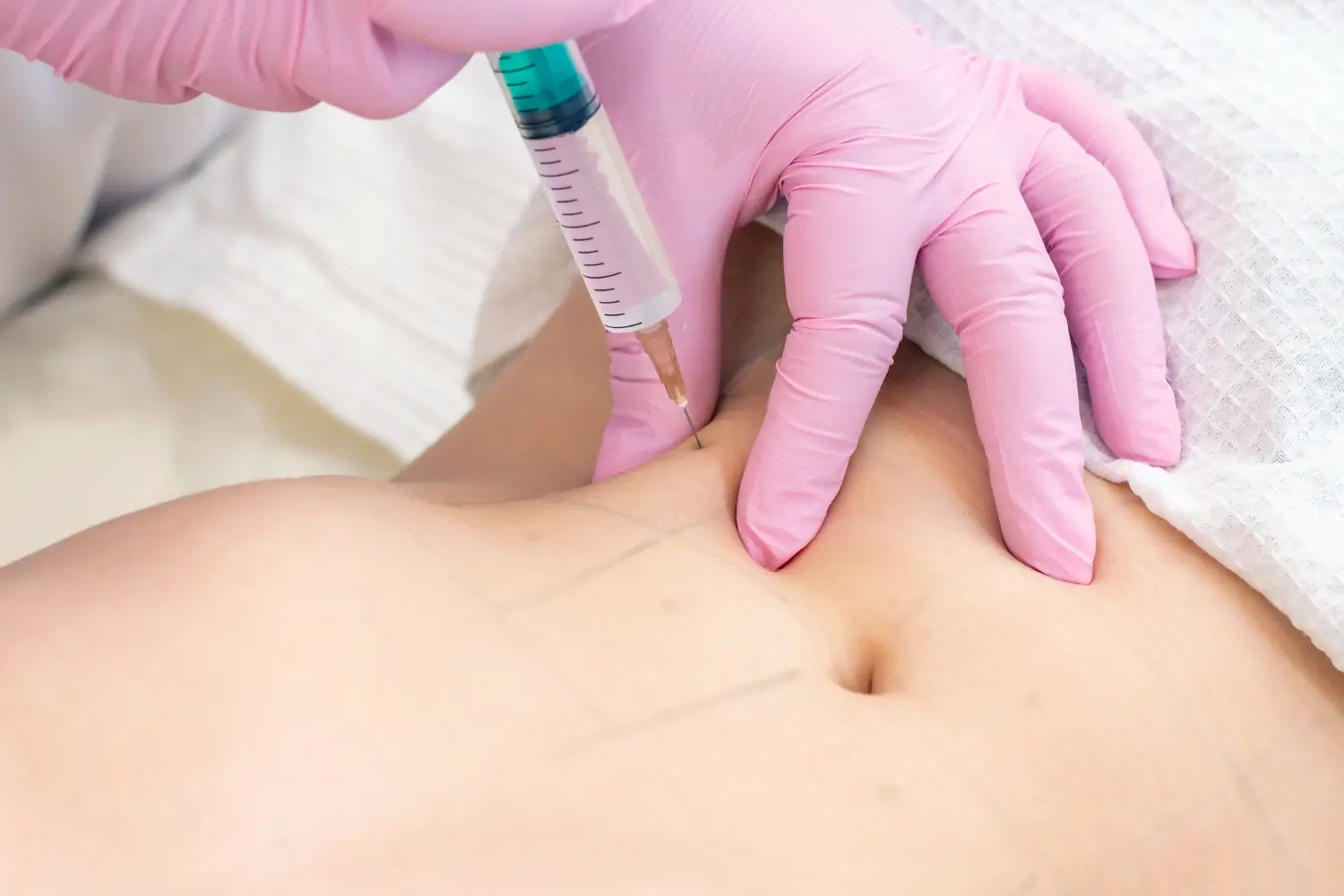
Practitioners frequently treat the abdomen with Aqualyx, but they must tailor the procedure to the patient’s fat volume and distribution. The treatment involves injecting a deoxycholic acid-based solution directly into the subcutaneous fat layer, where it breaks down fat cells by disrupting their membranes.

- Dosage Per Session: Typically 5–10 mL per side of the abdomen, depending on fat thickness
- Technique: Administered using a fan or grid pattern with a long, flexible cannula
- Depth: Injected into the subcutaneous fat, avoiding muscles and vital structures
- Session Duration: 30 to 60 minutes, including prep and aftercare guidance
- Session Frequency: Every 4–6 weeks, with 2–5 sessions commonly needed
Recent Research on Deoxycholic Acid for Localized Fat Reduction
A 2025 clinical study evaluating deoxycholic acid injections for flank fat found significant reductions in subcutaneous fat thickness and waist circumference following treatment. Most participants also demonstrated aesthetic improvement by Week 12, suggesting that deoxycholic acid may provide measurable contouring benefits when used to target localized fat deposits.[5]
The number of sessions may vary based on how the patient’s body metabolizes the dissolved fat. Visible changes typically begin after the second treatment, but results continue to improve with each session.
Managing Reactions: Swelling, Pain & Recovery
Post-treatment reactions are normal after Aqualyx abdominal injections. For patients wondering “What is Aqualyx?”, understanding how the treatment works can help explain why these temporary reactions occur. As the body triggers an inflammatory response to break down and eliminate fat debris, patients often experience temporary swelling, pain, and redness. These reactions are short-lived, but proper management is essential for comfort and optimal healing.

Common Side Effects
- Swelling and puffiness (typically peaks within the first 48 hours)
- Tenderness or discomfort lasting up to a week
- Redness and firmness around the treated area
- Occasional bruising due to minor vessel irritation
Recovery Tips
- Avoid strenuous workouts for 3–5 days post-procedure
- Apply cold compresses to reduce swelling
- Sleep elevated the first night to minimize fluid accumulation
- Avoid alcohol and anti-inflammatories immediately after treatment
Most patients return to daily activities within 1–2 days, but visible swelling may persist for up to a week. Following post-care instructions from the practitioner is essential to support healing and maximize results.
Combination Therapies: RF, Cavitation + Aqualyx
Clinicians often combine Aqualyx with non-surgical body treatments such as radiofrequency (RF) or ultrasound cavitation to enhance abdominal contouring. These treatments can help tighten skin, stimulate lymphatic drainage, and boost the fat breakdown process.
Common Combination Therapies
- Aqualyx + Radiofrequency (RF): RF promotes skin tightening and collagen production, often performed a week or two after Aqualyx sessions
- Aqualyx + Ultrasound Cavitation: Uses ultrasonic waves to further disrupt fat cells and improve fluid retention and contour refinement
- Aqualyx + Lymphatic Drainage Massage: Supports faster clearance of fat cell debris and reduces post-treatment puffiness
- Aqualyx + Cryolipolysis (CoolSculpting): Alternating treatment sessions can improve body sculpting, but practitioners must conduct them under clinical supervision to avoid over-treatment.
Schedule these adjunct treatments strategically to prevent inflammation overlap and maximize contouring outcomes. A well-planned treatment schedule ensures the best possible results.[2]
Conclusion
Aqualyx offers a minimally invasive approach to reduce stubborn abdominal fat and improve body contouring without the need for surgery. Aqualyx abdomen treatments are generally intended for healthy individuals with localized fat and good skin tone. Although it is not a replacement for diet and exercise, Aqualyx provides a solution for those hard-to-reach problem areas that don’t respond to traditional fat-loss methods.
When performed by a trained professional, results are gradual, natural-looking, and long-lasting. Mild side effects, such as swelling or tenderness, are common but manageable. To achieve optimal results, providers may recommend combination therapies like RF or cavitation alongside Aqualyx.
If you’re considering non-surgical abdominal fat reduction, Aqualyx is a safe and effective option worth exploring—just make sure you’re a good candidate and choose an experienced provider.
FAQs
1. How many Aqualyx sessions are needed for the abdomen?
Most patients need between 2 and 5 sessions, spaced 4–6 weeks apart, depending on the amount of fat and body response.
2. How long do Aqualyx results last?
Results are long-lasting if maintained with a stable weight. Once Aqualyx destroys and removes fat cells, the body does not regenerate them.
3. Is the procedure painful?
Mild discomfort or stinging can occur during and after injection. Providers typically combine Aqualyx with a numbing solution or local anesthetic to minimize discomfort during the injection process.
4. Can Aqualyx be used for belly fat after pregnancy?
Yes, if the fat is subcutaneous and the skin has reasonable elasticity. It’s not suitable for loose skin or separated abdominal muscles.
5. What’s the downtime after an abdominal Aqualyx session?
Most patients return to regular activity within 1–2 days. Swelling or mild soreness may last up to a week.
6. Can Aqualyx help with visceral fat?
No. Aqualyx only works on subcutaneous fat, the soft fat just under the skin. It cannot reach deeper, organ-surrounding visceral fat.
7. Is Aqualyx FDA-approved in the U.S.?
Aqualyx is not FDA-approved in the U.S. It is used in other countries under CE certification but not currently cleared for use in the U.S.
Citations
[1] Mayo Clinic. “6 Proven Strategies for Weight-Loss Success.” Mayo Clinic, 7 Dec. 2021. https://www.mayoclinic.org/healthy-lifestyle/weight-loss/in-depth/weight-loss/art-20047752. Accessed 14 Sept. 2026.
[2] “Body Contouring: What Is It, Benefits, Risks & Recovery.” Cleveland Clinic. Accessed 14 Sept. 2026.
[3] Obesity and Overweight. World Health Organization, 7 May 2025. Accessed 14 Sept. 2026.
[4] Nall, R. About Aqualyx Fat-Dissolving Injections. Healthline, 12 Dec. 2020. https://www.healthline.com/health/aqualyx.
[5] Namakizadeh Esfahani, Navid, et al. “Evaluating the Efficacy and Safety of Deoxycholic Acid Injection in Reduction of Flank Fat.” Journal of Cosmetic Dermatology, vol. 24, no. 9, Sept. 2025, p. e70436, https://doi.org/10.1111/jocd.70436. PubMed. Accessed 14 Sept. 2026.
Sourcing and accuracy for this article follow our Editorial policy: claims are cross-checked against clinical literature, regulatory filings, and manufacturer specifications before anything is published