

SHARE THIS ARTICLE
PRP
Plasmolifting Before and After – With Photo Examples
Jul 16, 2025
Did you know that human blood is composed of over 4,000 different proteins, many of which play essential roles in tissue regeneration and repair? According to the International Journal of Molecular Sciences, platelet-rich plasma (PRP), a concentrated form of your own platelets, contains key growth factors like PDGF and VEGF that promote cellular renewal, making it a versatile agent for healing and rejuvenation.
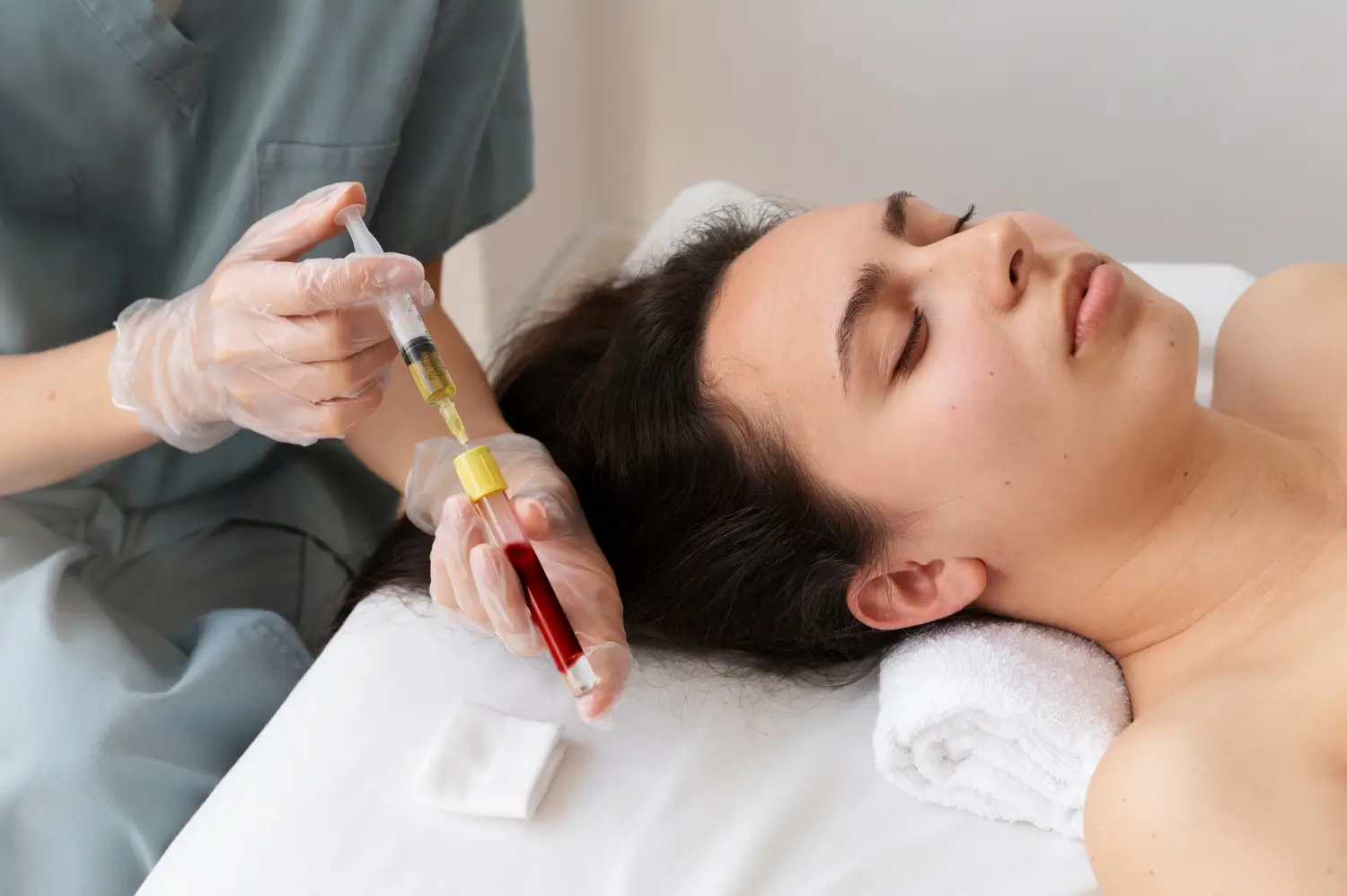
This same regenerative principle is used in Plasmolifting, a technique that harnesses autologous PRP to improve skin texture, elasticity, and overall tone. While subtle at first, before-and-after results often show noticeable enhancement in radiance and structure.
In this article, we’ll explore Plasmolifting before and after transformations, examine clinical research, and share photo examples from real treatments across aesthetic and medical settings.
Key Takeaways
- Plasmolifting utilizes platelet-rich plasma (PRP) to stimulate tissue repair and cellular regeneration, leading to improvements in hair, skin, and gum health.
- Treatments like Plasmolifting for the hair can help reduce early-stage hair thinning by stimulating follicles, reducing shedding, and promoting thicker hair growth over time.
- For facial treatments, Plasmolifting enhances skin tone, hydration, and elasticity, and reduces fine lines and wrinkles, with visible results often seen after 2–3 sessions.
- In dental applications, Plasmolifting accelerates healing, reduces gum inflammation, and enhances the texture and color of gum tissue, particularly after surgery or injury.
- Results depend on platelet concentration, technique, and patient factors such as overall health and adherence to post-treatment care.
- Before-and-after photos help set realistic expectations, track progress, and show patients the treatment’s effectiveness.
- Plasmolifting is a safe, non-invasive alternative to surgery, using the body’s natural healing process for gradual improvement.
About: Trusted by over 2,000+ global clients since 2014, Direct Doctor Supply has become a leading supplier of cosmetic, skincare, and orthopedic products for medical and aesthetic professionals. Direct Doctor Supply offers a wide range of authentic brand-name products at competitive wholesale prices, sourced from around the world.
Plasmolifting Results for Hair, Skin, and Gum Rejuvenation
Plasmolifting has shown remarkable potential in regenerative medicine, with applications ranging from hair restoration to skin rejuvenation and even gum tissue repair.[1] Using platelet-rich plasma (PRP), a natural compound derived from the patient’s own blood, this treatment supports the body’s natural healing abilities and accelerates tissue regeneration. Below, we will delve into the specific results seen in hair, skin, and gum rejuvenation using Plasmolifting.
Hair Treatments

Plasmolifting is proving especially beneficial for patients experiencing early-stage hair thinning or androgenetic alopecia. Through multiple sessions, typically between 2 to 4, Plasmolifting hair treatments stimulate the follicles, encourage thicker strands, and promote new hair growth in previously sparse areas.
This procedure is highly effective in the early stages of hair loss and often reduces shedding. Over time, PRP encourages a healthier scalp environment and improves overall hair density. Need to buy PRP kits online? Direct Doctor Supply brings authentic aesthetic and medical products together through one convenient online source.
2025 Study Update
A 2025 systematic review and meta-analysis examined 43 randomized controlled trials involving 1,877 participants to evaluate the effectiveness and safety of platelet-rich plasma (PRP) for alopecia. Researchers found that activated PRP increased hair density and reduced hair loss, and that PRP treatment also improved clinical outcomes and patient satisfaction. The analysis found no significant overall improvement in hair thickness, suggesting that PRP’s benefits may be more apparent in hair density and reduced shedding than in increasing individual hair diameter. The authors also noted that differences in PRP preparation and activation may influence treatment outcomes.[5]
Skin Rejuvenation

In facial applications, Plasmolifting is commonly used to improve skin tone, hydration, and elasticity. It’s an excellent solution for targeting problem areas such as under-eye circles, acne scars, and fine wrinkles.
After the second treatment, many patients notice visible changes, including smoother, firmer skin with improved texture. Peak results usually appear around 4–6 weeks, with continual improvement over the following months.
Gum Therapy

In dentistry, Plasmolifting treats chronic gum inflammation and bleeding gums and supports post-surgery recovery. By promoting faster healing, the treatment improves gum tissue health, reduces sensitivity, and enhances gum texture. Results include healthier gum color and improved overall gum integrity, benefiting both aesthetics and long-term oral health.
Clinical Context Behind Each Plasmolifting Transformation
The visible transformations seen with Plasmolifting are grounded in regenerative principles.[2] By using the body’s own platelet-rich plasma, the treatment stimulates tissue repair and cellular renewal, producing varied results across anatomical areas.
- Joints like the knee and elbow tend to show strong regenerative responses, owing to their rich capillary networks. In contrast, areas like the Achilles tendon may show more limited results because of lower vascularization.
- For facial treatments, PRP accelerates collagen synthesis and angiogenesis (new blood vessel formation), both of which improve skin texture, elasticity, and overall tone.
- Dental and orthopedic uses have also shown positive outcomes, helping speed healing and reduce inflammation in affected tissues.
These transformations showcase the interplay between PRP biology and tissue-specific healing dynamics, reinforcing the potential for Plasmolifting to rejuvenate skin, hair, and gums.
What Affects Outcomes: Platelet Concentration and Technique
The effectiveness of Plasmolifting varies greatly depending on a few critical factors, particularly platelet concentration and the technique used during administration.
- Platelet Concentration: Higher platelet levels in the PRP result in more growth factors being delivered to the treatment area. This directly correlates to enhanced tissue repair and regeneration. If the PRP is under-concentrated, patients may experience minimal improvement, even after multiple sessions.
- Injection Technique: The method of injecting PRP is just as crucial as the concentration. For scalp treatments like Plasmolifting hair, injections should be intradermal and spaced evenly to ensure proper follicular stimulation. In facial areas, the PRP should be injected in a precise pattern to avoid uneven results or bruising.
Other Factors that Influence Outcomes
Beyond platelet concentration and technique, several other factors play a significant role in determining the success of Plasmolifting treatments:
- Patient Health: Overall health, hydration, and nutrition significantly contribute to the body’s response to PRP therapy. Healthy lifestyles typically lead to better outcomes.
- Frequency of Sessions: Regular treatments, spaced out according to protocol, allow for progressive improvement over time. For example, Plasmolifting hair may require 4–6 sessions, depending on the individual’s hair condition.
- Supportive Therapies: Microneedling and other skin treatments can complement Plasmolifting by improving PRP absorption.
- Post-Treatment Care: Proper aftercare, such as avoiding sun exposure and keeping the treated area clean, is essential for optimal results.
How to Use Before and After Photos to Educate Patients
Before-and-after photos play a vital role in patient education, set realistic expectations, and help patients track progress over time. These photos are especially useful for:
- Setting Expectations: Showing realistic timelines and outcomes for patients experiencing similar conditions helps avoid disappointment.
- Demonstrating Specific Benefits: Before-and-after images highlight the key improvements patients may experience, such as increased hair density with Plasmolifting hair treatments, smoother skin, or healthier gums.
- Tracking Progress: Documenting each treatment session provides a clearer view of improvements and helps you adjust future sessions as needed.
- Building Credibility: Authentic images of real patients help build trust and transparency with potential patients, showcasing the clinical effectiveness of Plasmolifting.
Note: Ensure all photo use complies with consent and privacy regulations (e.g., HIPAA or GDPR). Patient anonymity must be respected unless permission is explicitly given.
Conclusion
Plasmolifting is a powerful, non-invasive treatment that offers natural tissue regeneration and rejuvenation. Whether you’re seeking to restore hair, rejuvenate skin, or improve gum health, Plasmolifting offers impressive, natural results with minimal downtime. Visible changes take time, but with consistent treatments, patients see improvements in skin texture, hair growth, and gum health.
By focusing on platelet-rich plasma and its healing properties, this treatment bridges traditional therapies and cutting-edge regenerative medicine.
FAQs
1. How many sessions of Plasmolifting do I need to see results?
Most people need 3–5 sessions spaced a few weeks apart to see visible and lasting improvements.
2. Is Plasmolifting safe for all skin and hair types?
Yes, since it uses the patient’s own blood, the risk of allergic reaction or rejection is extremely low.
3. How soon will I notice results after a Plasmolifting session?
Initial results may appear in 1–2 weeks, but the full effect often builds over 4–6 weeks.
4. Does the procedure hurt?
Mild discomfort may occur during injections, but numbing creams or local anesthesia are typically used to reduce pain.
5. Can Plasmolifting treat deep wrinkles or severe hair loss?
It’s more effective for mild to moderate concerns. Deep wrinkles or advanced balding may need combination therapies.
6. Are there any side effects I should be aware of?
Some temporary swelling, redness, or bruising can occur at injection sites, but these usually resolve within 48 hours.
7. What should I avoid after a Plasmolifting session?
Avoid direct sun exposure, alcohol, vigorous exercise, and facial treatments for 24–48 hours post-treatment.
Citations
[1] Hirose, Y., C. Fujita, A. Aoki, and H. Inoue. “A Comparative Study on the Influences of Platelet-Rich Plasma vs Its Derived Cytokines on Skin Rejuvenation.” European Journal of Plastic Surgery, vol. 46, no. 5, 2023, pp. 725–32. doi:10.1007/s00238-023-02063-3.
[2] Teplov, O., R. Salikhov, M. Chekunov, D. Galimov, I. Pankov, and A. Teplov. “Comparative Analysis of the Therapeutic Effect of Plasmolifting on the Ankle and Appendicular Joints.” Published online 10 July 2023. doi:10.21203/rs.3.rs-3124271/v1.
[3] Santos, Lorena Cristina, Giselle Lobo Lana, Gabriel Silva Santos, et al. “The Biological Role of Platelet Derivatives in Regenerative Aesthetics.” International Journal of Molecular Sciences, vol. 25, no. 11, 2024, p. 5604. doi:10.3390/ijms25115604.
[4] Alam, M., R. Hughart, A. Champlain, et al. “Effect of Platelet-Rich Plasma Injection for Rejuvenation of Photoaged Facial Skin.” JAMA Dermatology, vol. 154, no. 12, 2018, p. 1447. https://doi.org/10.1001/jamadermatol.2018.3977.
[5] Anitua, E., R. Tierno, and M. H. Alkhraisat. “Platelet-Rich Plasma in the Management of Alopecia: A Systematic Review and Meta-Analysis of Clinical Evidence.” Dermatology and Therapy, vol. 15, no. 11, 2025, pp. 3213–52. https://doi.org/10.1007/s13555-025-01542-8
Sourcing and accuracy for this article follow our Editorial policy: claims are cross-checked against clinical literature, regulatory filings, and manufacturer specifications before anything is published